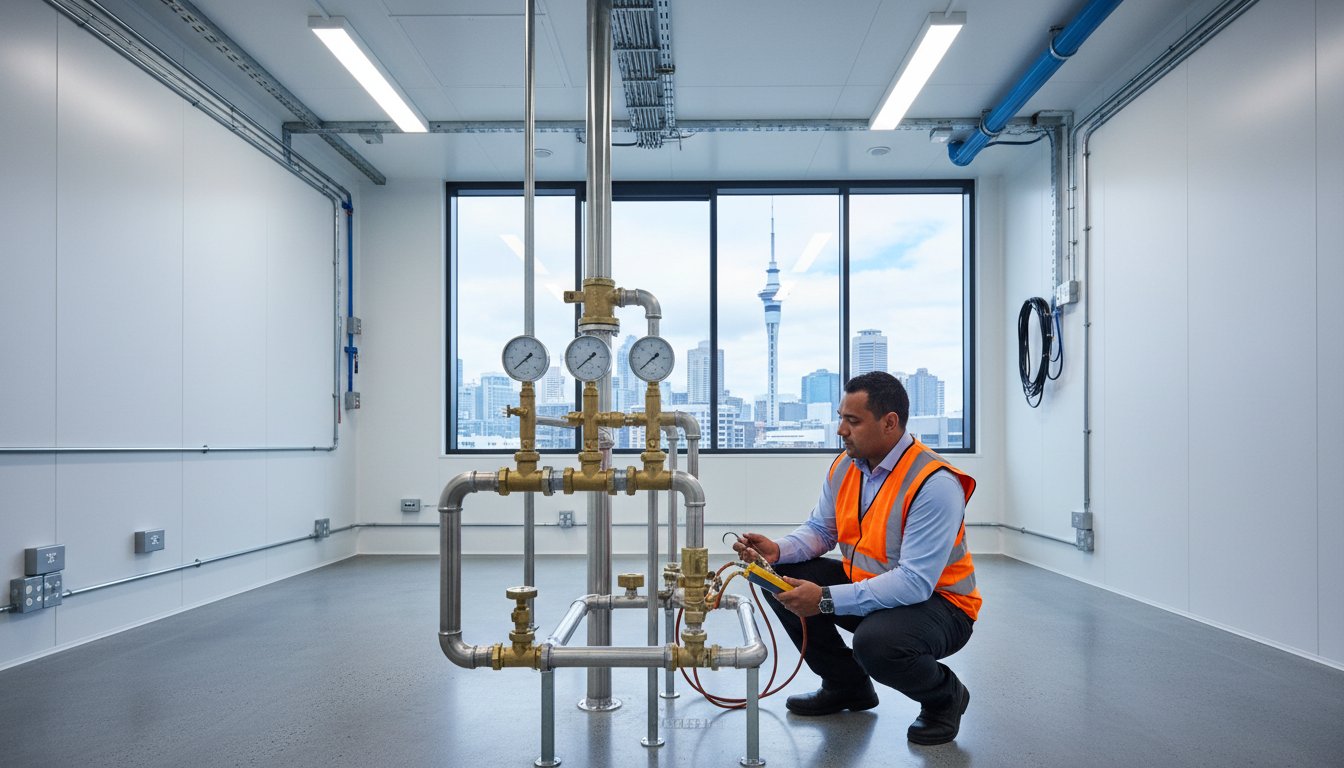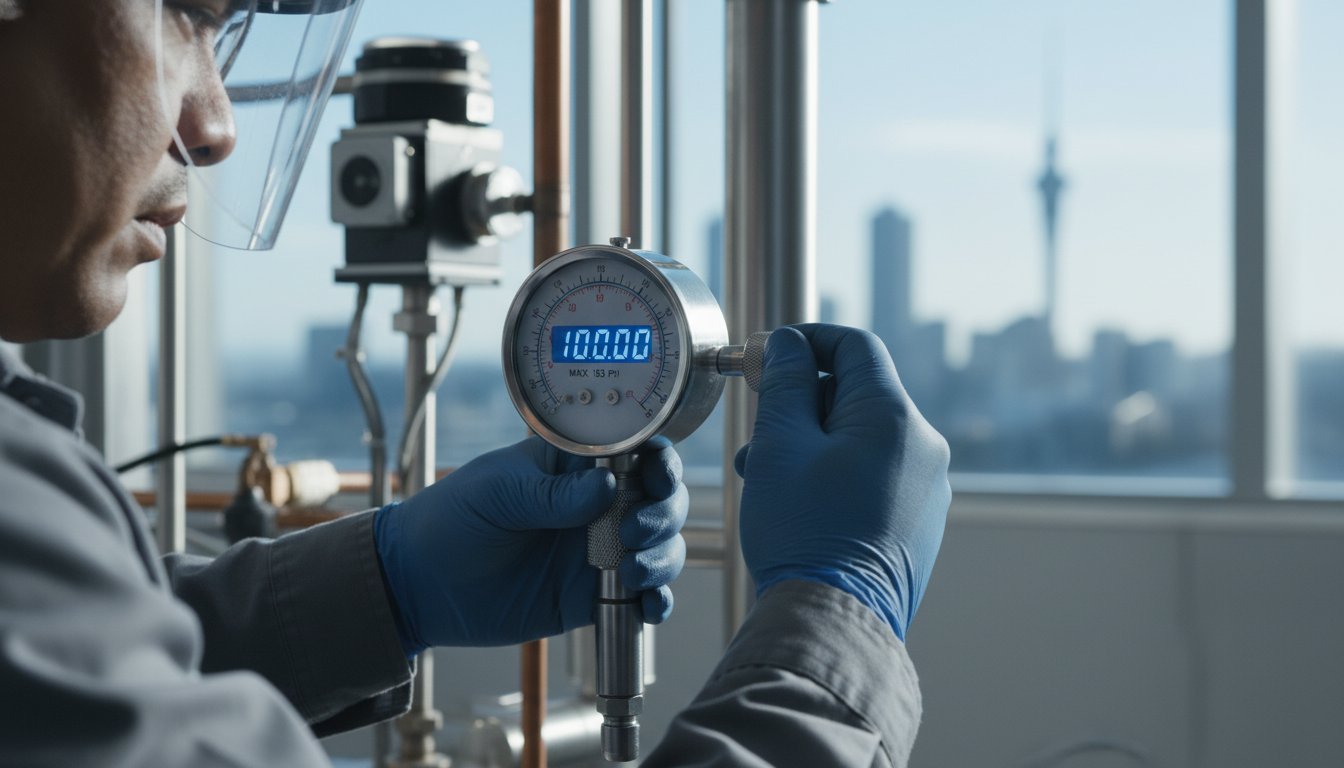



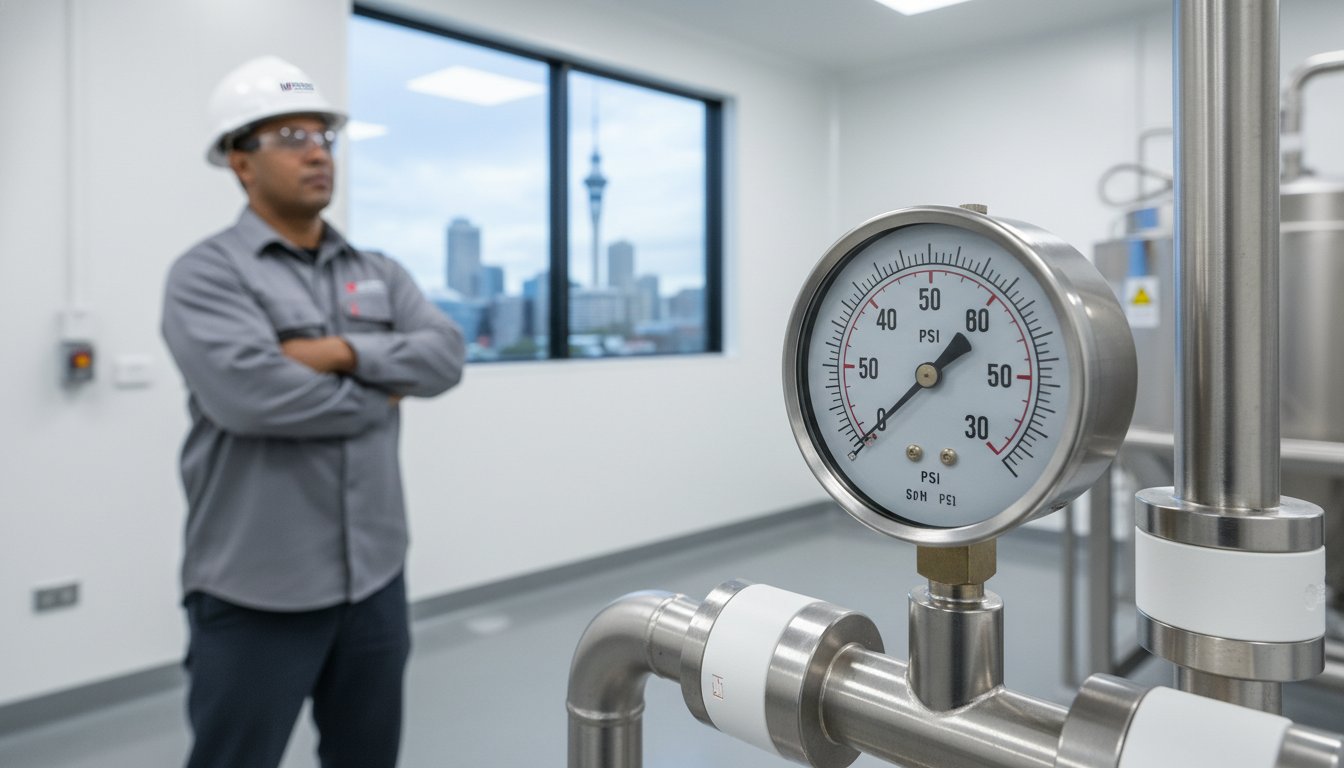
In January 2026, a maintenance supervisor at a major Suva processing facility discovered that 22% of their dry pressure gauges had failed within a single quarter due to internal corrosion and relentless mechanical vibration. You already know that a fluttering needle or a fogged-up gauge face isn't just a nuisance; it's a direct threat to your operational safety and IANZ compliance. At CPS (NZ) Ltd, we've seen how Fiji's high humidity and heavy industrial pulses can destroy standard equipment in record time.
This professional guide explains why glycerin-filled gauges are the industry benchmark for durability, offering up to 300% more service life than dry alternatives in high-vibration environments. You'll learn how liquid filling provides the steady, clear readings required for precision calibration and why this small upgrade is essential for your long-term maintenance strategy. We'll compare the performance metrics of both gauge types and provide a clear roadmap for selecting instrumentation that withstands the toughest Pacific conditions.
• Eliminate pointer flutter and premature mechanical wear by understanding the performance gap between dry and liquid-filled gauges in high-vibration industrial settings.
• Discover why glycerin-filled instrumentation is the professional standard for preventing internal fogging and condensation in the humid tropical climates of Fiji and New Zealand.
• Access a technical decision matrix to help you select the correct gauge fill based on specific process temperatures and environmental demands to ensure long-term durability.
• Learn how IANZ accredited calibration and the "total solution" approach provide the precision and traceability required for critical infrastructure across the South Pacific.
Glycerin, or glycerol, is a clear, odourless, high-viscosity liquid that serves as the backbone of reliable pressure measurement in heavy industries. At CPS (NZ) Ltd, we've seen how industrial environments in Fiji and New Zealand demand equipment that withstands constant vibration and harsh humidity. We standardise on 99.7% pure USP grade glycerin because its chemical stability prevents the yellowing or clouding often seen in cheaper, lower-grade alternatives. This purity level ensures that internal components remain lubricated and protected from corrosive atmospheres for years of service. It's a non-toxic, food-grade substance, making it safe for the food and beverage sectors that drive over 15% of Fiji's manufacturing output.
The choice between a liquid-filled gauge and a dry gauge often determines the lifespan of your instrumentation. Dry gauges are prone to internal wear and condensation, which can lead to premature failure in high-humidity regions like Suva or Auckland. Liquid-filled gauges use the viscous properties of glycerin to create a total solution for mechanical protection. This liquid dampens the movement of the pointer, making it readable even when the system experiences heavy pulses or mechanical shocks. Our field data shows that liquid filling can extend the service life of a gauge by up to 300% compared to dry units in high-vibration settings.
The thickness of the liquid effectively slows the mechanical movement of the internal gears. This prevents the needle from fluttering during rapid pressure changes, allowing for a precise reading.
High-grade 99.7% glycerin remains crystal clear over long periods. This ensures the dial face remains legible under various lighting conditions without the murky buildup found in non-USP fills.
Because liquids expand with temperature changes, these gauges include a fill plug or vent. This allows the internal pressure to equalise with the atmosphere, maintaining an accuracy level of 1.0% or 1.6% across the scale.
While glycerin is the standard for 90% of applications in Fiji and New Zealand, specific environments require alternatives. Silicone oil is preferred for extreme temperature ranges, typically operating between -40°C and +200°C. However, for the moderate tropical climates of the Pacific, glycerin remains the most cost-effective and durable choice. In specialized industries, such as medical oxygen plants or chemical processing, we supply Halocarbon fills. This is crucial because standard glycerin can react dangerously with oxidizing agents. We don't just sell you a gauge; we ensure the fill type matches your specific safety requirements and provides a total package for your site.
Dry pressure gauges are often the default choice for static applications, but they struggle in high-vibration environments like pump stations or compressor rooms. In these settings, the internal Bourdon tube and gear mechanism are subject to constant oscillation. Without a damping agent, the pointer vibrates rapidly. This makes accurate measurement almost impossible and accelerates mechanical wear. Choosing the right fill is a technical necessity for maintaining process integrity in demanding industrial sectors.
This isn't limited to large-scale industry; the same challenges of vibration and humidity affect equipment in various sectors. For instance, the pump and filtration systems for swimming pools also rely on durable, liquid-filled gauges to ensure longevity and proper function. For a look at how experts handle similar maintenance challenges in a different field, you can check out The Pool People.
Pointer flutter is more than a nuisance; it's a safety risk. When an operator can't get a clear reading on a 1000 kPa line, the margin for error increases significantly. The high viscosity of a glycerin fill absorbs these mechanical shocks. It provides a steady, readable measurement even when mounted directly to high-frequency equipment. This stabilization prevents "fatigue failure" in the Bourdon tube, a component that accounts for roughly 60% of gauge failures in heavy industry. By dampening the movement, you ensure that the internal components aren't shaking themselves to pieces during standard operation.
Friction is the primary enemy of precision. In a dry gauge, the gear teeth and segment rub together without protection. Over time, this leads to the "stuck pointer" syndrome, especially in the humid or salty conditions found in many coastal processing plants. A glycerin fill provides constant internal lubrication. This reduces friction between moving parts and prevents the buildup of condensation or corrosive particles inside the casing. While a dry gauge might fail within six months in a harsh environment, a liquid-filled alternative typically offers a service life of three to five years.
Maintaining this level of reliability requires more than just buying a product off the shelf. We provide the total solution for instrumentation by ensuring every gauge is calibrated to IANZ standards and fitted for your specific process requirements. This proactive approach prevents the costly downtime associated with vendors who don't understand the technical demands of local industry. Consider these performance advantages for your next installation:
• Complete protection of internals from corrosive atmospheres and salt spray.
• Elimination of condensation on the lens for clear visibility in all weather.
• Significant reduction in the frequency of recalibration by protecting the movement.
• Absorption of pressure spikes that would otherwise rupture a dry Bourdon tube.
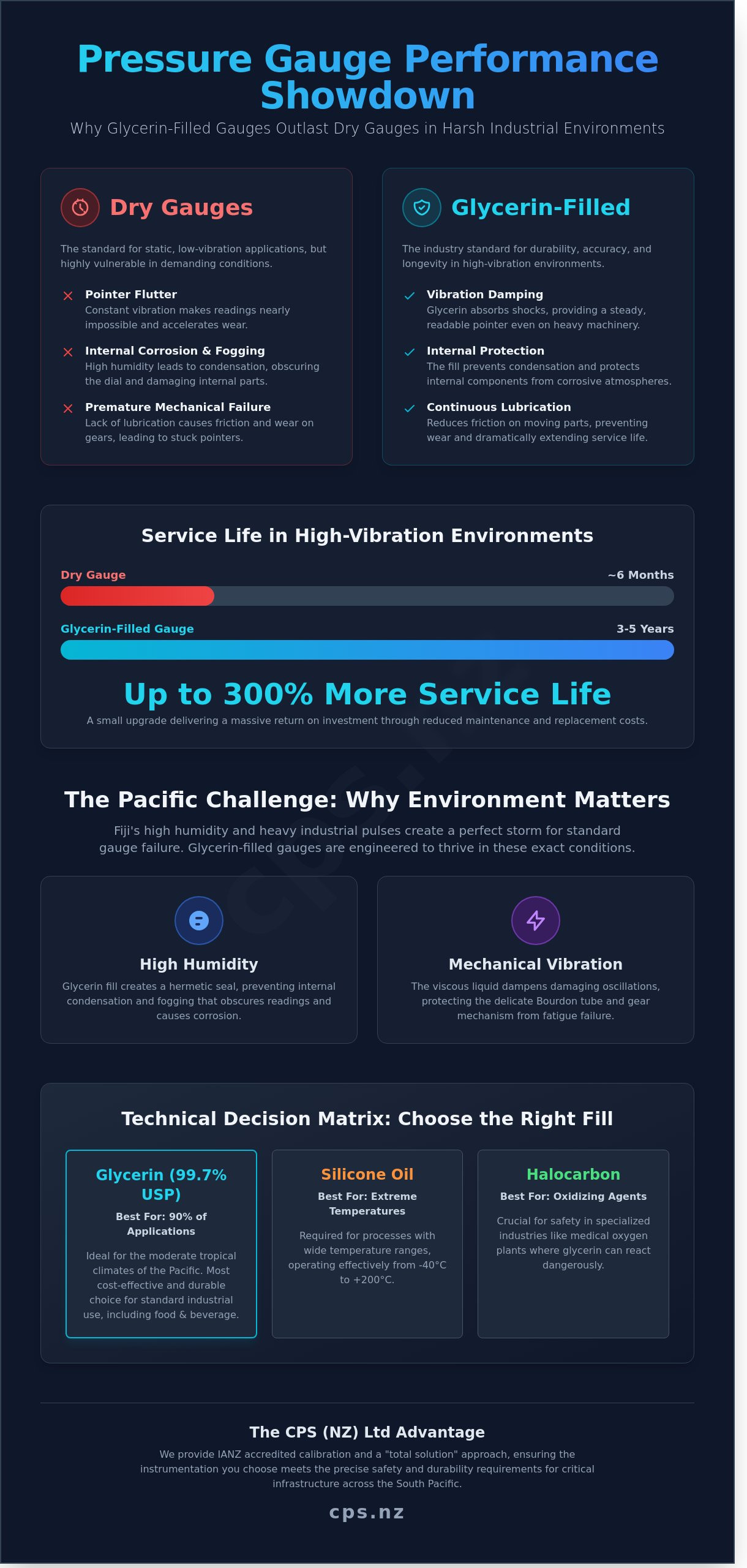
Fiji's industrial landscape presents a unique set of environmental stressors that standard dry gauges aren't built to withstand. In regions like Suva, where relative humidity levels often exceed 80%, the temperature fluctuations between a cool morning and a 32°C afternoon create a "breathing" effect in dry gauges. As the internal air expands and contracts, it draws in moisture-laden air through the case seals. This leads to internal condensation, rendering the dial unreadable and eventually corroding the delicate internal movement. We've seen this cycle lead to premature equipment failure in as little as four months in tropical processing plants.
Standard dry gauges frequently "fog up" because they contain a pocket of air. In the intense Fiji heat, this moisture traps against the lens. By choosing a gauge filled with glycerin, you eliminate the internal air space entirely. There is no room for moisture to accumulate. This ensures the dial remains crystal clear, preventing the 12% to 15% margin of error often caused by technicians "guessing" a reading through a clouded lens. Clear visibility is vital for maintaining the strict safety protocols required in modern steam or hydraulic systems where precision isn't optional.
Coastal facilities in Lautoka or the Port of Suva face relentless salt-air exposure. Sodium chloride particles are highly invasive and accelerate the degradation of brass internals. A liquid-filled casing acts as a physical barrier. It seals the gears and springs away from the atmosphere. For a "total solution" in durability, we recommend combining glycerin filling with a 316 stainless steel casing. This combination typically extends the service life of a gauge by 3 to 5 years compared to dry alternatives in maritime environments. It's the difference between a reliable monitoring system and a constant maintenance headache.
In a 2024 assessment of a marine engine room operating out of Denarau, dry gauges were failing every six months due to a combination of 95% humidity and constant hull vibration. The vibration caused the pointers to flutter, making accurate pressure checks impossible for the engineers. After transitioning to our liquid-filled units, the facility reported zero fogging issues and a 40% reduction in replacement costs over an 18-month period. We don't just supply a component; we provide the exact specification needed for the Pacific's toughest environments. Our expertise ensures your instrumentation survives the climate, so you don't have to worry about the next tropical downpour or coastal breeze affecting your production line.
Accuracy depends on more than just the internal mechanism. After installation, you must vent the gauge. Most high quality units feature a small rubber nipple or a lever on the top of the casing. Snip the tip or flip the lever to equalise internal pressure with the atmospheric pressure. Skipping this step can lead to a 2% to 5% error in your readings, which is unacceptable in precision industrial applications.
In low-vibration indoor settings, a dry gauge typically saves between 15% and 25% on unit costs compared to liquid-filled alternatives.
If your process involves temperatures outside the -20°C to +60°C range, a standard fill will either freeze or degrade.
Certain food and beverage processing lines in New Zealand require specific sanitary dry designs to prevent any risk of process contamination, even with food-grade fills.
Glycerin discolouration is a common concern for site managers. This usually happens because of two factors: prolonged UV exposure or excessive heat. Exposure to direct sunlight for more than 500 hours can cause the fluid to turn yellow. If the fluid turns dark brown, it's a sign that the ambient or process temperature is consistently exceeding the gauge's rating. You don't always need to replace the unit. You can drain the discoloured fluid, flush the case, and refill it with fresh, high-purity glycerin to restore clarity.
Safety is the most critical part of the selection process. Never use a liquid-filled gauge for oxygen service. The reaction between oxygen and organic oils is highly combustible. For oxygen applications, we only supply specialized dry gauges or those filled with inert fluorinated fluids. Using the wrong fill in these environments creates a significant explosion risk that puts your entire team in danger.
Since 1989, CPS (NZ) Ltd has functioned as the primary authority for pressure instrumentation across New Zealand and the South Pacific. We aren't a company that simply imports products to make a quick profit. We're technical partners who understand the rigours of Fiji’s industrial landscape. Whether you are deploying glycerin filled gauges for high-vibration environments or dry gauges for static loads, the hardware is only half the story. The true value lies in the technical support and certification that follows the sale.
We provide the total solution. Many suppliers sell you a gauge and leave you to source your own adapters or worry about accuracy levels. We don't operate that way. We do the fittings, we do the hoses, we do the calibrations, and we provide the protective cases. This end-to-end approach ensures that your equipment is ready for immediate service the moment it reaches your facility in Suva, Nadi, or Lautoka.
Liquid-filled gauges, particularly those using glycerin, require expert handling during the calibration process to ensure internal pressures are equalised and readings are true. Our IANZ accredited laboratory provides the highest level of certification available, ensuring your equipment meets 2026 international standards for traceability. For Fiji businesses, this isn't just about paperwork; it's about safety. Inaccurate pressure readings can lead to a 12% increase in system energy waste and significant safety risks. You can find more detail on these technical requirements in our sibling article, The Comprehensive Guide to Pressure Gauges for Fiji Industries (2026).
Fiji’s unique environmental conditions, from high humidity in sugar processing to salt spray in marine sectors, demand tailored equipment. We offer "plug and play" kits that are customised to your exact onsite requirements. These kits include:
• High-quality pressure gauges calibrated to IANZ standards.
• Application-specific fittings and high-pressure hoses.
• Ruggedized transit cases for field use.
• Full technical documentation for local regulatory compliance.
Our commitment to your operation doesn't end at the point of sale. We provide after-sales support that ensures your facility is never left stranded by a technical failure. We encourage Fiji plant managers to consult with our team for site-specific equipment audits to identify potential points of failure before they cause a shutdown. To secure your facility's accuracy, contact our Auckland or Fiji experts for a custom quote and let us build the total package for your needs.
Selecting the correct pressure gauge is a vital step in maintaining operational safety across Fiji's industrial landscape. Standard dry gauges frequently struggle with high humidity and mechanical vibration; this leads to premature failure and inaccurate readings. Opting for a high-quality glycerin fill provides the internal dampening required to protect your equipment and ensure long-term reliability in tropical conditions.
CPS (NZ) Ltd offers a total solution that goes beyond simple product supply. With over 35 years of industry expertise and our IANZ accredited calibration labs, we provide the technical assurance your business requires. We do the fittings, we do the hoses, and we do the calibrations to ensure you're never left stranded. Our specialised Fiji industrial support team understands local challenges and delivers the precision and traceability that modern industry demands.
View our range of professional glycerin-filled gauges and calibration services
We're ready to help you secure your infrastructure with world-class instrumentation today.
The primary difference lies in the internal dampening fluid used to protect the movement. Glycerin-filled gauges use high-purity glycerin to lubricate moving parts and absorb vibration, whereas dry gauges rely on an air-filled casing. In high-vibration Fiji processing plants, a dry gauge's needle often fluctuates wildly, which leads to mechanical wear within 6 months. A filled gauge provides a steady reading and extends the instrument's lifespan by up to 300%.
You can only add liquid to gauges specifically designed as "fillable" models. These units feature a sealed casing and a removable fill plug on top. Attempting to fill a standard dry gauge will result in leaks through the dial or case seams because they lack the necessary O-rings. We recommend purchasing pre-filled units from our Auckland facility to ensure a 100% bubble-free finish and guaranteed seal integrity.
Glycerin turns yellow due to prolonged exposure to UV radiation or temperatures exceeding 60°C. In tropical climates like Fiji, intense sunlight causes a chemical breakdown of the fluid over a period of 12 to 24 months. While the yellow tint doesn't immediately stop the gauge from working, it reduces visibility and indicates the fluid is degrading. We suggest replacing the fluid or the instrument once the discoloration obscures the scale.
Food-grade glycerin is safe for the Fiji food industry when it meets USP or BP purity standards. At CPS, we supply gauges filled with 99.7% pure vegetable glycerin that's non-toxic and safe for incidental food contact. For high-risk zones, we provide a total solution using food-safe silicone oil or specialized diaphragm seals to prevent any process contamination in the event of a lens failure.
You vent a gauge by cutting the tip of the rubber fill plug or moving the vent lever to the "open" position. This allows internal and atmospheric pressure to equalize. If you don't vent the gauge after installation, internal pressure build-up from Fiji's ambient heat can cause an accuracy offset of 1% to 2%. Always perform this step once the gauge is mounted vertically to prevent fluid loss.
A liquid fill doesn't negatively affect calibration accuracy if the gauge is properly vented. Our IANZ accredited laboratory tests show that unvented gauges can shift by 0.5 bar due to temperature-induced expansion of the liquid. Once the internal pressure is equalized, the dampening effect actually makes it easier to achieve a precise reading during the calibration process. We ensure every unit is calibrated to NZ standards before dispatch.
A leak creates a slip hazard and results in the loss of the gauge's vibration-dampening benefits. Because the fluid is water-soluble, you can clean it with warm water and standard detergents. However, a leak usually indicates a perished seal or a cracked lens. We advise replacing the unit immediately to prevent moisture from entering the casing and corroding the internal 316 stainless steel movements.
Standard glycerin is effective in temperatures ranging from -20°C to +60°C. In Fiji's industrial environments, ambient temperatures rarely drop below 15°C, but machinery heat can easily exceed the 60°C upper limit. If your process reaches 100°C or higher, we recommend using silicone oil instead. This ensures the fluid remains stable and doesn't expand enough to damage the gauge casing or blow out the fill plug.