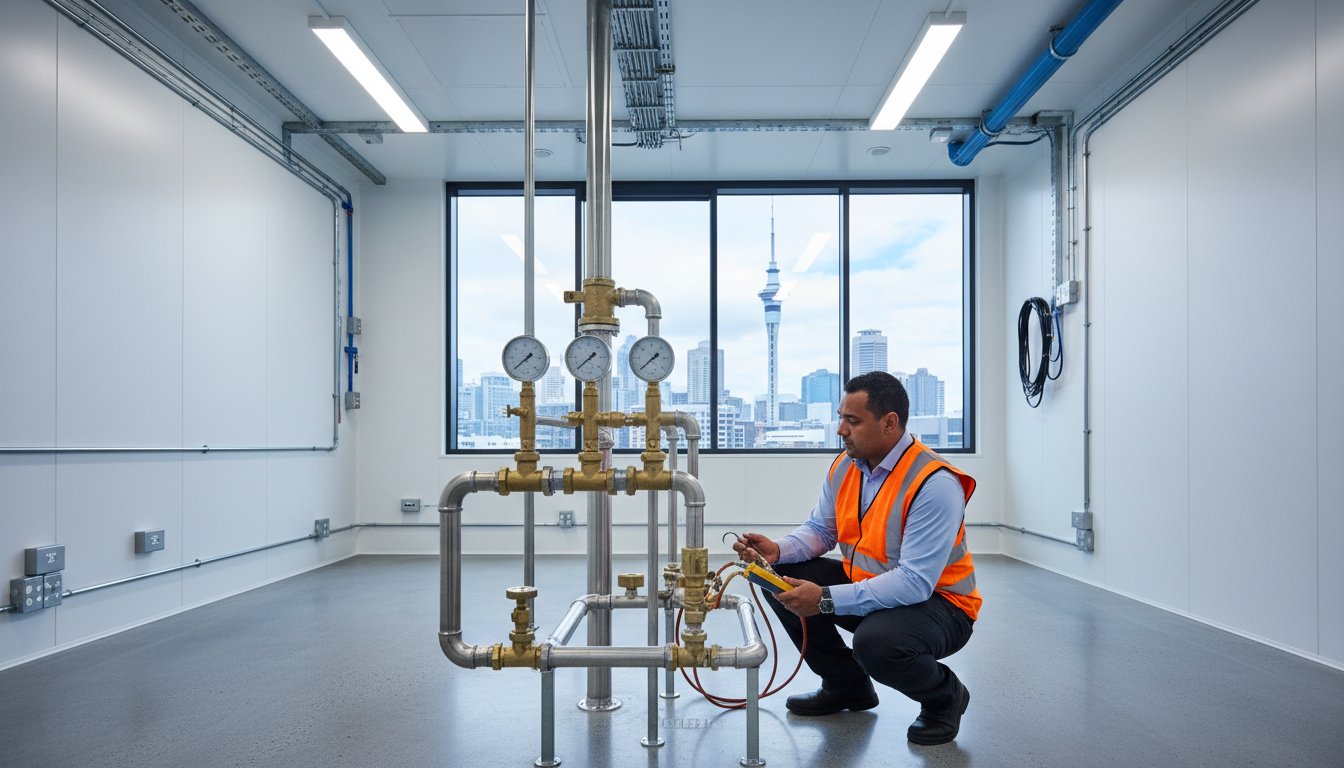



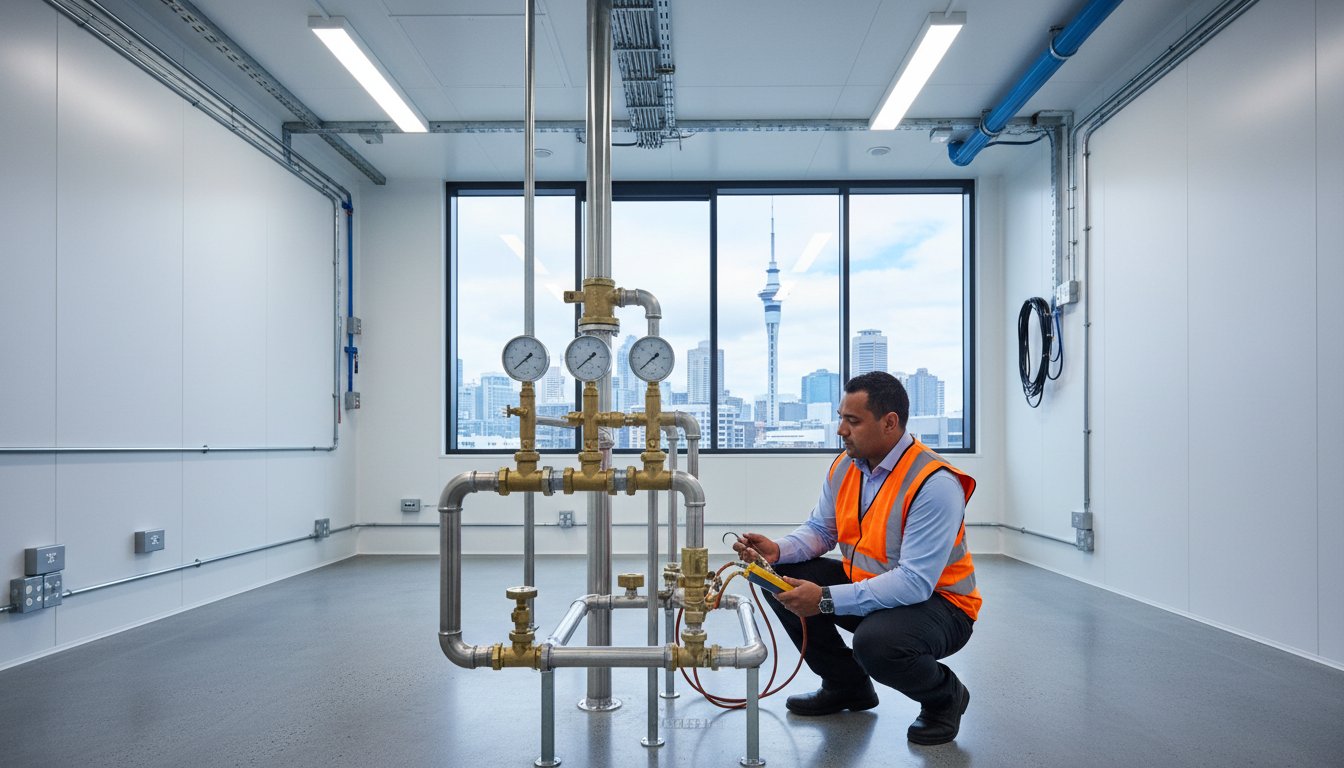
What if a minor pressure drop in your local water main turned your facility's internal waste into a NZ$50,000 liability overnight? It's a scenario that keeps many New Zealand site managers awake, especially as councils tighten enforcement of the NZ Building Code G12. Installing a backflow preventer is the first step, but simply having a device on-site doesn't guarantee your water remains safe or your business stays compliant.
We understand that deciphering the specific requirements for high-risk versus medium-risk hazards often feels like a moving target. You likely already know that failing to meet Watercare or local council mandates results in more than just a stern letter; it risks the integrity of our community's drinking water. This guide will help you master the technical differences between various devices and ensure your facility meets every safety standard required for 2026. We'll break down the mechanics of backflow prevention, show you how to select the right hardware for your specific risk level, and clarify exactly when you need testing versus full calibration to maintain your IANZ-traceable records.
• Understand the critical physics of backpressure and backsiphonage to protect your facility’s potable water from hazardous contamination.
• Learn why a standard check valve fails to meet NZ safety standards and when you must install a high-redundancy backflow preventer to remain compliant.
• Compare RPZ, DCV, and PVB assemblies to determine the precise level of protection required for your site's specific risk category.
• Master the requirements of NZ Building Code Clause G12, including the mandatory annual testing protocols performed by an Independently Qualified Person (IQP).
• Discover the "total solution" advantage for sourcing, installing, and managing accredited calibration to ensure long-term system reliability.
A backflow prevention device is a specialized mechanical assembly designed to stop the reverse flow of non-potable water into the clean water supply. In New Zealand, these units are mandatory for any commercial or industrial site where a cross-connection risk exists. Whether you're managing a food processing plant or a chemical lab, a backflow preventer acts as a fail-safe barrier. It protects the integrity of the public infrastructure and ensures your facility doesn't become the source of a local health crisis. Without these devices, bacterial contaminants, industrial chemicals, or stagnant water could migrate into the drinking water shared by your community.
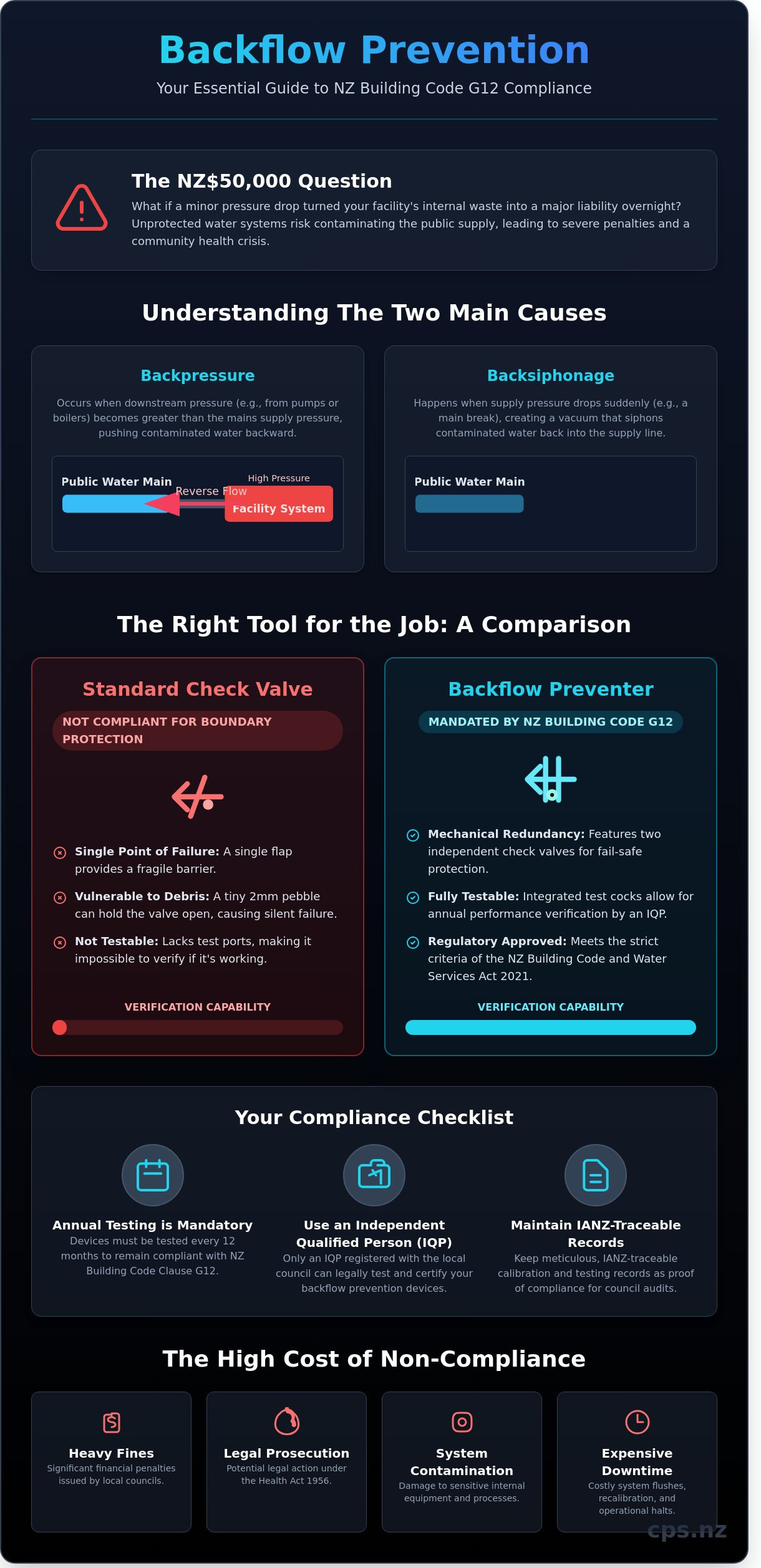
Understanding the physics of water movement is essential for proper system design. Backpressure occurs when the pressure on the customer side of the meter exceeds the supply pressure from the street. This is common in systems using high-head pumps or pressurized boilers. Backsiphonage happens when the supply pressure drops significantly, often due to a nearby water main break or high-volume firefighting activity. This drop creates a vacuum that pulls water backward through the system. While backpressure is a result of downstream force pushing water toward the source, backsiphonage is a suction effect caused by a pressure loss in the main supply line.
Non-compliance isn't just a technical oversight; it's a significant legal liability. The Health Act 1956 and the NZ Building Code G12 require annual testing of these devices by an Independent Qualified Person (IQP). If you fail to maintain your valves, you risk heavy fines and potential prosecution from local councils. Beyond the legal risks, backflow events can introduce contaminants that ruin sensitive instrumentation and reference equipment.
We've seen industrial cases where mineral buildup or chemical ingress from a backflow event fouled pressure transmitters and control valves. This leads to expensive downtime and requires a total system flush and recalibration. Maintaining your backflow preventer is the only way to ensure your process-critical applications remain accurate and your site remains compliant with New Zealand standards. It's about protecting both the public and your own internal infrastructure from preventable damage.
A standard check valve relies on a single internal flap to stop reverse flow. It's a fragile line of defense. If a small pebble or a bit of pipe scale, as small as 2mm, gets lodged in the seat, the valve stays partially open. Contaminants then enter the main water supply without any external sign of failure. This lack of redundancy is why NZ Building Code G12 mandates a more robust backflow preventer for boundary protection and high-hazard applications.
A check valve is a basic mechanical gate. You'll often find them in domestic pumps or small internal loops where the risk to the public is negligible. The primary issue is vulnerability. A single grain of grit prevents a tight seal. Because these valves lack test ports, there's no way to confirm they're actually working without dismantling the pipework. New Zealand authorities don't accept them for boundary protection because they provide zero verification capability.
A backflow preventer is a sophisticated assembly designed for high-stakes environments. These units include two independent spring-loaded check valves. In Reduced Pressure Zone (RPZ) models, a relief valve is also included to dump water if the pressure differential drops. Reliability is paramount in medical facilities or chemical plants. Annual testing via integrated test cocks ensures the device meets the strict criteria set by local councils and the Water Services Act 2021.
The difference in testability is the most significant factor for compliance. You can't verify a check valve's performance under pressure, but a preventer allows for annual, IANZ-traceable checks. Technicians use these ports to ensure the device holds pressure at specific levels, typically 7kPa or higher. This verification is a legal requirement for all registered devices in New Zealand to prevent cross-contamination.
Preventers use dual checks; if one fails, the second holds.
Only testable preventers satisfy the 2021 Water Services Act for medium to high-risk sites.
Integrated test cocks allow for onsite performance audits without system teardowns.
While a check valve costs as little as NZ$45, a failure can lead to fines exceeding NZ$50,000.
Investing in a dedicated preventer is about long-term risk management rather than just initial hardware costs. For those managing complex commercial systems, using precision calibration equipment ensures your testing remains accurate and compliant with national safety standards. A preventer isn't just a valve; it's a verifiable safety system that protects your site and the wider community from accidental water poisoning.
Selecting the correct backflow preventer isn't just a technical choice; it's a legal requirement under the New Zealand Building Code G12. Failure to match the device to the site's hazard level can lead to system contamination or failed IQP audits. We've seen roughly 15% of commercial installations require retrofitting because the initial hardware didn't meet the specific risk category of the facility. You must align your equipment with the documented risk levels to ensure both safety and compliance.
The Reduced Pressure Zone (RPZ) assembly is the most secure mechanical protection available for high-risk contamination. It features two independent check valves separated by a pressure-monitored relief valve. This relief valve maintains a zone of lower pressure between the checks. If a leak occurs or backpressure builds, the valve opens to the atmosphere, creates a physical air gap, and dumps the potentially contaminated water. This "fail-safe" design is mandatory for high-risk environments such as:
• Hospitals and dental surgeries where biohazards are present.
• Chemical processing plants and laboratories.
• Commercial car washes using recycled water or detergents.
Because these units have moving parts and internal springs, G12 regulations require annual testing. Our team provides the total solution, ensuring your RPZ is calibrated and verified to protect the public water main. We don't just supply the valve; we ensure it's backed by the necessary certification for your annual building warrant of fitness.
For medium-risk cross-connections, a Double Check Valve (DCV) is often the standard. These units use two independent checks to stop reverse flow, but they don't have a relief port to discharge water. They're effective for fire sprinkler systems or commercial kitchens where the risk is considered moderate. They don't provide a visual indicator of failure like an RPZ does, which is why they're restricted to non-toxic applications.
Pressure Vacuum Breakers (PVB) are specialized for backsiphonage only. They're common in irrigation but have a critical limitation: they can't handle backpressure. If your system includes a pump or an elevated tank, a PVB won't work. When selecting your backflow preventer, we calculate the exact flow rate and pressure drop for your specific instrumentation. This ensures your site stays compliant without compromising the performance of your downstream equipment or causing unnecessary pressure loss in your primary lines.
Compliance in New Zealand isn't a suggestion; it's a legal requirement under the Building Act 2004. The NZ Building Code Clause G12 (Water Supplies) dictates that any connection to a potable water system must prevent contamination. For most commercial and industrial sites, this means installing a verified backflow preventer at the boundary. These devices act as the primary defense for the public water supply, ensuring that high-risk fluids can't siphon back into the city mains during a pressure drop.
The Building Code Clause G12/AS1 specifically classifies risks into three levels: high, medium, and low. If your facility handles chemicals or biological agents, you're likely in the high-risk category, requiring a Reduced Pressure Zone (RPZ) valve. You're responsible for the ongoing maintenance of these units. Failing to keep up with the 12-month inspection cycle can lead to the loss of your Building Warrant of Fitness (BWoF), resulting in heavy fines or water service disconnection.
During a standard annual test, an Independently Qualified Person (IQP) performs a series of pressure differential checks. They monitor the internal springs and check valves to ensure they close tightly when backpressure occurs. For an RPZ valve, the relief valve must open when the pressure differential drops below 14 kPa. This precision requires specialized equipment that's as reliable as the valve itself.
Testing the device's mechanical function is only half the job. While the IQP confirms the valve works, the equipment they use must be accurate. To maintain legal compliance, every IQP must ensure their test equipment undergoes IANZ-traceable calibration every 12 months to verify the accuracy of the pressure readings. We provide the total solution by offering calibrated test kits that meet these exact standards, ensuring your documentation stands up to council scrutiny.
Auckland’s Watercare has some of the strictest enforcement policies in the country. They focus heavily on boundary protection, which is the device located at the point of supply from the street. In contrast, regional councils like the New Plymouth District Council, which covers Bell Block, may have different reporting formats for their IQP registers. Regardless of the region, the distinction between boundary protection and internal protection is clear: the council protects the street, while you protect your staff and onsite processes.
Finding an accredited service provider is straightforward through local council databases. For those in Auckland or Bell Block, ensure your technician uses IANZ-accredited labs for their tool calibration. We've supported NZ industries for over 35 years, providing the reference equipment needed to keep these systems running safely.
CPS (NZ) Ltd isn't a company that just imports and sells stuff to make a buck. We've spent over 35 years building a reputation as NZ's leading experts in pressure and safety instrumentation. When you source a backflow preventer through us, you aren't just buying a valve; you're investing in a total solution that ensures long-term compliance and industrial safety. We partner with world-leading manufacturers to provide high-precision equipment that meets New Zealand’s rigorous regulatory demands and high standards.
Our approach centers on the "Total Solution" philosophy. We don't just supply a component and leave you to figure out the rest. We provide:
• Sourcing of high-precision hardware from trusted global partners.
• Full supply, installation guidance, and accredited calibration.
• Instrumentation-grade quality specifically designed for industrial safety.
• Expert support to ensure your safety valves and gauges work in perfect harmony.
We don't settle for "off-the-shelf" quality. Every piece of hardware undergoes a strict technical vetting process before it reaches our warehouse. Our backflow preventer units are designed for seamless integration with digital pressure gauges and modern monitoring systems, ensuring traceability for every test. We provide custom "plug and play" kits for onsite technicians. These kits include the necessary fittings, hoses, and calibrated reference equipment, all packed in a durable carry case. This eliminates the guesswork and ensures your team has everything required for a successful installation or test from day one.
Reliability is built on more than just the initial sale. Our IANZ accredited labs provide the high-level calibration required to keep your systems legal and functional under strict regional codes. Because we've operated for over 35 years, we understand that industrial environments are harsh. We focus on instrumentation-grade quality that survives these conditions. Our team offers dedicated technical training and after-sales support, so you're never left stranded with a technical failure. Whether you need a single valve or a fleet of calibrated test kits, we provide the expertise to keep your infrastructure safe. Contact the experts at CPS for your backflow and calibration needs.
Maintaining water safety isn't just a best practice; it's a legal mandate under New Zealand's G12 Building Code standards. As the 2026 compliance updates approach, choosing the correct backflow preventer for your specific hazard level is critical for operational safety. Whether your site requires a Reduced Pressure Zone (RPZ) device for high-hazard zones or a Double Check Valve (DCV) for medium-risk applications, the technical specifications must be exact to pass inspection. CPS (NZ) Ltd has served the local industry for over 35 years, providing the deep expertise required to navigate these complex regulations. We don't just supply hardware. We operate IANZ Accredited Calibration Labs to ensure every component performs to its rated specification. Our team delivers a total solution that includes supply, precision calibration, and long-term technical support. This comprehensive approach eliminates the risk of regulatory failure and protects your infrastructure from cross-contamination. You can rely on our proven track record to keep your systems fully compliant. Browse our range of high-precision safety and pressure valves to find the right fit for your facility. We're here to help you secure your water supply with confidence.
No, a backflow preventer is not the same as a simple check valve. While both prevent water from flowing backward, a check valve is a basic mechanical component often found in pumps or domestic lines. A backflow preventer is a testable assembly designed specifically to protect the public water supply from contamination. It features built-in test cocks and shut-off valves that allow technicians to verify its performance according to NZS 5807:1980 standards.
You must test your backflow preventer at least once every 12 months. This annual requirement is a legal mandate under the Health Act 1956 and the Building Act 2004 to ensure the device functions correctly. If you don't submit a passing test report to your local council within this timeframe, you risk receiving a formal notice to fix or a fine of up to NZ$20,000 for non-compliance.
The property owner holds the legal responsibility for the installation and maintenance of all backflow devices. You must engage an Independently Qualified Person (IQP) who's registered with your local regional council to perform the mandatory annual testing. CPS (NZ) Ltd supports these professionals by providing the high-precision calibration equipment required to ensure every test is accurate and compliant with New Zealand regulations.
If a device fails its test, it must be repaired or replaced immediately to maintain water safety. Most failures result from debris in the seals or worn-out springs, which an IQP can often fix on-site. Once the repairs are finished, the technician must perform a re-test. You're required to submit the final passing report to your council within 15 working days of the initial inspection.
You can't install a backflow preventer yourself because it's classified as restricted plumbing work under the Plumbers, Gasfitters, and Drainlayers Act 2006. Only a licensed plumber with a specific backflow endorsement can legally install these devices. Because these units protect the community from lethal contaminants, the installation must also be recorded on the building's Compliance Schedule and verified by the local authority.
A Reduced Pressure Zone (RPZ) valve is a high-protection device used for high-risk environments like chemical processing plants or hospitals. It's required over a Double Check Valve (DCV) when there's a risk of toxic substances entering the water supply. While a DCV is suitable for medium-risk sites, the RPZ includes a relief valve that creates a physical air gap if a leak occurs, providing the highest level of safety.
The backflow preventer itself requires annual testing, but the specialized gauges used to perform those tests must undergo annual calibration. At CPS (NZ) Ltd, we provide IANZ-accredited calibration for these field test kits to ensure they maintain a precision of +/- 2% or better. Local councils won't accept test results from an IQP if their equipment lacks a current, traceable calibration certificate.
You can identify your risk level by referring to the New Zealand Building Code Acceptable Solution G12/AS1. This document classifies properties into high, medium, or low risk based on the activities performed on-site. For instance, a hairdressing salon or a commercial laboratory is high risk, whereas a small retail shop with only a staff toilet is low risk. Your local council water team can provide a formal hazard assessment if you're unsure.