


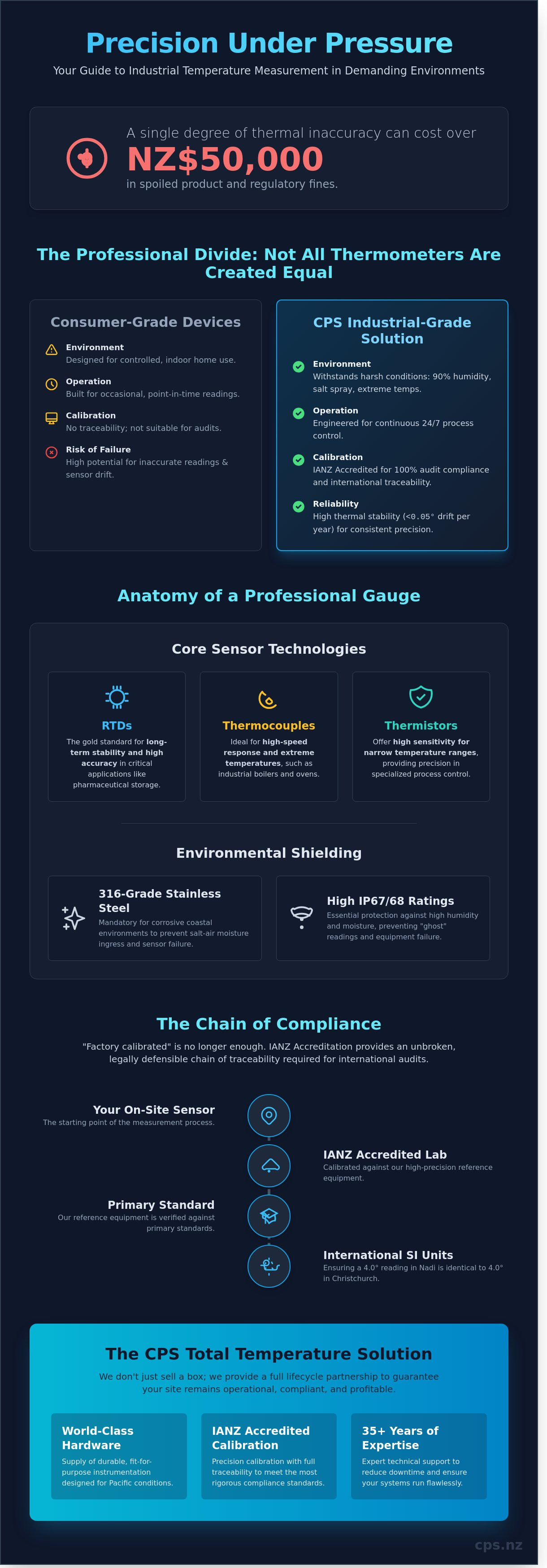
A single degree of thermal inaccuracy in a high-pressure food processing plant can cost a New Zealand manufacturer upwards of NZ$50,000 in spoiled product and regulatory fines. You likely already understand that in the varied demanding environments across New Zealand, from high humidity to salt-heavy coastal areas, a standard thermometer isn't just a tool; it's a critical point of failure. It's frustrating when equipment degrades prematurely or when you struggle to find reliable IANZ-accredited calibration that meets international standards.
CPS (NZ) Ltd is here to provide the total solution. This guide will show you how to select, calibrate, and maintain industrial-grade thermometers to ensure 100% compliance and precision in demanding New Zealand industrial environments. We'll walk you through durable tool selection to reduce downtime and help you establish a reliable calibration cycle that guarantees accuracy. You'll learn exactly how to protect your operations from the elements while maintaining the rigorous standards your industry demands. By the end, you'll have a clear roadmap for equipment that won't leave you stranded when accuracy matters most.
• Identify the technical specifications that separate a professional industrial thermometer from consumer-grade devices to ensure precision in demanding process control applications.
• Evaluate the shift toward contactless infrared technology against the enduring necessity of physical probes for accurate internal temperature measurement.
• Master environmental challenges like high humidity and salt spray to protect your instrumentation's battery life and operational integrity in Pacific conditions.
• Distinguish between simple factory verification and IANZ accredited calibration to meet rigorous New Zealand and Pacific compliance standards.
• Access a total temperature solution backed by 35+ years of expertise and an IANZ-accredited laboratory to ensure your site remains fully operational and compliant.
Industrial temperature measurement in 2026 is no longer about simple point-in-time readings. It's about continuous, high-fidelity data that stays accurate in the harshest conditions. A consumer thermometer is designed for occasional use in controlled environments, but industrial units must withstand 24/7 operation in Fiji's 90% humidity. Professional grade tools focus on thermal stability, ensuring the sensor doesn't "drift" more than 0.05 degrees over a year of heavy use. This level of precision is the difference between a successful batch and a total loss.
Choosing "cheap" alternatives is a gamble with your business liability. In the food export sector, a single inaccurate reading can trigger a full product recall, often costing upwards of NZ$120,000 in lost revenue and legal fees. We provide a total solution that covers the entire lifecycle of the instrument. This includes the initial supply of world-class hardware, precision calibration in our accredited labs, and the technical support required to keep your systems running without downtime. We don't just sell a box; we provide an insurance policy for your process control.
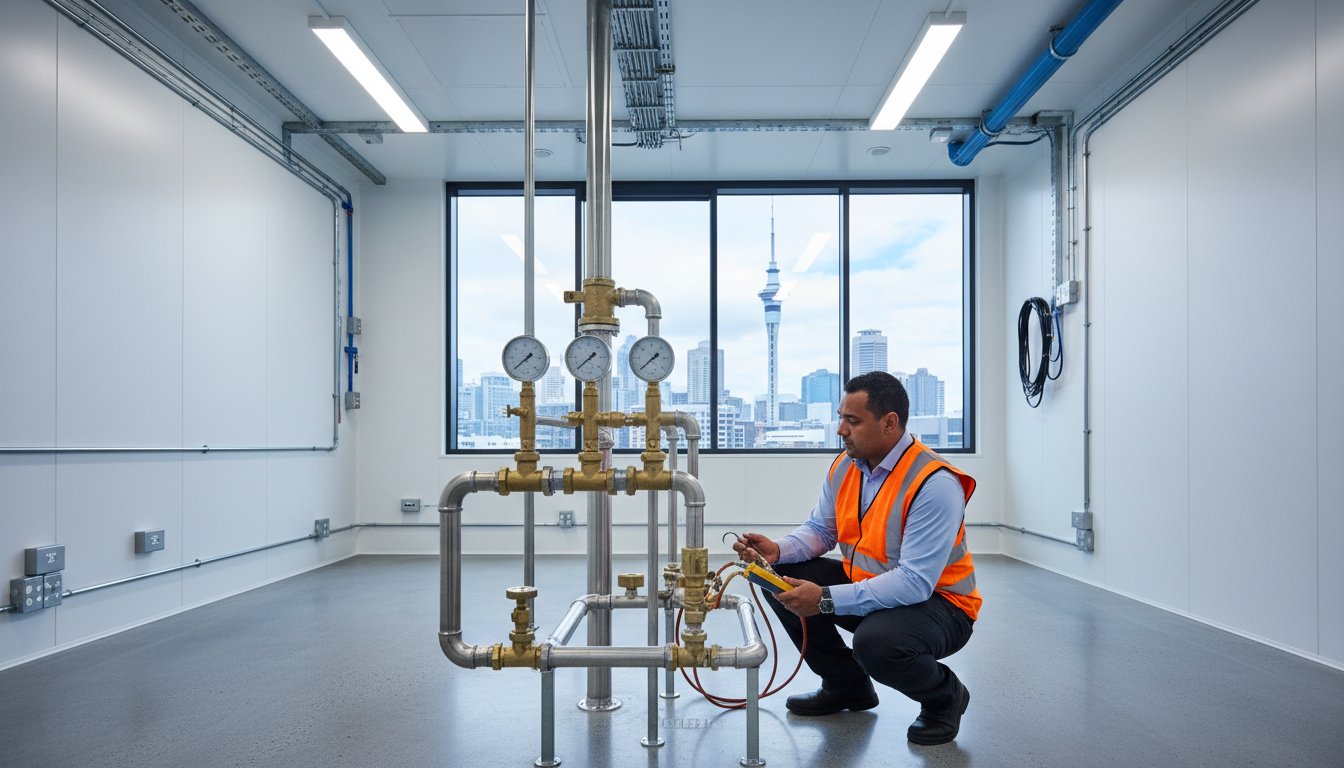
Professional gauges rely on three primary sensor technologies. Resistance Temperature Detectors (RTDs) are the gold standard for accuracy in pharmaceutical storage. Thermistors offer high sensitivity for narrow temperature ranges, while thermocouples handle the extreme heat of industrial boilers. Because Fiji's coastal environment is highly corrosive, we mandate 316-grade stainless steel housings and high IP ratings. These protections prevent salt-air moisture ingress that leads to "ghost" readings or total sensor failure. The total package approach ensures that every sensor is delivered as a ready to use system, complete with the correct fittings, protective housing, and a valid calibration certificate.
Precision is the foundation of the 2026 regulatory landscape. New Zealand standards for a digital thermometer now require absolute traceability to international SI units. This means every measurement is backed by a paper trail that leads back to a national metrology institute. Recent updates to food safety protocols in the Pacific region mean that "factory calibrated" is no longer enough for compliance during an audit.
The traceability chain is a rigorous process. It starts with your onsite sensor, which we compare against our reference equipment, which in turn is calibrated against a primary standard. This hierarchy ensures that a 4.0 degree reading in a Nadi cold store is exactly the same as 4.0 degrees in a Christchurch lab. We provide the documentation necessary to pass any international audit, protecting your brand's reputation and your bottom line. Our commitment to these standards ensures your business remains competitive in a global market that demands verified accuracy.
Best for long-term stability and high accuracy.
Ideal for high-speed response and extreme temperatures.
Essential for preventing failure in humid Fiji climates.
The legal requirement for defensible data in 2026.
We understand that instrumentation is an investment in your company's future. By focusing on the total solution rather than just the initial price tag, you eliminate the risks associated with equipment failure and regulatory non-compliance. Our experts are here to ensure your hardware is fit for purpose from day one.
Industrial data from 2024 indicates a 22% increase in the adoption of digital thermal solutions across the Pacific. By 2026, contactless infrared technology will likely become the primary screening method for 70% of Fiji's manufacturing sector. While speed is a major benefit, it's a mistake to rely solely on one method. Professionals understand that a high-quality
must be fit for purpose. Choosing the wrong sensor type leads to drift, inaccurate logs, and potential safety breaches. We don't just supply tools; we deliver the total solution to ensure your readings are defensible and accurate.
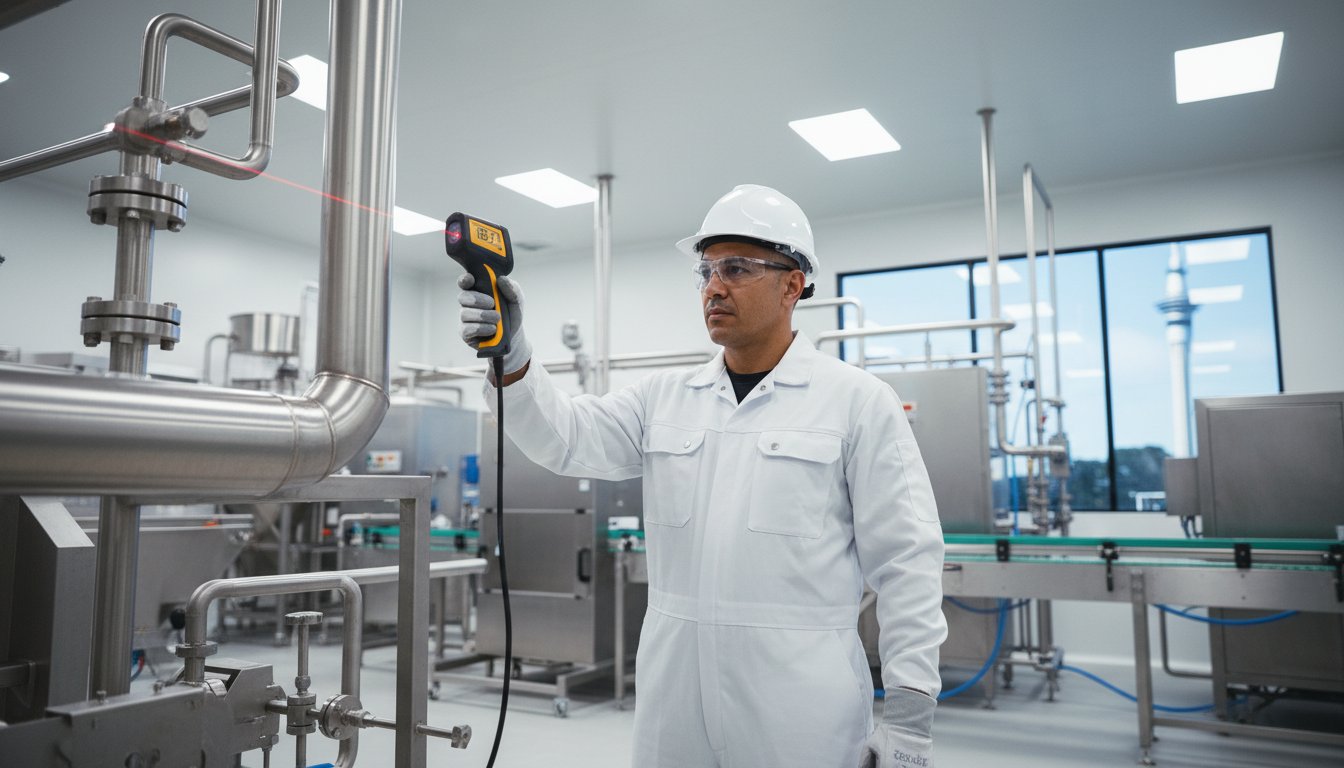
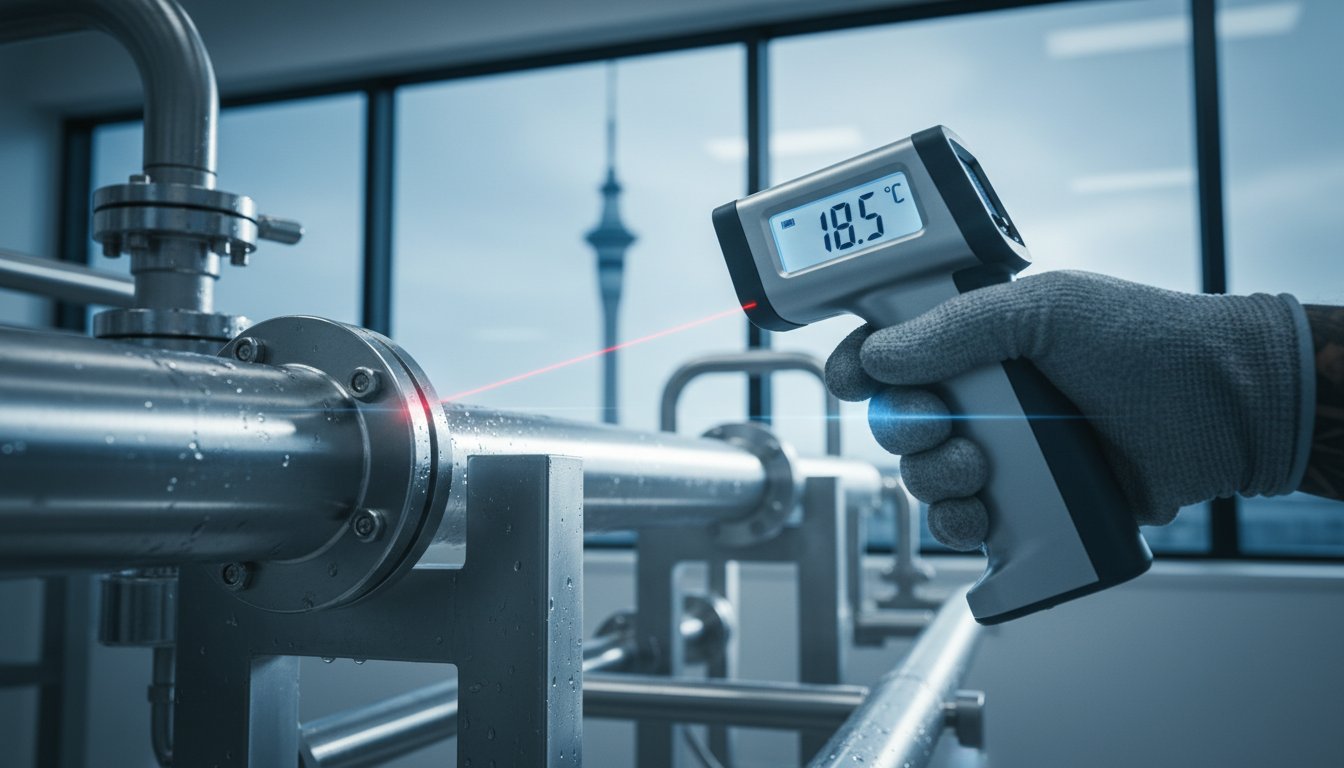
Infrared (IR) sensors measure surface energy rather than internal heat. This technology is indispensable for monitoring moving parts or high-voltage equipment at Fiji power plants where physical contact is dangerous. However, IR has distinct limitations. It cannot see through glass, steam, or heavy tropical humidity. Emissivity, the ability of a surface to emit thermal radiation, also plays a massive role. If you're measuring a polished stainless steel vat in a Lautoka food plant with a standard IR gun, your reading could be off by as much as 20% unless you adjust the emissivity settings.
IR serves best as a rapid screening tool. It identifies hotspots before they cause a total system shutdown. For formal regulatory compliance, contact measurement remains the gold standard. Most industrial operations in the region align their protocols with international calibration standards to ensure their IR devices stay within acceptable tolerances. Without regular verification against a known reference, an IR sensor's accuracy can degrade unnoticed over a 12-month period.
Physical probes are the workhorses of the food service and HVAC sectors. In a commercial kitchen in Nadi, a penetration probe is the only reliable way to verify internal cook temperatures for HACCP compliance. You have two main choices: fixed or interchangeable probes. Fixed probes generally cost less upfront, often priced around NZ$150 to NZ$250 for a reliable unit. However, interchangeable probes offer a better long-term ROI. If a cable breaks or a sensor fails, you only replace the probe attachment rather than the entire handheld unit.
Humidity is a constant threat in the islands. Moisture ingress can degrade sensor accuracy by 5% within just six months if the housing isn't properly sealed. We recommend using stainless steel shafts and IP67-rated connections to combat salt-air corrosion. Maintenance is straightforward but essential. You should clean probes with 70% isopropyl alcohol wipes after every use to prevent cross-contamination and mineral buildup. If you need help selecting a durable kit for your facility, we can provide a total package tailored to your onsite requirements.
Heavy industry applications, such as gold mining or cement production, require thermocouples. These sensors handle extreme ranges exceeding 1200°C where standard thermistors would simply melt. Type K thermocouples are the industry standard because they're rugged and respond to temperature changes in less than two seconds. Matching the right technology to your specific environment prevents frequent equipment turnover and keeps your operation running safely. Whether it's a fast-paced kitchen or a high-heat foundry, the right sensor is the foundation of your quality control system.
Operating in Fiji presents a unique set of challenges that standard off-the-shelf instrumentation cannot handle. The "Fiji Factor" involves an average relative humidity of 80% and constant exposure to coastal salt spray. These conditions often cause standard electronics to fail within 6 to 12 months. When you select a thermometer for your operations, you must prioritize ruggedized builds that prevent internal corrosion. CPS (NZ) Ltd has spent 35 years supplying equipment designed to withstand these exact tropical pressures. We don't just sell you a device; we provide a total solution that includes environmental protection and technical support.
Power management is another critical consideration for remote sites in Suva or Lautoka. Accessing specialized replacement batteries can take weeks if local stock runs dry. We recommend instruments with high-efficiency power profiles that offer 1,000+ hours of continuous use. For outdoor work, display readability is vital. High-glare environments require high-contrast LCDs with backlighting. This ensures your team can record accurate data without errors caused by poor visibility. Relying on NZ-based support means you avoid the delays of shipping equipment back to the Northern Hemisphere. We understand the Pacific logistics chain and ensure your tools remain operational year-round.
Protecting your
starts with an IP67 rating. This ensures the device is dust-tight and can survive immersion in water up to 1 meter deep. In Fiji, this protection is essential for Suva's heavy rainfall and high-humidity environments. You also need equipment that handles thermal shock. Moving a probe from a -20°C cold storage unit into 30°C ambient heat can cause condensation and sensor drift. Ensure your gear features chemical-resistant housings. This prevents the plastic from degrading when exposed to the harsh sanitation protocols required in food processing and medical facilities.
Fiji's tourism and hospitality sectors rely on precise HVAC and food safety monitoring to maintain international standards. Accuracy isn't optional when guest comfort and safety are on the line. For the agriculture and export sector, maintaining cold chain integrity is the difference between a successful shipment and a total loss. To ensure your data meets global trade requirements, your equipment should be part of an
. This provides the necessary traceability for Fiji produce entering New Zealand or Australian markets. In industrial manufacturing, such as sugar mills or boiler systems, high-temperature monitoring requires specialized probes that can withstand 400°C+ without losing calibration accuracy.
At CPS (NZ) Ltd, we don't just import and sell stuff to make a buck. We invest in the technology and the people to support your business. Our IANZ accredited labs ensure that every piece of equipment we supply is ready for the field. We do the fittings, we do the hoses, and we do the calibrations so you don't have to worry about the technical details. This comprehensive approach is why we are NZ's leading experts in temperature measurement solutions for the Pacific region. We provide the total package, calibrated and packed in custom carry cases, to ensure you're never left stranded with failing equipment.
Many Fiji businesses mistakenly rely on "Factory Calibration" certificates when they purchase new equipment. These documents often lack the traceability required by New Zealand and international regulatory bodies. A factory certificate is merely a snapshot taken at the point of manufacture. It doesn't account for the rigours of shipping or the specific environmental conditions of a Pacific facility. For compliance with ISO 9001 or food safety standards, you need more than a manufacturer's promise.
The technical difference between verification and IANZ accredited calibration is significant. Verification is a simple pass or fail check against a reference. In contrast, an IANZ accredited calibration involves a comprehensive technical procedure. It measures the specific uncertainty of your thermometer against a primary reference standard. This process provides a detailed map of how your instrument performs across its entire range. It ensures your data holds up under intense scrutiny during a Food Safety or MedSafe audit.
Electronic components and sensors naturally degrade over time. This phenomenon, known as measurement drift, can lead to costly errors. In a 2023 analysis of industrial sensors, roughly 14% of instruments showed significant deviation from their original accuracy within 12 months of deployment. Regular calibration cycles catch these errors before they lead to spoiled stock, failed batches, or regulatory fines. When you review your calibration certificate, you must look for three key data points: the IANZ logo, the statement of uncertainty, and the documented traceability to international standards.
IANZ (International Accreditation New Zealand) represents the highest level of technical competence. Because IANZ is a signatory to the ILAC Mutual Recognition Arrangement, certificates issued in our labs are legally recognized in Fiji and over 100 other economies. This global recognition is vital for exporters. Using uncalibrated instruments in a legal audit exposes your business to massive liability; corporate fines under the Food Act 2014 can reach NZ$100,000 for serious non-compliance.
Determining your calibration frequency depends on your specific risk profile and usage. If you're monitoring critical vaccines or high-value exports in a 24/7 environment, a 6-month cycle is the industry standard. For general ambient storage, a 12-month interval usually suffices. We offer both lab-based and on-site calibration to minimize your operational downtime. Our "No-Strand" support policy ensures you're never without a working, compliant tool. We provide the total solution, including loan units and proactive reminders for your next service. We don't just sell you a thermometer and walk away; we ensure it remains a reliable asset for years.
Ensuring your equipment is accurate is not just a box-ticking exercise. It's about protecting your brand and your bottom line. We manage the entire process, from the initial supply to the recurring technical support that keeps your facility running smoothly.
Book an IANZ accredited calibration today to secure your business compliance.
CPS (NZ) Ltd has spent over 35 years refining the science of temperature and pressure instrumentation. We don't operate like a typical importer that simply moves boxes to make a quick profit. Instead, we've positioned ourselves as technical partners who understand that a thermometer is only as reliable as the calibration and support backing it up. Since our establishment in 1988, we've invested millions into world-class reference equipment and specialized facilities to ensure our clients receive the most accurate data possible.
For our clients across the Pacific, the primary advantage of working with us is our IANZ-accredited laboratory. This accreditation isn't just a badge; it's a guarantee of traceability and international standards. When a Fiji-based food processor or industrial plant receives an instrument from us, they know it meets the strict regulatory requirements necessary for export and safety compliance. We bridge the gap between high-end New Zealand metrology and the practical, everyday needs of Fiji’s growing industrial sectors.
We pride ourselves on providing the "total solution." This philosophy means we take responsibility for every component of your measurement chain. We don't just supply a gauge and leave you to find the right adapters. We do the fittings, we provide the specialized hoses, and we perform the initial calibrations. Our custom "Plug and Play" kits are a direct result of this approach. These kits are tailored to specific Fiji industrial requirements, arriving fully assembled in rugged, custom-cut carry cases that protect your investment from the high humidity and harsh environments often found in tropical operations.
Our inventory features world-leading brands that set the global standard for accuracy and durability. We supply everything from basic handheld units to high-precision reference standards used in secondary laboratories. We understand that field technicians need more than just a bare instrument. That's why we offer specialized fitting solutions and protective cases that ensure your gear survives the trip from the workshop to the plant floor. You can explore our range of digital thermometers to find the exact model suited for your specific application, whether it's cold chain monitoring or high-heat manufacturing.
High-accuracy sensors for critical process control.
Ruggedized protection for field technicians working in the heat.
Every instrument is backed by data from our accredited lab.
Our commitment to the Fiji market is a long-term investment. We provide the technical assistance and training necessary to ensure your staff can operate complex instrumentation with confidence. We don't leave you stranded after the sale. If your facility is located in Lautoka or Suva, we can help you design a measurement strategy that accounts for local environmental conditions. We provide detailed, tailored quotes that reflect the total cost of ownership, ensuring there are no hidden surprises. Contact the experts at CPS (NZ) Ltd today for a total solution that keeps your facility running at peak efficiency with equipment you can trust for life.
Maintaining precise thermal control isn't just a technical requirement; it's a safety and quality imperative for every facility across New Zealand and the Pacific. Selecting the right thermometer involves matching advanced sensor technology with the specific humidity and salt-spray challenges found in Fiji industrial environments. Accuracy depends on rigorous traceability, and using an IANZ Accredited Laboratory ensures your data holds up under the strictest regulatory audits. CPS (NZ) Ltd provides the total solution that simple resellers can't match. We bring 35+ years of industry experience to every consultation and are already trusted by leading Fiji industrial facilities to maintain their critical infrastructure. We don't just sell equipment. We provide the fittings, hoses, and ongoing calibration that keep your operations running without downtime. You can rely on our world-class reference equipment to deliver results that protect your bottom line. It's time to eliminate the guesswork from your temperature monitoring and invest in a partnership built on technical excellence. Request a custom temperature measurement solution from CPS (NZ) Ltd and ensure your facility remains at the forefront of industry standards.
A thermocouple measures temperature through a voltage change between two dissimilar metals, while a digital thermometer probe typically relies on a thermistor or RTD sensor to measure resistance. Thermocouples offer a wider range, often reaching 1,600°C, which makes them ideal for industrial kilns or furnaces. Digital probes provide higher resolution and accuracy within the -50°C to 250°C range, making them the preferred choice for food processing and laboratory work.
You should calibrate your industrial thermometer at least once every 12 months to maintain compliance with food safety regulations. High-volume production environments often require a 6-month interval to account for mechanical wear and thermal stress. We recommend performing a monthly ice-point check to verify accuracy between professional lab visits. Our IANZ accredited laboratory provides full traceability for these annual requirements, ensuring your records satisfy 100% of audit criteria.
No, you cannot use an infrared thermometer to measure internal food temperatures because it only captures surface radiation. To ensure a core temperature of 75°C for 2 minutes, you must use a physical probe thermometer. Infrared units are excellent for non-contact scanning of incoming goods or cooling units to identify hot spots. We provide dual-sensor units that include both infrared and folding probes to give you a complete measurement tool for your facility.
CPS (NZ) Ltd provides comprehensive calibration support for Fiji businesses through scheduled technical site visits and our specialized calibration kits. We've supported Pacific industries for over 35 years with technical expertise that goes beyond simple product sales. For complex installations, our technicians travel to your site in Suva or Nadi to calibrate your equipment. Alternatively, you can ship instruments to our Auckland lab for a 5-day turnaround service.
IANZ accreditation signifies that our laboratory meets the ISO/IEC 17025 international standard for testing and calibration. For your business audits, this provides legally defensible proof of measurement traceability to national standards. Using an IANZ accredited provider means your thermometer readings are recognized globally. This level of certification eliminates the risk of audit failure, which can cost businesses upwards of NZ$5,000 in re-inspection fees and lost production time.
Thermometers drift due to mechanical shock, sensor aging, or exposure to temperatures outside their designed operating range. You can identify an inaccurate reading by performing a slush ice test, where the instrument should read exactly 0.0°C. If your device shows a variance of more than 0.5°C, it requires professional adjustment. Our 35 years of experience shows that even high-quality sensors can drift by 1°C or more after 12 months of heavy industrial use.
Digital thermometers are generally more accurate than analog gauges because they eliminate parallax error and mechanical lag. A standard digital probe offers accuracy within 0.1°C, while an analog dial gauge often has a margin of error of 1% to 2% of the full scale. Digital units also provide faster response times, often stabilizing in under 5 seconds. We recommend digital instrumentation for any process requiring precise control to maintain product quality and safety.
The best thermometer for Suva's 80% average humidity is a digital probe with an IP67 waterproof rating. These units feature sealed housings that prevent moisture ingress from damaging the internal circuitry and causing erratic readings. We supply specialized ruggedized instruments designed for tropical climates, ensuring your equipment doesn't fail during peak production. Investing in a high-quality, sealed thermometer reduces your replacement costs by 40% compared to using standard consumer devices.