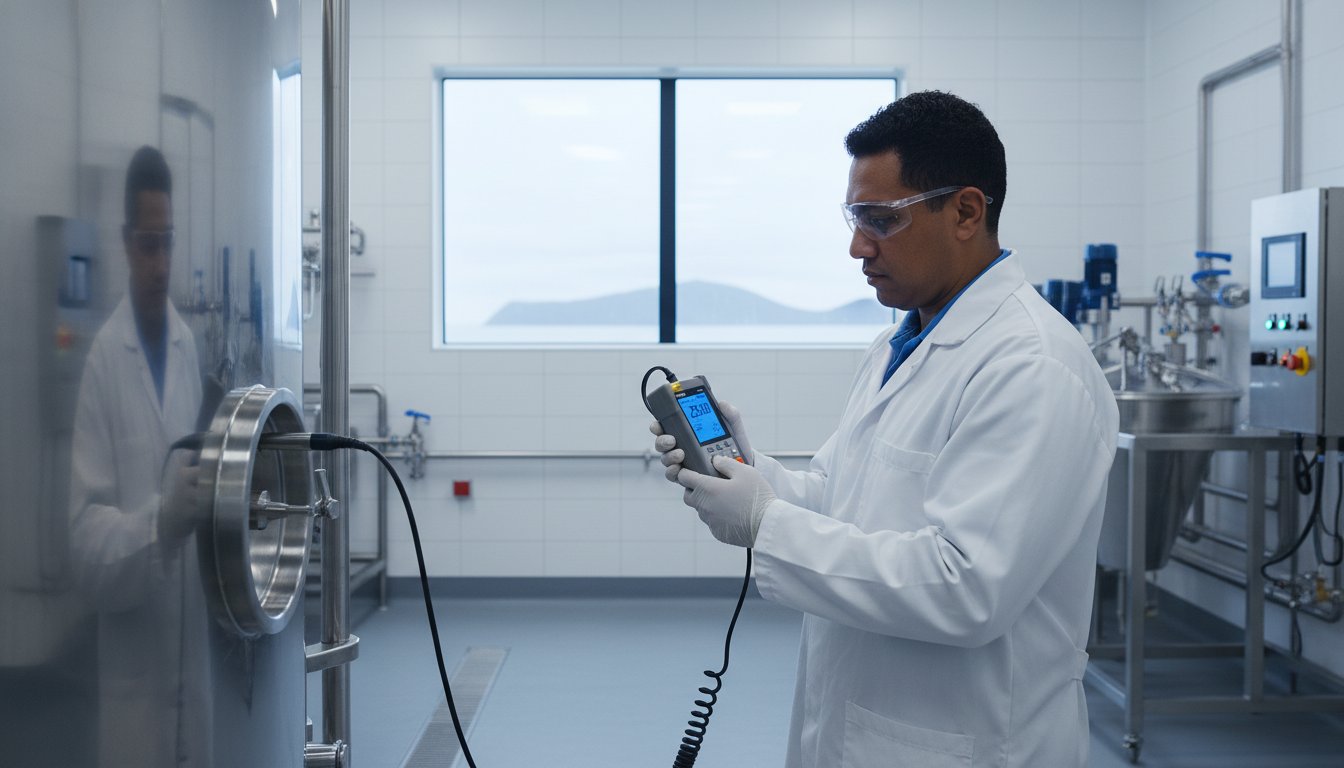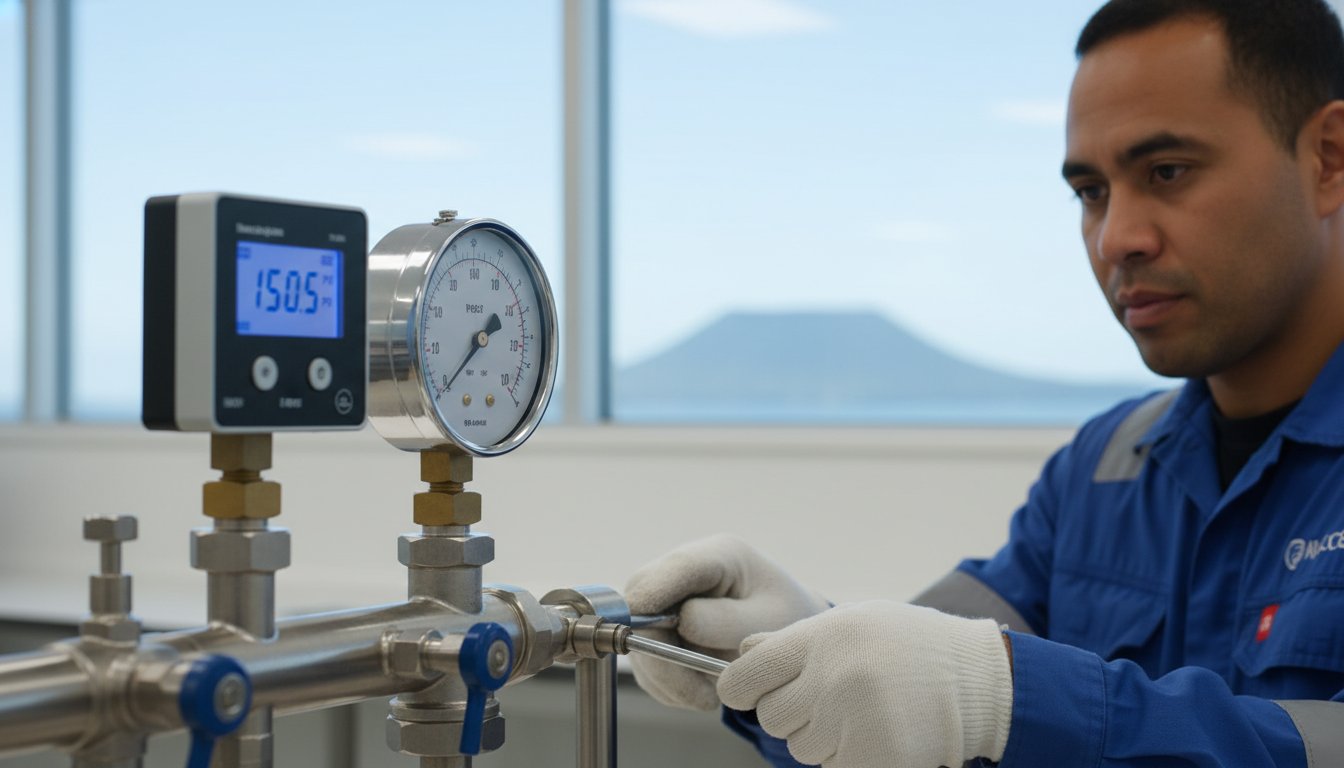



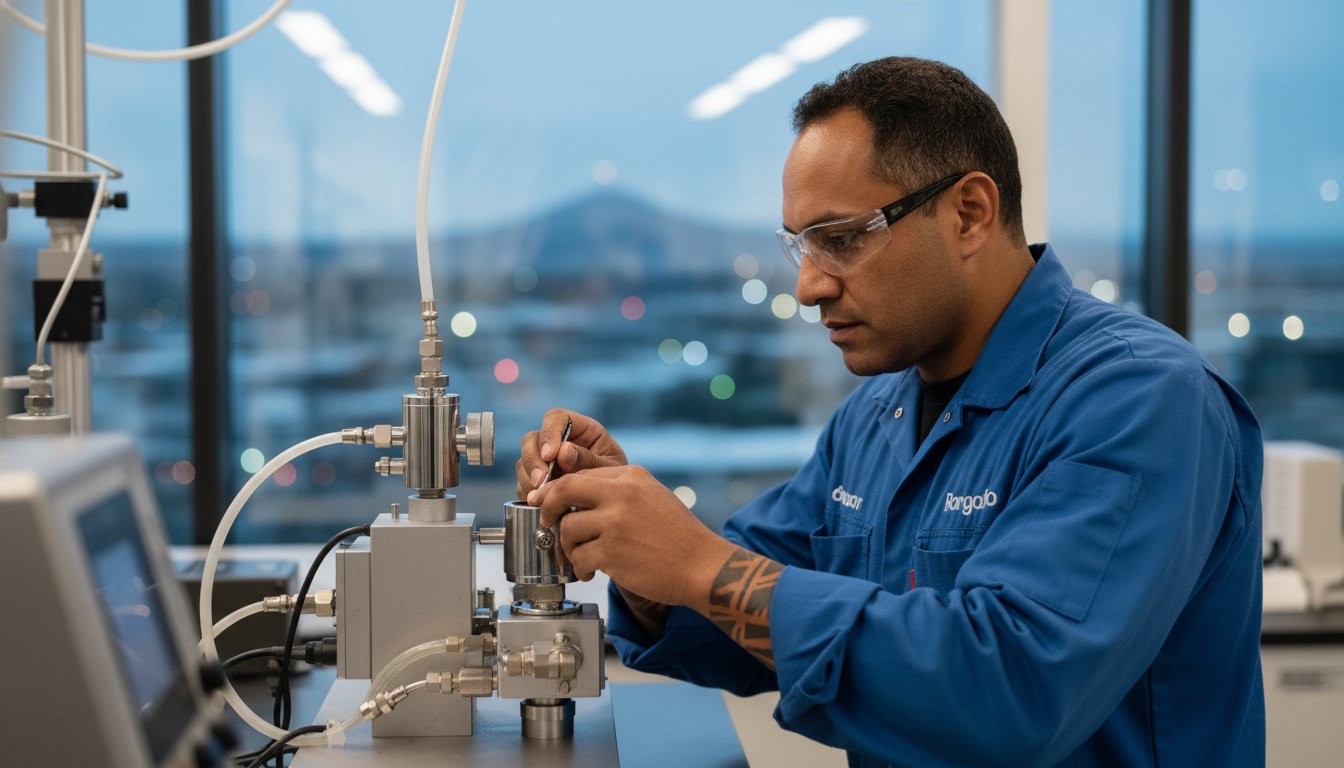
In New Zealand, there is no government-mandated regulation that dictates exactly how often to calibrate pressure gauges. While WorkSafe and MPI emphasize the general responsibility for equipment safety, the specific timing is left to your discretion. This lack of a rigid rule often leads to uncertainty, leaving site managers caught between the fear of a failed audit and the logistical headache of instrument downtime. Determining the right interval is not about following a calendar; it's a technical decision about managing risk and ensuring measurements remain traceable to national standards.
You likely share the common concern of whether to calibrate an existing unit or simply purchase a new one to avoid service delays. This expert guide will help you master the science of calibration intervals to ensure industrial safety and regulatory compliance. We'll explore the industry best practice of annual cycles, the requirements for IANZ-accredited laboratories under ISO/IEC 17025, and how to build a schedule that protects your equipment without causing unnecessary operational delays. You'll gain a clear, defensible strategy for your measurement and verification needs that aligns with New Zealand’s high standards of technical competence.
• Learn how often to calibrate pressure gauges by establishing a 12-month baseline and adjusting for the specific risk profile of your industrial application.
• Identify critical environmental stressors, such as mechanical vibration, that can compromise gauge accuracy and require more frequent verification intervals.
• Gain clarity on IANZ requirements and the necessity of maintaining traceability to national standards for audit compliance and export quality assurance.
• Evaluate the serviceability of your instruments using a clear decision matrix to choose between accredited calibration or the purchase of a new pressure gauge.
• Streamline your operations by partnering with a single-source provider for everything from equipment supply and installation to comprehensive on-site calibration services.
Calibration ensures that your instruments provide readings that reflect reality rather than just providing a ballpark figure. To understand What is Calibration?, you must look at the chain of traceability that links a single gauge on your factory floor back to national and international measurement standards. A functional check on-site might confirm that a needle is moving, but an accredited calibration certificate provides the documented evidence of accuracy and measurement uncertainty required for high-stakes compliance. This document is the only way to prove to auditors that your equipment operates within its specified tolerances.
Deciding how often to calibrate pressure gauges is a balance of operational risk and technical necessity. While every environment differs, the industry has settled on a specific baseline to maintain safety and quality control across New Zealand's industrial sectors.
The 12-month interval has become the global benchmark for most industrial applications. It aligns with standard ISO 9001 quality management systems and the typical IANZ audit cycles found in New Zealand. For Tier 1 instruments, statistical data suggests that the probability of significant accuracy loss within a one-year window is low under normal operating conditions. This interval provides a defensible schedule that satisfies most regulatory bodies while keeping maintenance costs predictable.
However, this baseline assumes the instrument is in active use or properly maintained. If you have new gauges that have been sitting in a warehouse for more than six months, they should be calibrated before installation. Time alone can affect an instrument's internal components. A "new" gauge isn't necessarily an "accurate" one if it has exceeded its verified shelf life before it ever sees a pressurized line.
Even the most expensive digital or mechanical gauges aren't immune to the passage of time. Drift is the gradual loss of accuracy due to mechanical or electronic aging. In mechanical gauges, this is usually caused by Bourdon tube fatigue or wear in the internal linkage. As the metal expands and contracts over thousands of cycles, its ability to return to a perfect zero point diminishes. This change is often microscopic at first but compounds over months of operation.
Environmental factors also play a role during storage. Temperature fluctuations and humidity can degrade internal lubricants or cause micro-corrosion in delicate parts. Because of these factors, calibration isn't just about how much you use the gauge; it's about the physical stability of the materials inside. Regular intervals ensure that this inevitable drift is captured and corrected before it leads to equipment failure or unsafe pressure spikes.
While the 12-month baseline provides a standard starting point, it isn't a universal rule for every instrument on your site. Technical specialists recognize that the environment and the application's criticality often override the calendar. Deciding how often to calibrate pressure gauges requires a detailed assessment of the physical stresses the instrument endures daily. If a gauge operates in a high-risk zone, waiting a full year for verification is a gamble that could lead to significant downtime or safety breaches.
Accuracy isn't a static quality. It degrades faster when instruments are pushed to their physical limits. If you're managing a facility where precision is tied to product quality or personnel safety, a more aggressive calibration schedule is a technical necessity rather than a suggestion.
Mechanical stress is the primary driver of instrument drift. Continuous vibration from heavy machinery or pumps causes friction in the internal gears and linkages, leading to premature wear. Pulsation, which involves rapid pressure fluctuations, can fatigue a Bourdon tube far quicker than a steady load. In these scenarios, the National Institute of Standards and Technology highlights the importance of regular traceability to ensure that these stresses haven't pushed the device out of its tolerance band.
We recommend shifting to a 3-6 month calibration interval for gauges located in high-stress zones. You can identify these areas by looking for:
• Pump discharge lines where rapid cycling is common.
• Mounting points near reciprocating compressors or large motors.
• Outdoor installations exposed to New Zealand's extreme UV and thermal shifts.
• Lines where hydraulic hammers or pressure spikes are frequent.
Selecting the correct hardware can mitigate some of these risks. You should review our guide on choosing the right pressure gauge to see if a liquid-filled or digital model would better suit your specific environment.
In safety-critical systems, even a 1% measurement error can result in catastrophic failure or a total loss of a product batch. New Zealand’s dairy processing and high-pressure steam industries are prime examples where calibration frequency must be high. For pasteurization loops or steam boiler headers, the margin for error is non-existent. These systems are often high-cycle, meaning the gauges experience thousands of pressure changes every week, which accelerates mechanical fatigue.
Digital pressure modules often provide better long-term stability in these high-cycle scenarios because they lack the delicate moving parts found in traditional mechanical gauges. However, they still require regular verification to ensure the electronic sensors haven't drifted. If you're unsure if your current schedule meets your safety requirements, our team provides on-site calibration services to help you establish a defensible, risk-based schedule tailored to your facility's needs.
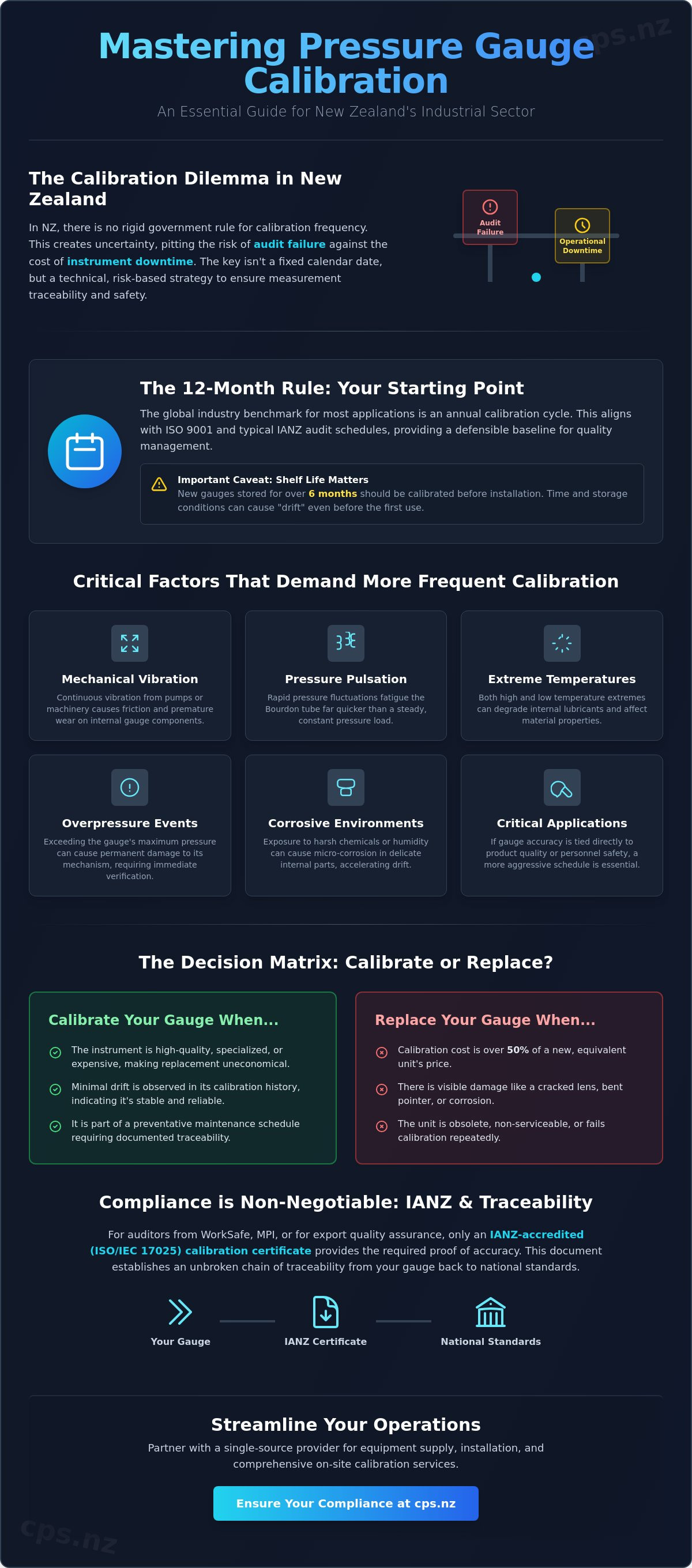
In New Zealand, the technical landscape for measurement is overseen by International Accreditation New Zealand (IANZ). While previous sections established the physical factors influencing how often to calibrate pressure gauges, the regulatory framework provides the "why" behind your schedule. IANZ doesn't mandate a specific timeframe; instead, it accredits the laboratories that perform the work. This accreditation ensures that a facility meets the ISO/IEC 17025 standard, confirming they possess the technical competence, equipment, and traceability to deliver accurate results. For any business operating under WorkSafe or Ministry for Primary Industries (MPI) guidelines, using an accredited provider is the only way to ensure your calibration data stands up to professional scrutiny.
Traceability to national standards is the backbone of New Zealand’s export economy. Whether you are processing dairy for global markets or maintaining high-pressure steam systems, your measurements must be linked back to a recognized national metrology institute. While many instruments arrive with a factory certificate referencing the National Institute of Standards and Technology (NIST) in the United States, local compliance often requires IANZ-endorsed certification. This local accreditation provides the highest level of assurance for New Zealand technical audits, as it confirms the laboratory has been independently verified within our specific regulatory environment.
Engaging an accredited laboratory is about more than just a piece of paper; it's about risk mitigation. IANZ accreditation confirms that the laboratory’s processes, staff, and reference equipment have been rigorously assessed. Relying on non-accredited services can lead to severe legal and insurance complications if an instrument failure results in a workplace accident or a contaminated product batch. Insurance providers often require proof of accredited maintenance to validate claims. By adhering to these benchmarks, you demonstrate a commitment to maintaining professional standards and protecting your operational integrity.
A successful technical audit relies on the quality of your documentation. A professional calibration certificate must include several critical elements to be considered valid:
A statement of the margin of error for each reading.
This records how the gauge was performing when it arrived and how it performed after adjustment. This data is essential for determining if your current interval is adequate.
A clear link to the national standards used during the test.
Maintaining a master instrument register is the most efficient way to manage fleet-wide traceability. This register should track every gauge on-site, its location, and its last service date. Many maintenance teams use calibration stickers as a visual management tool. A quick glance at a sticker on a gauge in the field can immediately tell a technician if the device is within its valid window or if it's time to schedule a service. This proactive approach prevents the common pitfall of missing a deadline and failing a surprise audit.
Determining how often to calibrate pressure gauges is only half the battle; the other half is deciding if the gauge is actually worth the investment of a professional laboratory test. For many maintenance managers, the threshold for replacement is often clearer than the schedule for maintenance. If an instrument is physically compromised or has drifted significantly beyond its tolerance, the most cost-effective path is usually a fresh installation. High-quality instruments are technical investments, but lower-tier, "disposable" gauges often cost less to replace than the labor required for an IANZ-accredited calibration.
Investing in high-precision digital gauges, such as those from Additel, changes the long-term ROI calculation. While the initial purchase price is higher than mechanical alternatives, their electronic sensors provide superior stability and a much lower rate of drift. Over a three-to-five-year period, the reduced need for frequent adjustments and the increased reliability in safety-critical zones often make digital instrumentation the more economical choice for modern New Zealand facilities.
A gauge is considered beyond economic repair if it shows signs of internal linkage failure or significant housing damage. You should inspect your fleet for the following red flags during every maintenance cycle:
• A cracked or yellowed lens that obscures the dial.
• A zero-point shift greater than 5% of the total scale.
• Visible corrosion on the socket or the internal movement.
• Leaking glycerine in liquid-filled models.
Glycerine-filled gauges are particularly effective in New Zealand’s high-vibration environments because the fluid dampens internal movement and reduces mechanical wear. However, any gauge that fails an "As-Found" test by more than 10% should likely be replaced. This level of drift often indicates structural fatigue in the Bourdon tube that a simple recalibration cannot permanently fix.
It's tempting to perform in-house "bucket tests" or simple comparisons against a secondary gauge to save on service costs. These unverified checks lack the measurement uncertainty data and traceability required for IANZ compliance. An accredited laboratory result doesn't just provide a certificate; it identifies emerging system issues, such as hidden pressure spikes or temperature-induced drift, before they cause a total system failure. If your facility is large enough to justify an internal setup, you should consult our ultimate guide to calibration equipment to ensure your reference standards meet the necessary benchmarks.
When the cost of professional calibration approaches the price of a new Tier 1 instrument, replacement is the logical technical decision. You can browse our full range of premium pressure gauges and accredited services to find the right balance for your specific operational needs.
CPS (NZ) Ltd stands as the primary industry authority for pressure and temperature measurement within the region. We've built our reputation on decades of operational history and a continuous reinvestment in high-end technology. Unlike generic importers who focus solely on sales volume, we define our value through a deep-level service model. We are a single-source provider, covering everything from the initial supply of premium pressure gauges to on-site installation and maintenance. Our strategic partnerships with world-leading brands like Additel and Fluke allow us to provide global-standard equipment backed by local technical expertise. We understand the technical nuances of how often to calibrate pressure gauges based on your specific industry's risk profile and regulatory requirements.
Technical precision requires a controlled environment. Our state-of-the-art laboratory at 38J Angle Street, Onehunga, is designed to meet the most demanding calibration requirements. We provide IANZ-accredited results that ensure your instruments are traceable to national standards. However, we also recognize that logistical constraints often make it difficult to send equipment to a lab. To resolve this, we maintain a robust mobile service for on-site calibration services across New Zealand. This approach distinguishes us from purely transactional competitors who cannot provide the same level of end-to-end support.
Our reach extends throughout the Pacific, where we support critical infrastructure with specialized pressure gauge solutions for Fiji industries. Whether you're operating a processing plant in Auckland or a remote facility in the islands, our technicians provide the same level of rigorous verification. This on-site approach minimizes operational downtime by allowing your instruments to be tested and certified while still in situ, ensuring your team is never left without a solution.
Establishing how often to calibrate pressure gauges is only the first step in a successful maintenance strategy. The real challenge lies in the consistent execution of that schedule. CPS helps you bridge this gap by managing your calibration recall schedules automatically. Our asset management system tracks every device we service, providing you with advance notice before any instrument reaches its expiration date. This proactive system is a core part of our commitment to your long-term operational safety.
This customer-centric approach ensures you are never caught off guard by a surprise audit. We provide the personalized attention required to manage complex instrument fleets, ensuring that every safety relief valve and hand-held meter remains within its calibrated tolerance. By partnering with a seasoned expert, you gain the confidence that your measurements are accurate and your documentation is defensible. Contact the experts at CPS (NZ) Ltd today for an accredited calibration quote.
Establishing a defensible schedule for how often to calibrate pressure gauges is a vital step in protecting your facility from unexpected downtime and audit failure. You've seen that while a 12-month interval is the standard industrial baseline; high-vibration zones and safety-critical applications require a more frequent, risk-based approach. Utilizing IANZ-accredited services isn't just about compliance; it's about the technical certainty that your measurements are accurate and your personnel are safe. Maintaining this accuracy ensures that your systems operate at peak performance without the risk of sudden instrument failure.
CPS (NZ) Ltd leverages over 30 years of NZ industrial expertise to support your measurement goals. We operate as an authorized Additel and Fluke service partner, ensuring our IANZ-accredited laboratory meets the highest global standards. Our team is ready to assist with everything from initial supply to complex on-site installations. You don't have to manage these technical requirements alone. Our comprehensive service model ensures that every instrument in your fleet remains reliable and ready for rigorous inspection at any time.
Book Your IANZ Accredited Pressure Calibration Today to secure your operational integrity. We look forward to helping you maintain a reliable and compliant instrument fleet.
Digital pressure gauges typically maintain their accuracy longer than mechanical models because they lack moving internal parts. However, both should follow a 12-month interval to ensure sensor stability. Mechanical gauges are more susceptible to physical wear and environmental drift, which often makes more frequent checks necessary for older units or those in high-stress environments.
You should calibrate a brand new pressure gauge before its first use if your industry requires traceable documentation for compliance. While gauges leave the factory with a certificate, this doesn't always meet IANZ standards for local technical audits. Additionally, if a gauge has been stored for over six months, its accuracy may have drifted since the initial factory test.
IANZ calibration is performed by a laboratory that has been independently assessed and found competent to international ISO/IEC 17025 standards. This provides a formal statement of measurement uncertainty and traceability. Non-accredited services are often simple functional checks that lack the rigorous verification required for high-stakes safety and export quality assurance in New Zealand.
You can perform in-house calibration if you invest in high-precision reference standards and trained personnel. While this reduces external costs, these checks won't carry IANZ endorsement unless your own facility is accredited. Most businesses find it more efficient to use external experts to determine how often to calibrate pressure gauges and ensure their documentation stands up to professional scrutiny.
If a gauge fails its calibration test, it is either adjusted back into tolerance or marked as beyond economic repair. Our technicians provide an "As-Found" report to show how far the instrument had drifted before any corrective action was taken. If the drift is severe, we recommend replacing the unit to avoid future measurement errors and potential system risks.
Continuous mechanical vibration accelerates the wear of internal linkages and gears in mechanical gauges. This physical stress often requires you to shorten your schedule to a three or six-month cycle. Identifying high-vibration zones helps you determine how often to calibrate pressure gauges to prevent accuracy loss before it impacts your operational safety or product quality.
New Zealand law doesn't specify a fixed number of days for calibration; instead, it places a general responsibility on equipment controllers to ensure safety. The Health and Safety at Work Act 2015 requires that all measuring instruments function accurately to prevent workplace hazards. Following industry best practices, such as annual cycles, is the most effective way to meet these legal obligations and satisfy WorkSafe requirements.
A typical professional calibration in our Auckland laboratory takes between three and five working days. This timeframe allows for proper thermal stabilization and rigorous multi-point testing across the instrument's full scale. If you require a faster turnaround, our on-site calibration services provide immediate verification and certification, which significantly reduces the time your equipment is out of service.