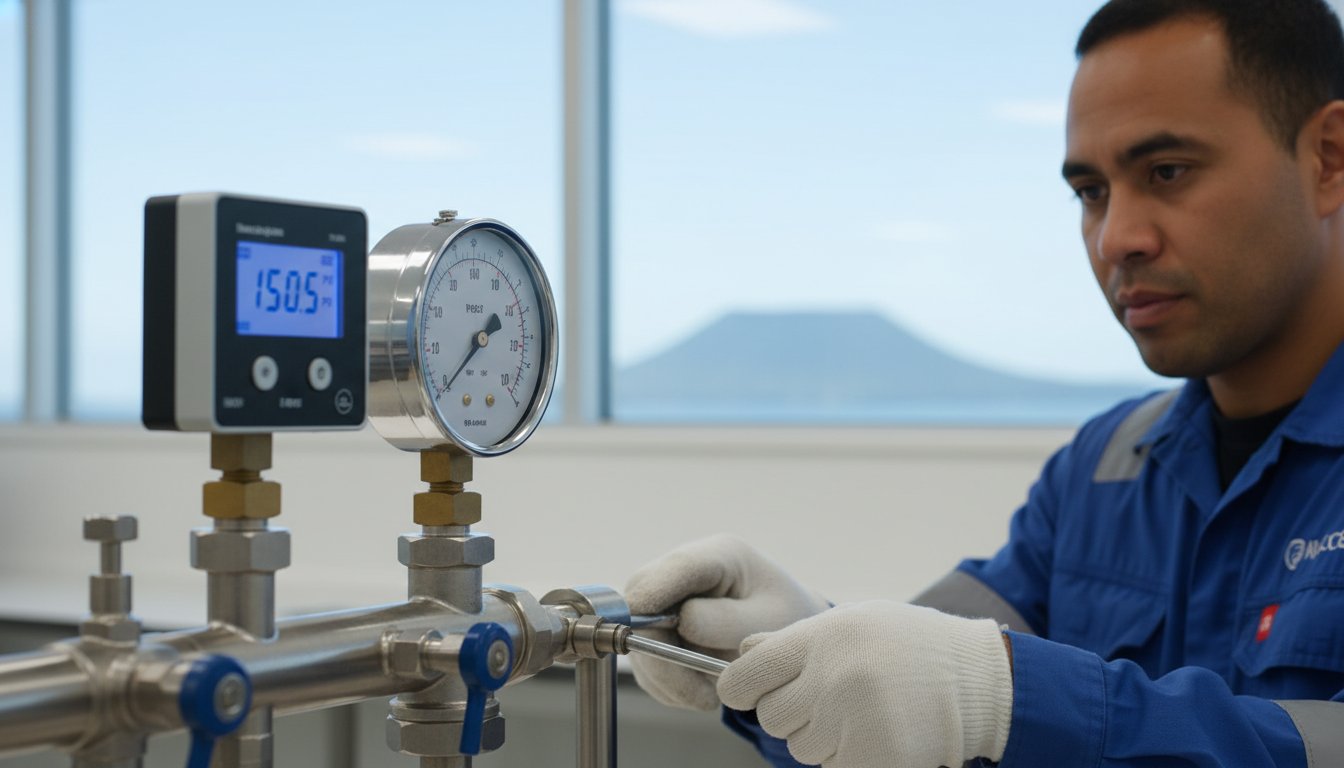



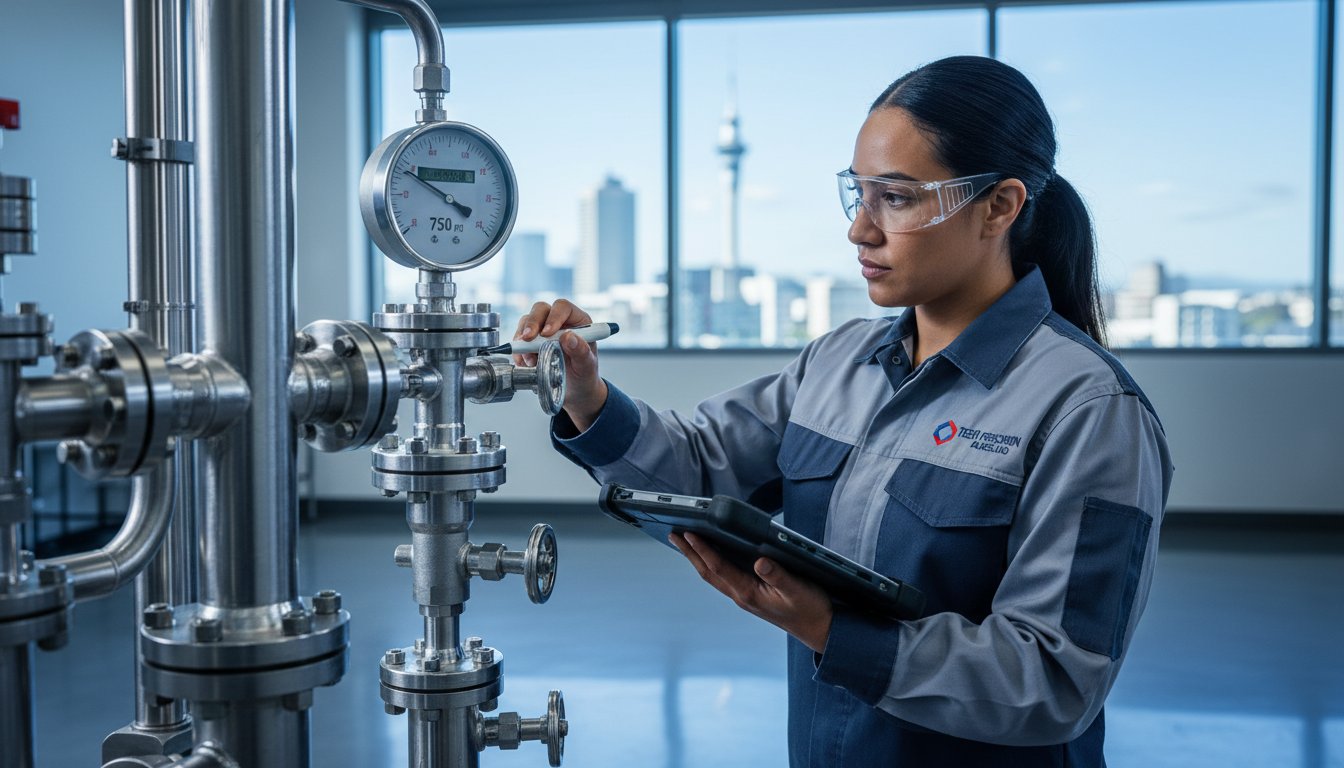
Relying solely on a European CE mark to meet New Zealand's rigorous safety standards is a risk that could leave your operation exposed to WorkSafe intervention. While the 2014/68/EU Pressure Equipment Directive is recognized internationally, local compliance in 2026 still demands strict adherence to the Health and Safety in Employment (PECPR) Regulations 1999 and AS/NZS 3788. You likely feel the pressure of balancing these complex legal frameworks while trying to avoid the steep penalties associated with the recent Health and Safety at Work Amendment Bill. It's a common challenge to distinguish between overseas manufacturing standards and the mandatory annual certification required for pressure safety valve compliance NZ.
You deserve the certainty that your equipment is both safe and audit-ready. This guide provides a clear roadmap through New Zealand's regulatory landscape and explains how precision calibration secures your operational continuity. We'll outline the essential 12-month inspection frequencies for safety relief valves and show you how a lifecycle approach to verification eliminates the fear of unexpected downtime or regulatory fines. By moving beyond simple equipment acquisition to a model of continuous accredited maintenance, you ensure your site remains compliant and your people stay protected.
• Distinguish between the European Pressure Equipment Directive (PED) and New Zealand's mandatory PECPR Regulations to ensure your site meets local legal standards.
• Learn how to navigate the essential steps of design verification and fabrication inspection for high-hazard pressure vessels and boilers.
• Understand why annual accredited testing is the cornerstone of maintaining pressure safety valve compliance NZ and avoiding WorkSafe penalties.
• Discover the critical role that precision pressure gauges and regular calibration play in preventing equipment failure and operational downtime.
• Explore how a single-source partnership for supply and calibration provides a comprehensive, audit-ready maintenance framework for your entire pressure system.
Engineering teams in New Zealand often encounter the Pressure Equipment Directive (PED) when sourcing high-spec components from overseas. It is a common point of confusion. The PED, specifically 2014/68/EU, is a European Union standard that governs the design and manufacture of pressure equipment within the EU. While it represents a high level of safety and engineering rigor, it doesn't hold legal standing in New Zealand on its own. Instead, our local operations are governed by the Health and Safety in Employment (Pressure Equipment, Cranes, and Passenger Ropeways) Regulations 1999, commonly referred to as the PECPR Regulations. WorkSafe New Zealand acts as the primary regulator, ensuring that all equipment, regardless of its origin, meets these specific local requirements.
Importing a CE-marked vessel doesn't automatically grant you a pass during a WorkSafe audit. New Zealand law requires that imported equipment is verified against recognized standards like AS/NZS 3788 or the relevant Approved Codes of Practice. This crossover is critical for maintaining pressure safety valve compliance NZ. If your safety relief valves are built to European standards but aren't design-verified for the New Zealand environment, you risk significant operational delays and potential legal liabilities. We often see businesses struggle when they assume a European certificate is enough to satisfy a local inspector; it isn't.
Confusion often arises because the term "Directive" is used colloquially in New Zealand to describe various regulatory requirements. You might hear technicians refer to the PED when they actually mean the PECPR framework. It's vital to recognize that while international standards like ASME from the USA or PED from Europe are excellent benchmarks, they must be reconciled with the New Zealand context through design appraisal by a chartered professional engineer. International compliance is a starting point, not the finish line. Total site safety depends on recognizing these distinctions early in the procurement phase to avoid costly retrofitting later.
The Health and Safety at Work Act 2015 (HSWA) serves as the overarching legislation for all industrial activities in New Zealand. Under this act, the responsibility for safety falls on the Person Conducting a Business or Undertaking (PCBU). As a PCBU, you have a primary duty of care to ensure that pressure equipment is safe to operate. This isn't just a suggestion. It's a legal mandate. Current penalties for non-compliance are severe, with fines reaching hundreds of thousands of dollars for businesses that fail to manage critical risks. Ensuring pressure safety valve compliance NZ through regular accredited testing is one of the most effective ways to demonstrate that you're meeting your obligations under the HSWA 2015 and protecting your workforce from harm.
The PECPR Regulations 1999 provide the specific legal framework for managing pressure equipment in New Zealand. This includes everything from large-scale industrial boilers to the piping systems and vessels found in food processing plants. If a system contains a fluid or gas under pressure, it's subject to these rules. The primary goal is to ensure that every component is designed, installed, and maintained to prevent failure. WorkSafe NZ oversees this process, requiring that all equipment is categorized by its potential for harm.
The hazard level classification system is the core of this regulation. Equipment is ranked from High (Level A) to Low (Level E) based on its volume, pressure, and the type of contents it holds. High-hazard equipment must be registered with WorkSafe and requires design verification by an approved person. This verification ensures the build matches safe engineering standards before operation begins. Maintaining pressure safety valve compliance NZ is a critical part of this lifecycle, as these valves act as the final line of defense against over-pressurization.
Boilers are governed by a specific Approved Code of Practice (ACOP) due to the added risks of combustion and extreme heat. This framework is separate from the guidelines for static pressure vessels or steam turbines. Because these systems operate under high power, the regulations demand that only approved maintenance contractors perform work on them. It's not enough to simply fix a leak; every repair must be documented and verified. Using high-quality safety relief valves that meet these specific boiler standards is the only way to ensure total site reliability.
The law defines the equipment controller as the person who has control over the equipment at any given time. This role carries significant legal weight. You're responsible for keeping a detailed equipment logbook that tracks every inspection and calibration event. These records are the first thing a WorkSafe inspector will ask for during an audit. Regular safety inspections must be documented and performed by competent persons to confirm the system remains fit for service. This process is central to achieving pressure safety valve compliance NZ and maintaining a safe working environment.
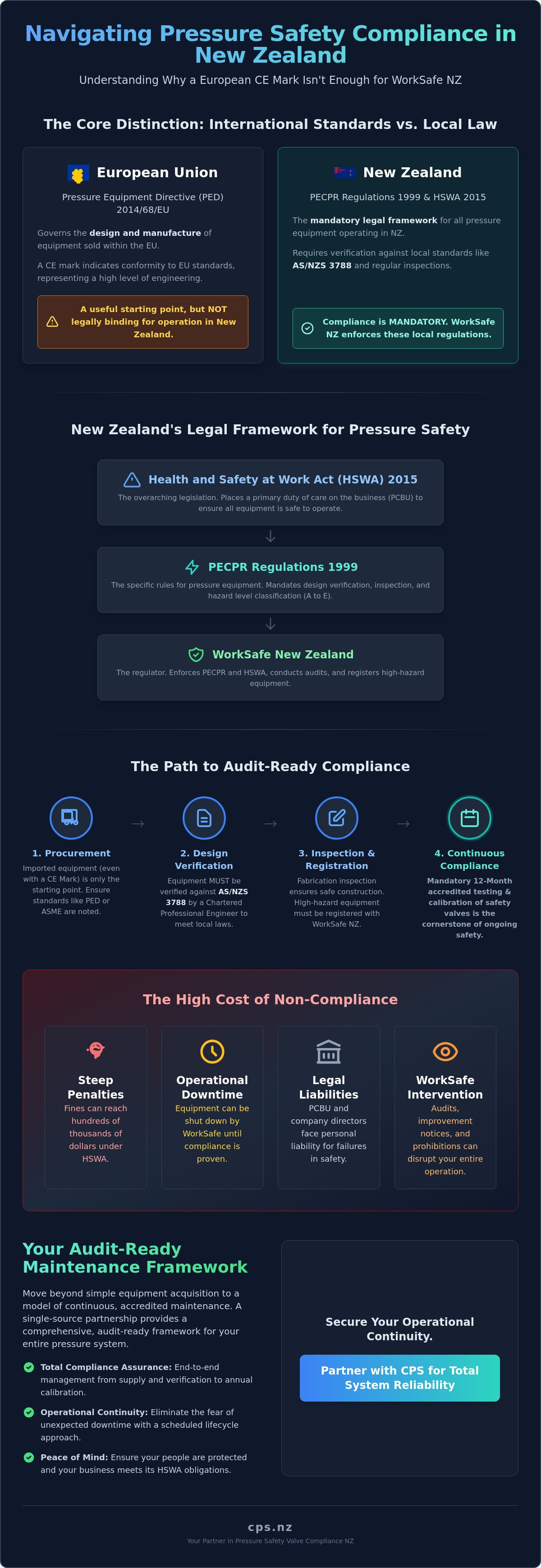
The Pressure Equipment, Cranes, and Passenger Ropeways (PECPR) Regulations 1999 mandate a specific sequence of verification steps to move a vessel from the design phase to active service. This process is not a mere formality. It's a technical safeguard designed to prevent catastrophic failure. The first step involves a comprehensive design appraisal by an independent chartered professional engineer (CPEng). This engineer reviews the technical drawings, material specifications, and calculation sets to ensure the equipment can safely handle its intended operating pressure and temperature.
Once the design is verified, the focus shifts to fabrication inspection. An independent inspector must visit the manufacturing site to confirm that the physical build matches the verified design exactly. They check weld quality, material traceability, and non-destructive testing (NDT) results. After the equipment arrives on site, an initial inspection and certification are required before it enters service. Maintaining pressure safety valve compliance NZ requires more than a one-off check; it involves a continuous cycle of periodic in-service inspections. According to AS/NZS 3788, pressure vessels typically require an external inspection every 2 years and an internal inspection every 4 years, while safety relief valves must be certified every 12 months.
New Zealand's unique geological landscape introduces a layer of complexity often overlooked by international manufacturers. Standard offshore designs frequently fail to meet local criteria because they don't account for the specific seismic loading requirements found in AS/NZS 1200:2000. A vessel built for a European or Asian market may lack the reinforced supports or base plate thickness necessary to withstand a significant seismic event in New Zealand. You must ensure that your design appraisal specifically addresses these lateral force requirements to avoid a rejection during the WorkSafe registration process.
Successful design appraisal relies on a complete documentation package. If you're importing equipment, you'll likely deal with 'Notified Bodies' that have already certified the unit under international frameworks. While their data is valuable, it must be translated into the New Zealand context. To prepare for a WorkSafe audit, you should compile a dossier including the design verification certificate, manufacturer's data report, material certificates, and hydrostatic test results. Most importantly, you must include current calibration certificates for all instrumentation. Achieving pressure safety valve compliance NZ is impossible without documented proof that your relief valves have been tested in an accredited laboratory and are set to the correct blow-off pressures.
Accurate instrumentation isn't just a technical preference; it's the operational backbone of your site's safety. While the PECPR regulations define the legal boundaries, the actual enforcement of those boundaries happens at the gauge face and the valve seat. High-quality pressure gauges provide the real-time data necessary to monitor system health, acting as the primary diagnostic tool for equipment controllers. Without precise measurement, you're effectively operating in the dark, unable to verify if your system is approaching its maximum allowable working pressure (MAWP).
The final mechanical safeguard in any pressurized system is the relief valve. Correctly specified and maintained pressure relief valves are designed to lift at a precise set point, venting excess pressure before a catastrophic failure occurs. In New Zealand, the legal requirement for accurate measurement under the HSWA 2015 directly links your site's safety to the quality of your calibration records. Achieving pressure safety valve compliance NZ depends on proving that these devices will function exactly as intended during an over-pressure event.
Neglecting your calibration schedule introduces gauge drift, where environmental factors and mechanical wear cause readings to become increasingly inaccurate over time. This drift can mask a dangerous over-pressure condition, leading to equipment fatigue or rupture. Beyond the physical risk, using unverified safety valves creates a significant legal liability for the PCBU. If an incident occurs and your records show expired certificates, WorkSafe's investigation will be far more severe. Investing in high-grade calibration equipment or regular professional service is a preventative strategy that saves money by reducing unplanned downtime and legal exposure.
International Accreditation New Zealand (IANZ) is the authority that verifies a laboratory's technical competence. An IANZ-accredited calibration is far more rigorous than a simple functional check. It involves a formal process of uncertainty analysis, traceability to national standards, and documented proof of accuracy across the device's entire range. WorkSafe inspectors and insurance auditors prioritize IANZ-endorsed certificates because they provide an indisputable paper trail of compliance. When you choose an accredited partner, you aren't just getting a sticker; you're getting the technical assurance that your measurements stand up to legal scrutiny.
Contact the specialists at CPS today to schedule your accredited calibration services and ensure your equipment meets every New Zealand safety standard.
Achieving total site safety requires more than just purchasing the right hardware; it demands a continuous partnership with a technical specialist who understands the New Zealand regulatory environment. CPS (NZ) Ltd provides a single source for every stage of your technical process, from the initial supply of high-spec components to ongoing maintenance and training. We distinguish our value by contrasting our deep-level service model against the shallow, profit-driven approach of generic importers. By acting as the bridge between complex legislative requirements and technical execution, we ensure that your operation never falls short of its legal obligations.
Our Auckland-based laboratory is equipped with state-of-the-art calibration equipment, allowing us to provide the highest level of precision for your instrumentation. We understand that industrial downtime is a significant risk to your bottom line. To mitigate this, we offer comprehensive on-site calibration services across New Zealand. Our technicians bring laboratory-grade accuracy directly to your facility, allowing for the rapid verification of your systems without the need for extended equipment removal. This proactive approach is essential for maintaining pressure safety valve compliance NZ while keeping your production lines moving.
CPS (NZ) Ltd has served the New Zealand market for over 30 years, building a reputation for stability and technical leadership. This multi-decade history is a trust signal that we have the longevity to support your equipment throughout its entire lifecycle. Our strategic partnership with global leaders like Additel ensures that our clients have access to world-class precision tools and high-end technology. We align our internal processes with Engineering New Zealand standards, providing an authoritative service that satisfies both internal quality benchmarks and external regulatory audits.
The journey to total compliance begins with selecting the correct equipment and continues through a rigorous schedule of accredited certification. We help you navigate every step, ensuring that your safety relief valves, pressure gauges, and vessels are always fit for purpose. Our team provides the personalized attention and long-term support needed to manage your equipment logbooks and stay ahead of mandatory inspection dates. Don't wait for a WorkSafe audit to discover a gap in your documentation. We encourage you to book a full system consultation to identify potential risks before they become critical failures. Pressure safety valve compliance NZ is a continuous commitment, and we are here to provide the technical expertise to make it seamless.
Contact the experts at CPS (NZ) Ltd for IANZ-accredited pressure calibration and let us secure the reliability and safety of your pressure systems for years to come.
Managing pressure equipment in New Zealand requires a precise understanding of the PECPR Regulations and the critical role of periodic verification. You've learned that while international standards provide a strong foundation, local compliance depends on independent design appraisal and strict adherence to AS/NZS 3788 standards. Maintaining pressure safety valve compliance NZ isn't merely a legal box to tick; it's a fundamental commitment to the safety of your workforce and the longevity of your assets.
By integrating regular IANZ-accredited calibration into your maintenance schedule, you eliminate the risk of undetected gauge drift and ensure your relief valves are always ready to protect your system. CPS brings over 30 years of New Zealand industry expertise to every project, serving as an authorized distributor for global precision brands like Additel. Our IANZ-accredited laboratory and on-site service teams provide the technical assurance you need to pass any WorkSafe audit with confidence.
Ensure your pressure systems are compliant, Contact CPS for Accredited Calibration today. We look forward to supporting your site’s safety and reliability.
The PED is not a New Zealand law, though equipment marked with CE is often accepted as meeting essential safety requirements. You must still verify that any imported equipment complies with the Health and Safety in Employment (PECPR) Regulations 1999. A local design appraisal by a chartered professional engineer is usually necessary to bridge the gap between European manufacturing and NZ operational standards.
The PECPR regulations are the specific legal requirements for managing the design, manufacture, and maintenance of pressure equipment, cranes, and ropeways. They apply to any Person Conducting a Business or Undertaking (PCBU) who owns or operates such equipment. These regulations ensure that high-hazard items are registered with WorkSafe and undergo regular certification to prevent workplace accidents.
Inspection frequencies are governed by AS/NZS 3788 and depend on the equipment type and hazard level. Generally, pressure vessels require an external inspection every 2 years and an internal inspection every 4 years. However, achieving pressure safety valve compliance NZ requires a more frequent schedule, with safety relief valves typically needing testing and certification every 12 months to ensure they function correctly.
A safety valve is designed to open fully and instantaneously when a set pressure is reached, typically used for compressible gases like steam or air. A pressure relief valve opens gradually in proportion to the pressure increase, often used for non-compressible liquids. Both devices are essential for over-pressure protection, and their selection must match the specific fluid and system requirements of your site.
IANZ-accredited calibration is the only way to provide an indisputable paper trail of accuracy for WorkSafe inspectors. While a standard check might tell you a gauge is working, an IANZ certificate proves the measurement is traceable to national standards. This level of verification is vital for meeting your legal obligations under the Health and Safety at Work Act 2015 regarding accurate instrumentation.
Operating equipment without design verification is a breach of the PECPR regulations and can lead to significant WorkSafe penalties. In the event of an incident, your insurance is likely to be voided if the equipment wasn't legally verified for use in New Zealand. You must ensure all high-hazard vessels are design-appraised and registered before they are commissioned for active service on your site.
Yes, CPS provides comprehensive on-site calibration services for large or fixed pressure systems across New Zealand. Our technicians bring laboratory-grade equipment to your facility, which reduces industrial downtime and eliminates the risks associated with transporting sensitive instruments. This service is a practical way to maintain pressure safety valve compliance NZ without disrupting your core production cycles or site operations.
Legal responsibility lies with the PCBU and the designated equipment controller. The PCBU has a primary duty of care under the HSWA 2015 to ensure all plant is safe. The equipment controller is responsible for the day-to-day safe operation and must maintain an accurate logbook of all inspections, repairs, and calibrations to demonstrate that the system remains fit for purpose.