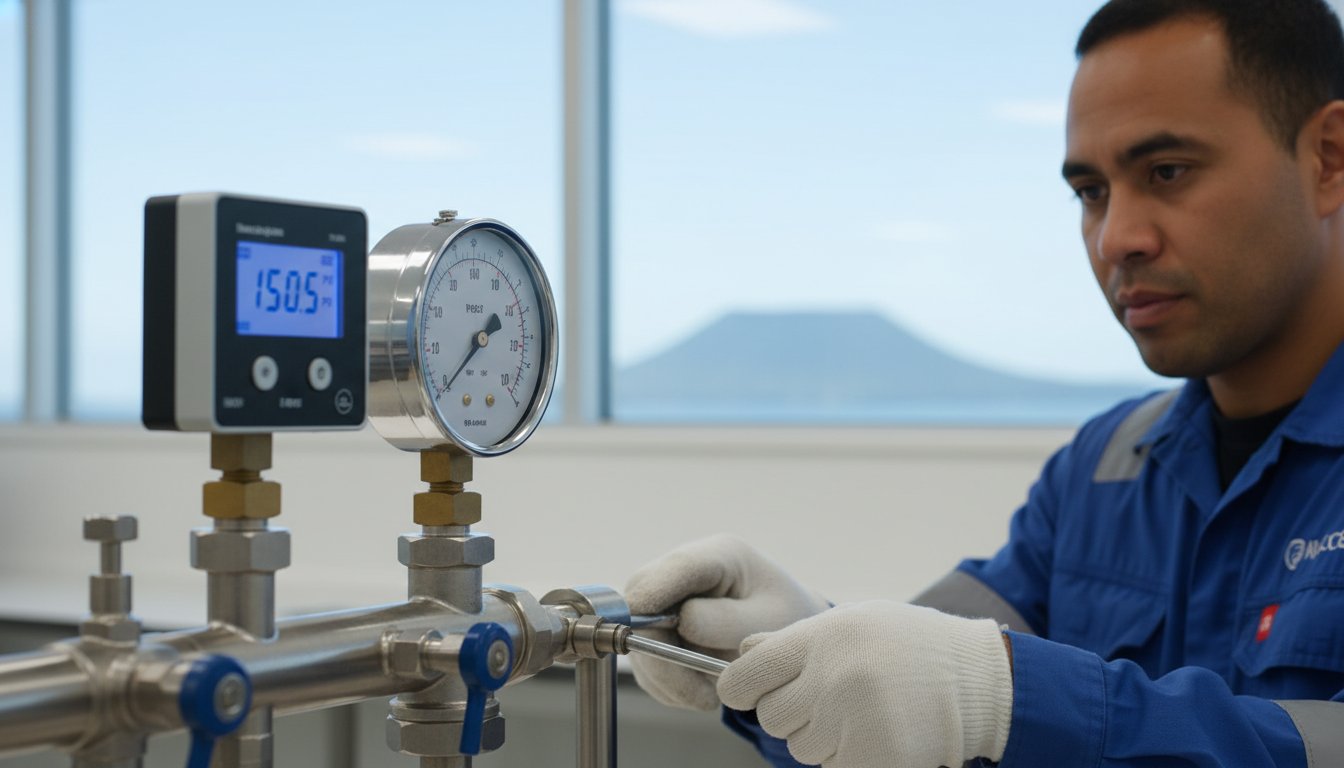



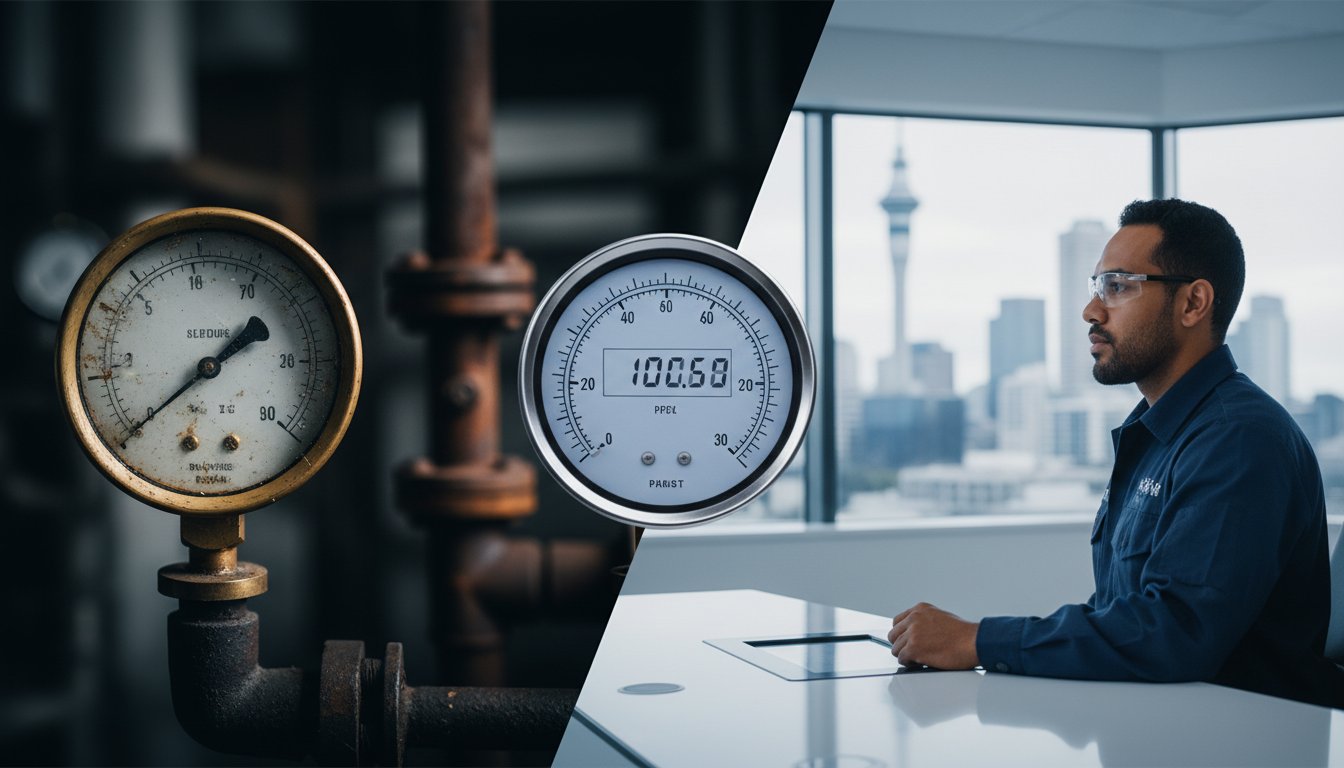
What if the most critical instrument in your facility is quietly providing false data? When you look at a dial or a digital display, you assume the reading is absolute, yet even a minor deviation can compromise system safety and lead to unexpected equipment failure. If you are currently asking yourself why is my pressure gauge inaccurate, you are likely dealing with more than just a faulty component. You are seeing the symptoms of environmental stress, mechanical wear, or a mismatch between the gauge and its specific application.
We know that unreliable data creates frustration and confusion over accuracy classes. You need absolute precision to avoid downtime and meet industry standards such as ASME B40.1. This guide identifies the root causes of gauge drift and explains how to determine whether to repair or replace your equipment. You will also learn how to maintain long-term reliability through IANZ accredited calibration. We provide the total solution your operation requires to stay safe, compliant, and efficient in demanding industrial environments.
• Define the critical gap between true pressure and indicated readings to understand how measurement drift affects your process over time.
• Identify how mechanical stressors like vibration and environmental factors like salt air corrosion in New Zealand and Fiji degrade gauge performance.
• Uncover the specific system-level failures that answer why is my pressure gauge inaccurate, allowing you to move from guesswork to precision.
• Recognize common installation errors and selection mismatches that lead to parallax issues or socket stress before they cause equipment failure.
• Learn why IANZ accredited calibration provides the total solution for maintaining safety and operational reliability in demanding industrial settings.
Accuracy isn't just a number; it's the foundation of your system's safety. Technically, accuracy is the difference between the true value of the pressure being measured and the reading indicated on the dial. When you find yourself questioning why is my pressure gauge inaccurate, you're usually observing a deviation from the manufacturer's stated tolerance. This tolerance is based on pressure measurement principles that define how mechanical or electronic sensors respond to force. If the reading on the dial doesn't match the actual pressure in the line, your data is compromised.
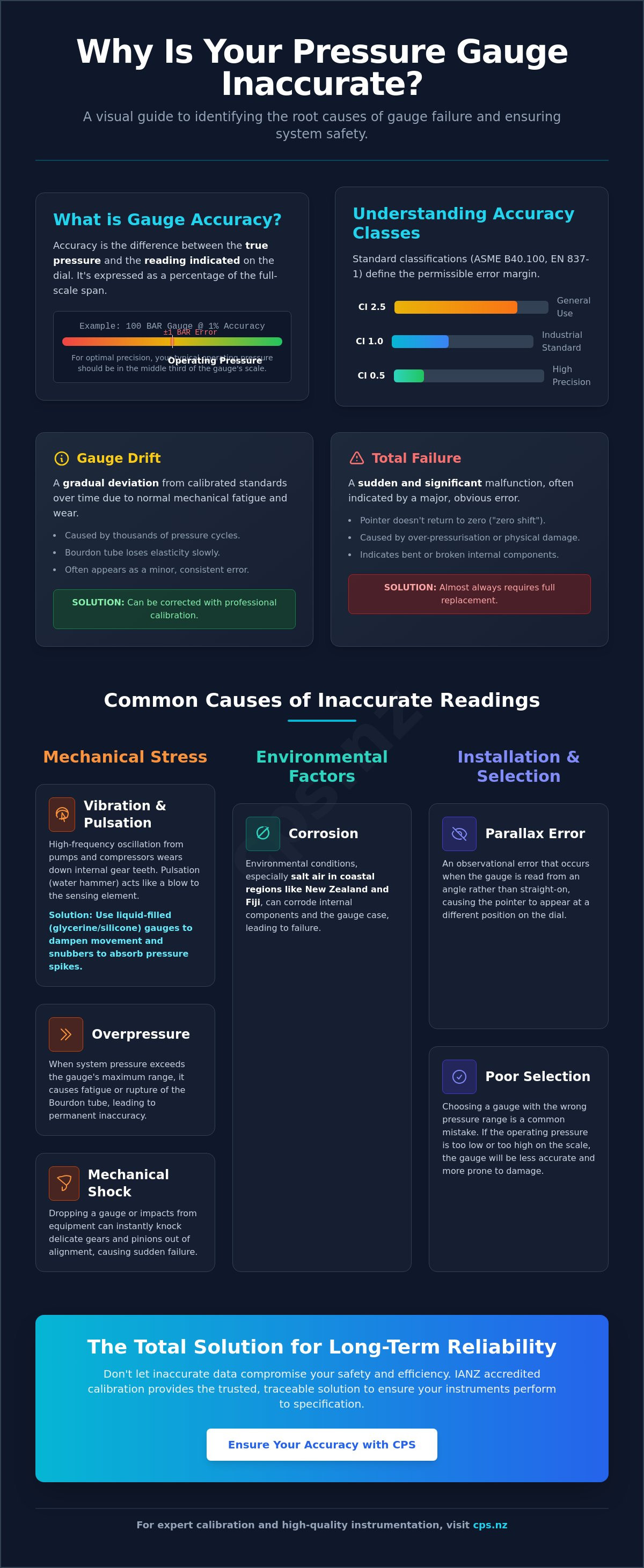
Accuracy is expressed as a percentage of the full-scale span. This means that a gauge with a 0 to 100 bar range and an accuracy of 1% has a permissible error of ±1 bar across the entire scale. If that same gauge only measured up to 10 bar, the error would be ±0.1 bar. Choosing a gauge where your operating pressure sits in the middle third of the scale is vital for maintaining precision. It's the most effective way to ensure the margin of error doesn't interfere with your process control.
Standard classifications like ASME B40.100 or EN 837-1 help engineers select the right tool for the job. You will typically see an "Accuracy Class" (Cl) marked clearly on the dial. For example, a Cl 1.0 gauge ensures that the reading remains within 1% of the total scale. In contrast, a Cl 2.5 gauge is suitable for general industrial use where a wider margin of error is acceptable. High-precision environments often require Cl 0.5 or better to maintain strict safety protocols. Knowing these classes helps you determine if your current readings are within an acceptable range or if the device has drifted beyond its intended limits.
It's important to distinguish between a gauge that needs calibration and one that's fundamentally broken. Drift is the gradual deviation from calibrated standards due to mechanical fatigue. It happens slowly as internal components like the Bourdon tube lose their elasticity over thousands of cycles. However, total failure is often sudden. If the pointer doesn't return to zero when the system is depressurised, it's a major red flag. This "zero shift" often indicates that the internal movement is bent or the sensing element has been over-pressurised. While drift can be corrected through professional calibration, mechanical damage often requires a full replacement to ensure long-term reliability.
Mechanical stress is the most frequent reason why is my pressure gauge inaccurate in high-output industrial environments. While we previously discussed the natural drift of components, mechanical damage often occurs through sudden events or high-frequency wear that physically alters the instrument's internal geometry. When the internal movement is compromised, the gauge can no longer provide a reliable window into your process safety.
Mechanical shock is a common but overlooked culprit. This happens when an instrument is dropped during installation or struck by heavy machinery. A single physical impact can knock the delicate gears and pinions out of alignment. If you notice a sudden jump in readings or a pointer that seems stuck, physical damage is the likely cause. In these cases, the gauge usually requires a full replacement because the structural integrity of the movement has been lost.
Vibration is the leading cause of gauge failure in New Zealand's industrial plants. When a gauge is mounted directly to vibrating equipment like pumps or compressors, the internal components oscillate at high speeds. This creates constant friction that eventually rounds off the teeth of the movement gears. To mitigate this, liquid-filled gauges are the standard solution. Filling the case with glycerine or silicone oil dampens the internal movement and lubricates the parts. Understanding these Process Conditions That Affect Pressure Gauge Accuracy is essential for maintaining system uptime.
Pulsation and water hammer act like a hammer blow to the internal sensing element. Rapid pressure spikes can cause the Bourdon tube to fatigue prematurely or even rupture. If your process involves quick-acting valves or reciprocating pumps, using a snubber or a needle valve restrictor is necessary to protect the instrument from these destructive spikes.
Overpressure occurs when the system pressure exceeds the gauge's maximum scale. This forces the Bourdon tube past its elastic limit, causing it to take a permanent "set." Once the metal is deformed, the gauge will never return to zero and will provide false data across the entire range. This is why is my pressure gauge inaccurate after a system surge. To prevent this, you should select a gauge where the normal operating pressure sits between 50% and 75% of the full-scale range. For more detailed advice on selecting the correct instrument for your application, see our guide on choosing the right pressure gauge.
If you suspect your equipment has suffered mechanical damage, it's safer to consult with expert instrumentation technicians rather than relying on compromised data.
Environmental conditions are often the silent culprit behind why is my pressure gauge inaccurate. In regions like New Zealand and Fiji, we don't just deal with standard industrial wear. We face aggressive salt air, high volcanic sulfur content in certain areas, and intense tropical humidity. These factors don't just damage the external casing; they physically alter the properties of the internal sensing elements. When the environment attacks the instrument, the data you rely on for system safety begins to drift almost immediately.
Coastal New Zealand and the Fiji islands share a common enemy in salt air. This saline environment penetrates standard casings and corrodes the delicate gears of the internal movement. In tropical climates, high humidity also leads to condensation inside the dial. This fogs the glass and creates internal corrosion that can eventually seize the pointer. Choosing a hermetically sealed, stainless steel case is a necessity for long-term reliability in these regions, rather than an optional upgrade.
Precision calibration usually occurs at a controlled temperature of 20°C. However, in a geothermal plant in Rotorua or a processing facility in Suva, ambient and media temperatures vary wildly. Every 10°C shift from the calibration temperature can introduce an additional error of approximately 0.4% of the span. If your gauge is exposed to high-temperature media like steam, the Bourdon tube can lose its tempered elasticity. Using siphons or capillary lines is a critical step to dissipate heat before it reaches the instrument, ensuring the metal remains within its designed operating parameters.
The media inside your pipes is just as important as the air outside them. Using brass internals with corrosive chemicals or seawater leads to internal pitting, which is a primary reason why is my pressure gauge inaccurate. Additionally, debris or viscous fluids can block the small orifice of the gauge. This leads to "frozen" readings where the needle doesn't move even when the system pressure changes. Diaphragm seals provide the total solution here. They create a physical barrier that transmits pressure through a fill fluid without allowing the process media to enter the gauge. This level of protection is a key part of effective maintenance for Fiji industries where processing environments are often demanding and remote.
Even the most expensive high-precision instrument will fail to deliver reliable data if the installation is flawed. If you've been wondering why is my pressure gauge inaccurate despite it being a brand-new unit, the issue often stems from the mounting process. Over-tightening a gauge into a port by using the case for leverage, rather than a wrench on the socket flats, can twist the internal movement. This mechanical stress immediately compromises the calibration. Using mismatched threads, such as forcing an NPT thread into a BSP port, creates micro-leaks that lead to perceived pressure drops and inconsistent readings.
Parallax error is another common source of perceived inaccuracy. This occurs when the observer reads the dial from an angle rather than head-on, leading to a shift in where the pointer appears to sit against the scale. Beyond observation, choosing the wrong range is a frequent selection mistake. If you use a gauge with a 400-bar span to monitor a 10-bar system, the pointer barely moves from the zero pin. Because accuracy is a percentage of the full-scale span, the margin of error in this scenario could be as large as the pressure you're trying to measure.
Standard pressure gauges are designed for vertical mounting. When installed horizontally or upside down, gravity can affect the balance of the internal movement, leading to a shift in the zero point. If you use long capillary lines, the weight of the fluid inside the line creates liquid head pressure. This added force means the gauge will read higher or lower than the actual pressure at the source. Achieving true accuracy begins with the right fluid fittings to ensure a leak-free system and stable mounting.
Selecting an instrument involves more than just picking a dial size. You must match the gauge to the specific media, whether it's gas, liquid, or a viscous slurry. Cheap gauges might seem like a cost-saving measure, but they often lack the structural integrity to withstand the environmental factors discussed in previous sections. They quickly fail, leading to more downtime and replacement costs. We believe in providing the total package. This means we don't just supply a gauge; we provide the hoses, fittings, and pre-calibration services tailored to your exact onsite requirements. This comprehensive approach ensures that your instrumentation is ready for immediate, accurate service.
To ensure your system is equipped with the correct instruments for long-term precision, reach out to the technical experts at CPS (NZ) Ltd for a tailored solution.
Identifying why is my pressure gauge inaccurate is only the first step toward restoring system integrity. Once you've pinpointed the cause, whether it's mechanical fatigue or environmental stress, the next phase is professional remediation. A common mistake in many workshops is attempting to "zero" the needle by manually adjusting the pointer. While this might align the needle with the zero mark, it does nothing to correct linearity or span errors across the rest of the scale. Real accuracy requires a comprehensive check against a high-precision reference standard to ensure the instrument is reliable at every point on the dial.
Determining your optimal calibration frequency depends on the criticality of your process and the harshness of the environment. In high-vibration or corrosive settings, a six-month interval might be necessary to catch drift before it leads to failure. For general industrial applications, an annual service is often the standard. We provide the total package, ensuring your instruments are not only calibrated but also inspected for the mechanical and environmental damage discussed in previous sections. This proactive approach prevents the safety risks associated with unreliable data.
In New Zealand and Fiji, IANZ accreditation is the gold standard for measurement confidence. An IANZ-accredited lab has been independently audited to ensure its equipment, staff, and procedures meet strict international standards. This provides the traceability required for safety audits, insurance requirements, and legal compliance. When you receive a calibration certificate from an accredited facility, you're getting documented proof that your instrument performs to its stated accuracy class. Following Engineering New Zealand standards ensures your facility maintains professional-grade precision and safety at all times.
We distinguish ourselves from companies that simply import and sell products to make a quick profit. CPS (NZ) Ltd is a technical partner that reinvests heavily in world-class reference equipment and technology. This investment allows us to offer the total solution, from the initial supply of a gauge to its ongoing maintenance and onsite support. We don't just supply a product; we ensure it works correctly within your specific system.
For businesses in Fiji, particularly in Lautoka and Suva, our onsite calibration services eliminate the downtime associated with shipping instruments overseas. We bring the expertise to you, ensuring your systems remain operational while meeting international standards. We don't just give you a number; we provide the assurance that your entire instrumentation setup is reliable for the long term. Contact CPS for expert pressure gauge calibration today to secure your system's precision and safety.
Maintaining accuracy requires more than a quick glance at a dial. It demands a deep understanding of how mechanical stress and environmental conditions in New Zealand and Fiji degrade your instruments over time. If you've been struggling to understand why is my pressure gauge inaccurate, remember that the answer lies in the intersection of proper selection, correct installation, and regular maintenance. Relying on unverified data is a risk your facility doesn't need to take.
CPS (NZ) Ltd has over 35 years of industry experience providing the total solution for industrial instrumentation. We don't just supply gauges; we provide the precision fittings, hoses, and accredited services that keep your systems safe and compliant. Our IANZ Accredited Calibration Labs ensure your equipment meets the highest global standards for traceability and performance. Don't leave your system safety to chance. Get your pressure gauges calibrated by NZ’s leading experts at CPS and ensure your readings are always reliable. We're here to help you maintain a safe, efficient, and precise operation.
You should calibrate your pressure gauge at least once every twelve months under standard operating conditions. However, if your equipment is used in high-vibration environments or for critical safety processes, a six-month interval is more appropriate. Regular servicing ensures that natural drift doesn't compromise your system data or lead to unexpected downtime. Maintaining a consistent schedule is the best way to guarantee long-term instrument reliability.
You cannot safely fix an inaccurate pressure gauge yourself without specialized reference equipment and controlled laboratory conditions. Simply moving the pointer to "zero" does not correct linearity or span errors across the rest of the scale. Professional calibration in an accredited lab is the only way to ensure the instrument meets its stated accuracy class and provides the traceability required for industrial safety audits.
Excessive needle vibration is typically caused by mechanical resonance from nearby machinery or rapid pressure pulsation within the process line. This constant oscillation quickly wears out the internal gears and pinions. If you are wondering why is my pressure gauge inaccurate after noticing needle flutter, it is likely because the internal movement has been physically rounded off. Liquid filling or using a pressure snubber will mitigate these effects.
Temperature significantly impacts readings by changing the elasticity of the internal sensing element. Most industrial gauges are calibrated at a standard temperature of 20°C. For every 10°C shift from this point, the gauge can experience an additional error of approximately 0.4% of its span. Using siphons or capillary lines is essential to protect the internal Bourdon tube from high-temperature media like steam or hot oil.
Glycerine-filled gauges contain a viscous liquid that dampens the internal movement, protecting it from vibration and lubricating the parts. Dry gauges lack this filling and are only suitable for static environments where vibration is not a factor. Liquid-filled gauges are the standard choice for pumps and compressors because they prevent the internal wear that leads to premature failure and inaccurate data.
Digital pressure gauges are often more accurate because they eliminate parallax error and offer much higher resolution. While a standard analog gauge might have an accuracy of 1.0%, many digital units provide precision levels of 0.1% or better. Digital gauges are also less susceptible to mechanical wear from vibration, though they still require regular accredited calibration to ensure the electronic sensors haven't drifted over time.
If your gauge does not return to zero when depressurized, you must replace it immediately. This "zero shift" is a primary reason why is my pressure gauge inaccurate, as it indicates the internal Bourdon tube has been over-pressurized and permanently deformed. Once the metal has lost its original shape, the instrument can no longer provide linear or reliable readings across its scale, posing a significant safety risk.
IANZ accreditation provides documented proof that your calibration results are traceable to international standards and have been verified by an independent authority. This is critical for meeting New Zealand and Fiji safety regulations, insurance requirements, and quality management audits. Using an IANZ-accredited lab ensures your data is technically sound and globally recognized, giving you absolute confidence in your facility's pressure measurement systems.