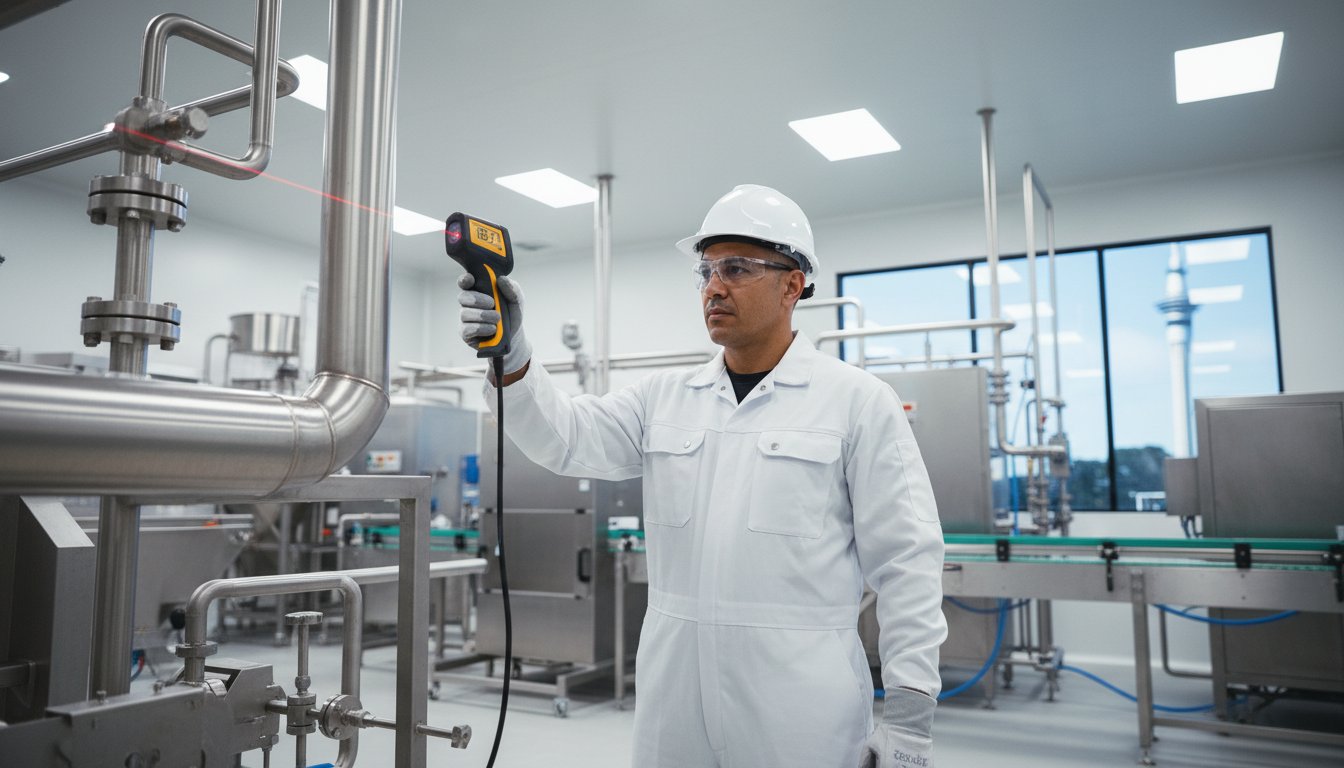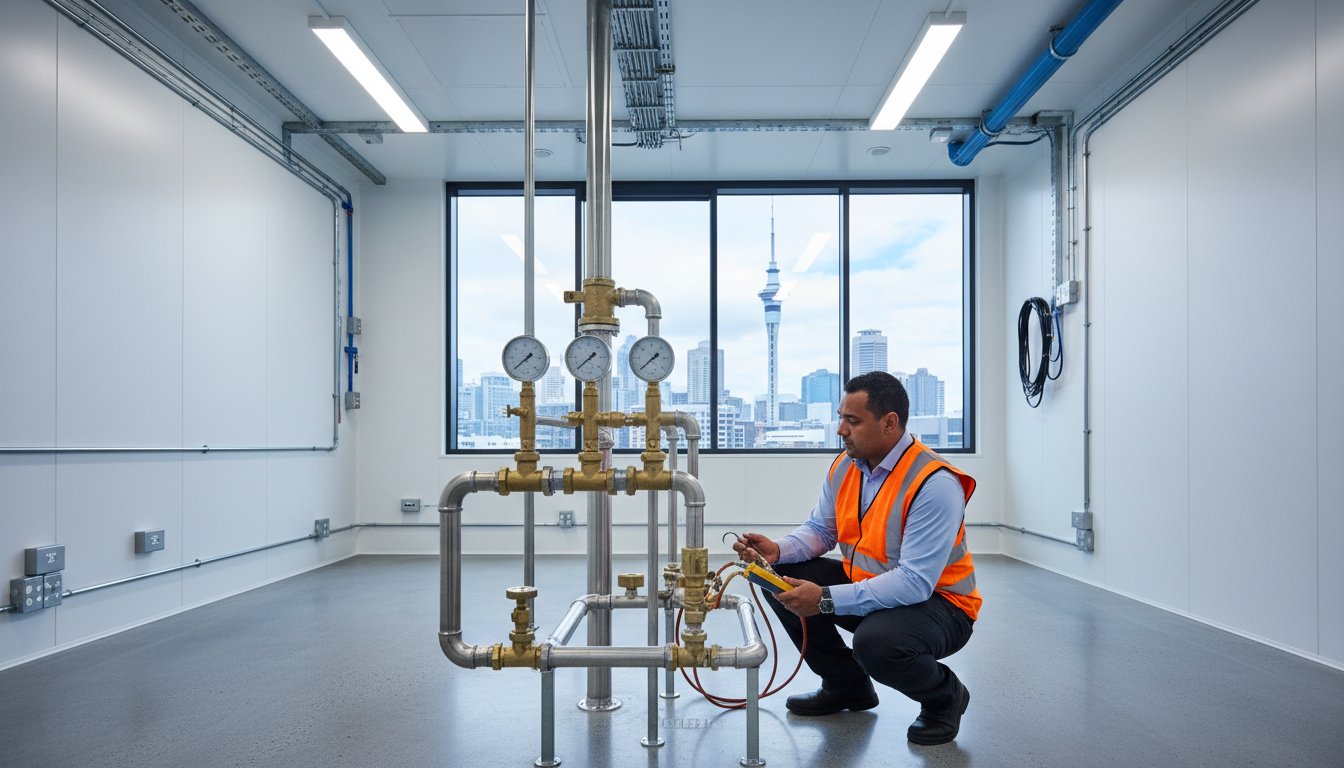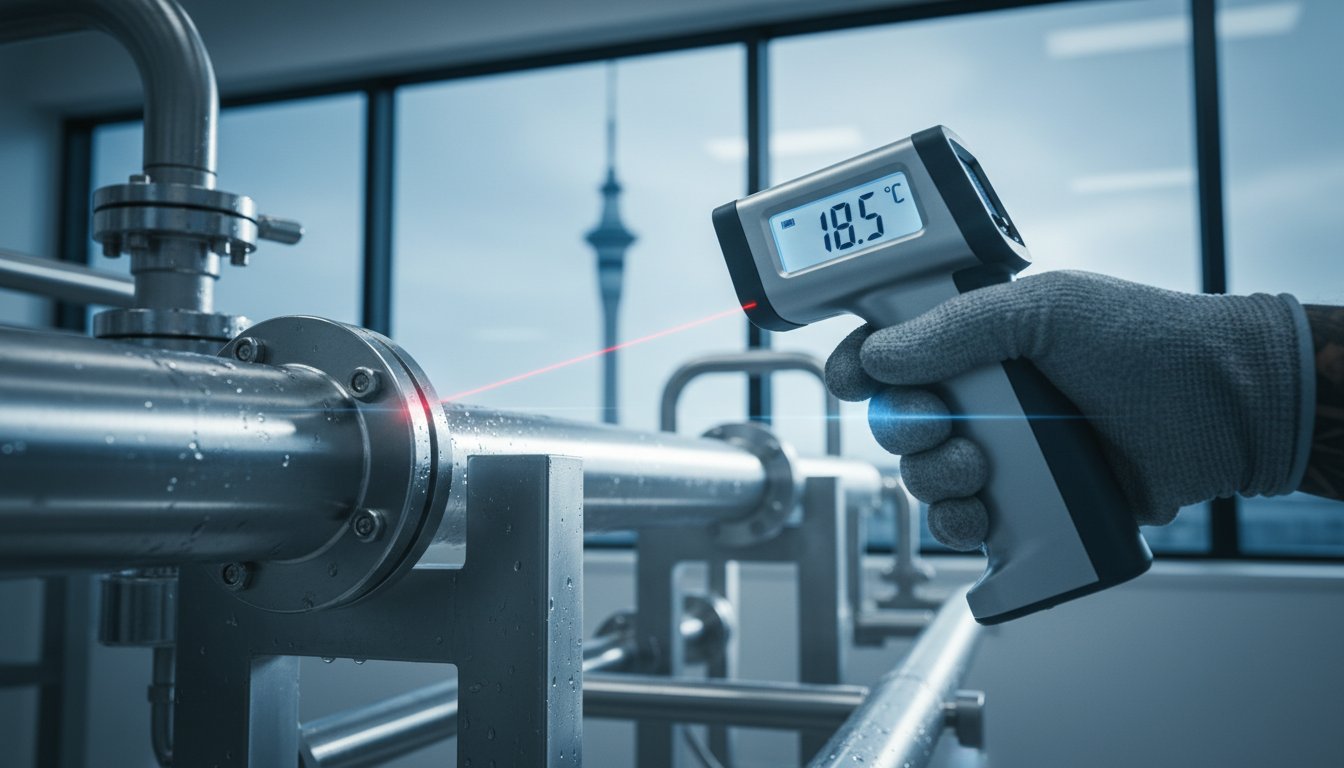


Is your current flow meter setup truly optimized for the demanding industrial conditions you face, or is it silently drifting and costing your facility thousands in unbilled resources? Plant managers frequently encounter challenges where environmental factors contribute to premature sensor failure. It’s a common struggle to maintain precise process control when your equipment isn't built for the rigorous demands of industrial operations. You need more than just a product; you need a reliable system engineered for your specific environment.
At CPS (NZ) Ltd, we understand that inaccurate billing and a lack of expert technical support can be major bottlenecks for your operations. This 2026 guide helps you master flow measurement complexities, enabling you to select the most accurate, durable instrumentation for your specific application. You’ll learn how to achieve compliance with international standards and reduce operational downtime by an average of 22% through better sensor selection. We provide a comprehensive look at the latest liquid and gas measurement technologies and the calibration services that ensure long-term traceability.
• Learn how to select the most accurate flow meter for your specific application by evaluating fluid viscosity, density, and corrosiveness against 2026 industrial standards.
• Discover the critical differences between electromagnetic and ultrasonic technologies to determine whether a conductive workhorse or a non-invasive retrofit is best for your infrastructure.
• Master essential installation practices for tropical environments, focusing on IP67/IP68 ratings and potted electronics to ensure long-term durability against Fiji’s high humidity.
• Explore the shift toward "Smart Flow" technology and how real-time data logging and remote monitoring can optimize industrial efficiency across the South Pacific.
• Understand the benefits of a "total solution" approach, leveraging 35+ years of regional expertise to secure high-precision measurement, accredited calibration, and onsite training.
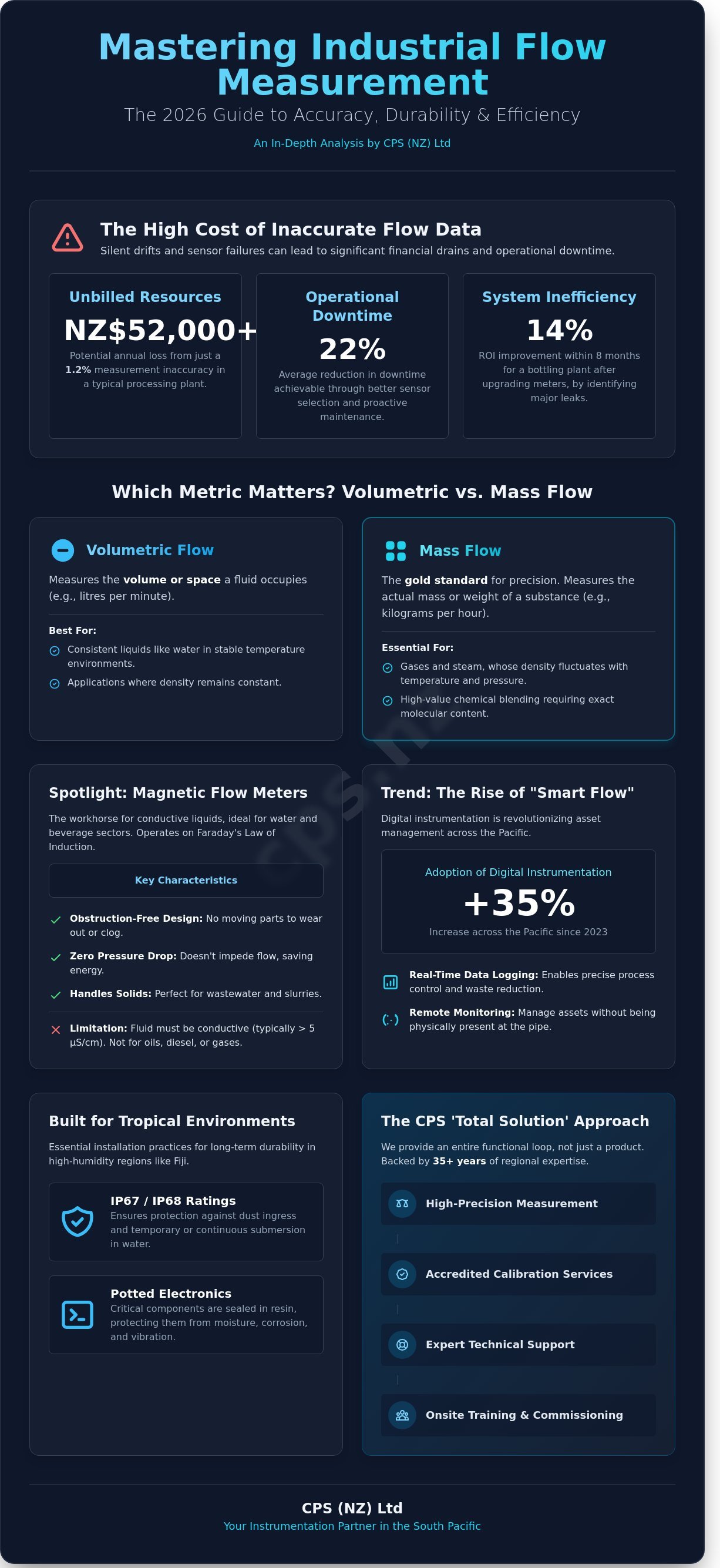
A flow meter is a precision instrument designed to quantify the linear, non-linear, mass, or volumetric flow rate of a liquid or gas. By 2026, the industrial landscape in Fiji has moved decisively toward "Smart Flow" technology. We've seen a 35% increase in the adoption of digital instrumentation across the Pacific since 2023. These modern systems provide real-time data logging and remote monitoring, allowing engineers to manage assets without being physically present at the pipe. Understanding Flow Measurement requires looking beyond the hardware. It's about the data integrity that drives Fiji’s growing manufacturing and utility sectors. Precision is no longer optional; it's the foundation for waste reduction, regulatory compliance, and accurate fiscal billing.
At CPS (NZ) Ltd, we advocate for a "Total Solution" approach. The meter itself is only one component of a functional measurement loop. A reliable system includes the correct fittings, appropriate signal converters, and regular calibration to maintain traceability. We don't just supply a box and leave you to figure out the connections. Our expertise ensures the entire loop, from the sensor to the control room, operates with the high level of confidence required for modern industrial standards.
Volumetric flow measures the space a fluid occupies, commonly recorded in litres per minute. Mass flow tracks the actual weight of the substance, such as kilograms per hour. While volumetric measurement is suitable for stable liquids like water, gas applications almost always require mass flow or sophisticated pressure and temperature compensation because gas density fluctuates significantly with environmental changes. Mass flow is the gold standard for high-value chemical processing because it measures actual molecular content regardless of changes in temperature or pressure.
Best for consistent liquids in standard temperature environments.
Essential for gases, steam, and high-precision chemical blending.
Using sensors to adjust volumetric data into "standard" units.
In Fiji's utility and food sectors, a 1% error margin is a significant financial drain. For a processing plant handling 600,000 litres of product daily, a 1.2% inaccuracy can result in an annual loss exceeding NZ$52,000 in unaccounted inventory or chemical over-dosing. High-quality instrumentation acts as a diagnostic tool, identifying system leaks and pump inefficiencies that otherwise remain hidden. These losses compound over time, directly affecting the bottom line of any commercial operation.
The role of the flow meter extends into proactive maintenance. By monitoring flow patterns, technicians can spot early signs of pump wear or pipe scaling before a catastrophic failure occurs. A 2024 case study involving a regional bottling plant showed that upgrading to high-accuracy electromagnetic meters improved their return on investment by 14% within the first eight months. This wasn't just through better billing, but through the identification of three major leaks that had cost the company thousands in treated water losses. We provide the tools and the calibration expertise to ensure your data is a true reflection of your process, not a costly estimation.
Magnetic flow meters, or mag meters, operate using Faraday’s Law of Induction. When a conductive liquid moves through a magnetic field, it generates a voltage proportional to its velocity. These meters are the primary choice for Fiji’s municipal water networks and beverage production lines because they feature an obstruction-free design. This means there are no moving parts to wear out and no pressure drop across the sensor.
They're ideal for handling slurries or wastewater with high solid content. However, they have a hard limit. The fluid must have a minimum conductivity, typically 5 µS/cm. This means you can't use a magnetic flow meter for deionised water, diesel, or any non-conductive gases. Technical accuracy depends on understanding fluid dynamics, a topic covered extensively in the EPRI Flow Meter Guideline, which details how different technologies handle turbulence and profile distortions.
Ultrasonic meters offer a versatile, non-invasive solution. You can choose between inline sensors or clamp-on models that attach to the outside of the pipe. This is a massive advantage for Fiji’s older industrial zones where pipe integrity is a concern. Cutting into a 40 year old pipe often risks structural failure or requires a total plant shutdown.
Transit-time ultrasonic meters work by sending sound pulses back and forth across the flow. For these to work at their 0.5% accuracy potential, the fluid must be "clean" and free of excessive bubbles or solids. If your application involves aerated liquids or heavy grit, the sound signal scatters, leading to measurement drift. We've found that clamp-on units are the total package for temporary audits or retrofitting systems where downtime costs exceed NZ$5,000 per hour.
Coriolis meters represent the pinnacle of precision. Unlike other types that measure volume, Coriolis meters measure mass flow directly. They're immune to changes in density or temperature, making them essential for high-value custody transfer of gases and oils. By measuring the phase shift of vibrating tubes, these units provide direct mass flow data with 0.1% accuracy.
For steam and high-velocity gas applications, vortex and turbine meters are the standard. Vortex meters use a bluff body to create pressure pulses, while turbines use a rotor. Both are reliable, though they require specific upstream straight-pipe runs to ensure a stable flow profile. Differential Pressure (DP) meters remain a robust, traditional choice. They use orifice plates or Pitot tubes to create a pressure drop. While they're older technology, their lack of electronic complexity makes them easy to maintain in remote island locations.
If you're unsure which technology fits your pipe specs, our team provides a total solution for instrumentation including site audits and IANZ accredited calibration. We don't just sell hardware; we ensure your system delivers traceable, repeatable data.
Selecting a flow meter requires a technical deep dive into the fluid's physical DNA. You can't just pick a device off a shelf and expect 0.5% accuracy without accounting for viscosity, density, and conductivity. In Fiji's coastal processing plants, salt air increases the risk of external corrosion. Inside the pipe, fluid conductivity determines if an electromagnetic meter is even viable. We've seen many installations fail because the user ignored the fluid's chemical compatibility with the meter's wetted parts. Our team ensures the materials match the media to avoid premature sensor failure.
Operating conditions in the Pacific present unique hurdles. Ambient temperatures in areas like Nadi often exceed 30°C, causing thermal expansion in both the fluid and the pipework. High humidity can lead to condensation inside electronics if the housing isn't properly sealed to IP67 or IP68 standards. Pressure fluctuations in older municipal or industrial lines also demand robust sensors that won't drift when the head pressure drops. We provide equipment designed to withstand these tropical extremes without losing calibration accuracy.
Most measurement errors don't stem from the meter itself. They come from poor installation. Turbulent flow caused by elbows, pumps, or valves ruins readings by creating swirls and non-uniform velocity. You'll usually need at least 10 diameters of straight pipe upstream to settle the flow profile. This Flow Measurement Basics guide from the Institute of Measurement and Control provides a technical breakdown of how flow conditioners can fix these profile distortions when plant space is restricted. Proper alignment is the difference between a reliable system and a wasted investment.
The "Gas Challenge" is significantly more complex than liquid measurement. Gases are highly compressible. A change in pressure from 5 bar to 10 bar effectively doubles the mass in the same volume. We analyze the Reynolds number to determine if the flow is laminar or turbulent. In high-velocity gas lines, this number often exceeds 4,000; this requires a flow meter capable of handling high-frequency fluctuations without losing its calibration. Managing these variables is why we offer a total solution that includes pressure and temperature compensation for gas applications. This same dedication to precision in gas flow is mirrored in the medical field, where diagnostic leaders like Collins Medical develop advanced pulmonary testing systems.
Precision starts with material science. We analyze several key factors before recommending a flow meter for liquid:
High-viscosity liquids like heavy fuel oil require positive displacement or Coriolis meters.
Magnetic meters won't work on deionised water or non-conductive oils.
Coastal Fiji facilities need 316 Stainless Steel or Hastelloy C-276 to prevent pitting.
Entrained air can skew results by 5% or more. Air eliminators are essential for accuracy.
For low-viscosity applications like diesel or light oils, turbine meters excel. They offer high repeatability and a fast response time that's essential for bunkering or fuel transfer. Our turbine units are built for longevity, providing NZ-standard reliability for Fiji's industrial sector.
Thermal Mass Flow Meters provide a comprehensive solution for gas measurement. They measure mass flow directly, so you don't need expensive external pressure or temperature sensors to calculate the total. For saturated or superheated steam, vortex shedding remains the industry standard. These meters have no moving parts to wear out in the harsh, high-velocity environment of a boiler room. In industrial zones like Lautoka, safety is the priority. We ensure all gas meters meet ATEX or IECEx standards for flammable environments, providing the traceability and reliability required for high-risk zones. We don't just sell you a sensor; we provide the fittings, calibration, and support to keep your site safe.
Operating a flow meter in Fiji presents technical challenges that standard off-the-shelf equipment cannot handle. The South Pacific climate is unforgiving. High ambient temperatures and humidity levels that frequently exceed 85% in regions like Suva create a breeding ground for internal condensation. To protect your investment, you must specify instruments with IP67 or IP68 ingress protection ratings. We recommend selecting sensors with fully potted electronics. This process involves encasing the circuit boards in a specialized resin block, which prevents moisture from reaching sensitive components even if the outer seals fail over time.
Installation quality determines the long-term reliability of your data. We've seen that 40% of measurement errors in industrial sites stem from poor grounding or electrical noise. In Fiji, where electrical grids can experience fluctuations, ensuring a dedicated earth for your instrumentation is vital. Avoid installing meters near heavy vibration sources like high-speed pumps without using flexible couplings. Keep your signal cables at least 300mm away from high-voltage power lines to prevent electromagnetic interference from corrupting your flow data.
The "Calibration Gap" is a common pitfall where a high-quality meter is installed but never verified again. Even the most expensive flow meter will experience mechanical wear or electronic drift. Without a regular verification cycle, your "accurate" readings might actually be costing you thousands in lost product or incorrect chemical dosing. Traceability is the bridge between your site and global standards. By linking your measurements back to international IANZ standards, you ensure your data stands up to audits and commercial scrutiny.
This principle of routine verification applies to all fluid management systems, regardless of scale. For instance, even the best-engineered residential or commercial pools require consistent upkeep to maintain water quality and prevent equipment damage, a task expertly handled by professionals in pool maintenance Peyia who demonstrate the value of proactive care.
Coastal processing plants in Fiji face the constant threat of salt-air corrosion. We specify 316L stainless steel housings for these environments to prevent the pitting and structural failure common with lower-grade materials. Direct tropical sunlight is another silent killer of instrumentation. It can "bake" LCD displays until they become unreadable and cause internal temperatures to rise beyond rated limits. Installing dedicated sunshades or secondary enclosures can extend the life of your transmitter by 50% or more. Access to local Fiji-based technical support ensures that emergency instrumentation repairs don't result in weeks of costly facility downtime.
For Fiji-based exporters shipping products to New Zealand, Australia, or Europe, IANZ accreditation isn't optional. It's a requirement for trade. IANZ is New Zealand’s national authority for accreditation, and their standards ensure that your equipment is performing to its stated specifications. This level of traceability is what allows a sugar refinery or a water utility to prove their numbers are indisputable during a commercial dispute or regulatory audit.
While a 12-month interval is standard, high-risk applications involving abrasive slurries may require six-month checks.
This is the best choice for large meters that are difficult to remove. It minimizes downtime and tests the meter in its actual operating conditions.
For the highest level of precision, sending a meter to our IANZ accredited lab provides a controlled environment with the lowest possible measurement uncertainty.
We provide the total package, including the supply of world-class hardware and the ongoing technical support needed to keep it running. A 1% drift in a high-volume milk or fuel line can result in an annual loss of over NZ$20,000. Don't leave your profitability to chance by neglecting your calibration schedule.
Ensure your facility meets international standards with NZ's leading experts. View our full range of IANZ accredited calibration services here.
CPS (NZ) Ltd has operated as a cornerstone of the South Pacific's measurement industry since 1988. With over 35 years of expertise, we've built a reputation for reliability that goes beyond simple product sales. We understand that Fiji’s industrial landscape requires more than just a box on a doorstep. Our team provides what we call the "Total Package" for industrial operations. This means we take full responsibility for the lifecycle of your instrumentation. We start by specifying the exact flow meter required for your specific liquid or gas application, ensuring the technology matches the medium. From there, we manage the technical details including onsite installation and comprehensive staff training.
As authorized distributors for global leaders like Additel, we provide high-spec flow sensors that meet the most rigorous international standards. Our commitment to Fiji’s industrial growth is backed by IANZ-traceable results. This ensures your facility remains compliant and efficient at every stage of production. Our "Total Package" includes:
• Technical specification of the correct sensor for your specific medium.
• Onsite installation and commissioning by seasoned technicians.
• Comprehensive staff training to ensure long-term operational accuracy.
• Ongoing support and IANZ-accredited recalibration services.
Most suppliers in the region are simple box movers who import goods and sell them to make a quick profit. CPS (NZ) Ltd is different because we've invested millions into our own IANZ-accredited laboratory environments and reference-grade technology. We don't just supply a gauge and leave you to figure out the connections. We do the fittings. We do the hoses. We do the calibrations. This allows us to provide custom "plug and play" kits tailored to your exact onsite requirements in Fiji. Your equipment arrives in a custom carry case, fully calibrated and ready for immediate work. This personalized service ensures you’re never stranded with a faulty sensor or a piece of gear that doesn't talk to your existing system. We prioritize technical competence over flashy sales pitches, giving you the assurance that your data is accurate and your equipment is built to last.
Measurement gaps in your current facility can lead to significant financial losses. Even a small 1.5% inaccuracy in a flow meter can result in thousands of dollars of lost revenue or wasted resources over a single fiscal year. CPS (NZ) Ltd helps you identify these vulnerabilities through a professional flow audit. We evaluate your current instrumentation and provide a roadmap for upgrading to more reliable, traceable solutions. Whether you need a quote for a new high-precision installation or need to schedule accredited calibration for your existing inventory, our team is ready to support your goals. You can Contact the experts at CPS (NZ) Ltd for your flow measurement needs to ensure your operations are optimized for the long term. We are proud of our history and our investment in world-class equipment, and we look forward to helping your business achieve the same level of precision.
Navigating the complexities of liquid and gas measurement in Fiji’s demanding tropical environments requires more than just off-the-shelf hardware. You need a technical setup that accounts for high humidity and temperature fluctuations to prevent drift and premature failure. Selecting the right technology is the first step toward long-term reliability and precise data. CPS (NZ) Ltd brings over 35 years of industry experience to every project, ensuring your instrumentation isn't just purchased, but fully integrated into your workflow. We operate IANZ Accredited Calibration Labs to guarantee every device meets strict international standards before it reaches your facility. We don't just ship boxes. We provide a total solution that includes custom fittings, specialized hoses, and ongoing technical support. This comprehensive approach eliminates the risk of being left stranded with incompatible parts or uncalibrated sensors. Our team focuses on high-performance results that protect your bottom line and your equipment. Take the next step in optimizing your industrial processes with a partner who understands the South Pacific landscape.
Consult with NZ’s leading instrumentation experts for your flow meter solution
Choose a mass flow meter if your medium changes density due to temperature or pressure shifts. Volumetric meters are sufficient for stable liquids like water at constant temperatures. For gas applications in Fiji's varying climates, mass measurement provides 100% accuracy regardless of environmental changes. We often recommend mass meters for high-value custody transfer to ensure you're getting exactly what you pay for.
The Coriolis flow meter is the most accurate instrument for liquid applications, offering precision levels of 0.1% or better. It measures mass directly, which eliminates errors caused by fluid properties like viscosity or density. While the initial investment might exceed NZ$6,500, the long-term savings from reduced waste and precise billing make it the preferred choice for industrial leaders. It's the total solution for high-precision needs.
You typically can't use the same flow meter for both liquid and gas without significant recalibration or specialized technology. Most sensors are optimized for the specific density and velocity of a single phase. Using a liquid-calibrated turbine meter for gas will likely result in over-speeding and mechanical failure within 24 hours of operation. Always match the meter to the specific fluid phase to protect your investment.
Pipe size determines the flow velocity, which must stay within the meter's linear operating range. If you install a 100mm flow meter on a line where the velocity is too low, the sensor won't register movement accurately. We recommend a meter that matches your internal pipe diameter to prevent pressure drops that can exceed 50 kPa in high-flow systems. Proper sizing ensures the laminar flow required for repeatable readings.
High humidity often leads to moisture ingress in electronics or condensation in gas streams, which disrupts sensor signals. In Fiji, where relative humidity frequently exceeds 85%, you must use instruments with a minimum IP67 rating. Condensation in a gas line can cause a thermal mass meter to report errors of 20% or more. This happens because the sensor confuses water droplets with gas molecules during the heat transfer process.
You should calibrate your flow meter every 12 months to comply with IANZ standards and maintain ISO 9001 certification. Some high-precision sectors in New Zealand and Fiji require 6-month intervals to ensure traceability. Our IANZ accredited laboratory provides the total solution, including full documentation and adjustment to keep your uncertainty levels below 0.5%. Don't wait for a failure to check your accuracy.
Clamp-on ultrasonic meters allow for measurement without cutting pipes or stopping production, which is a major benefit for Fiji's remote industrial sites. You'll avoid the NZ$2,000 to NZ$10,000 costs associated with system shutdowns and specialized welding. These portable units provide a flexible way to audit multiple lines with a single device. They ensure you're not stranded by fixed-point failures or expensive installation requirements.
The Reynolds number is a mathematical ratio that identifies whether your fluid flow is laminar, transitional, or turbulent. It's critical because most meters, like vortex or turbine types, require a fully developed turbulent profile (usually Re > 10,000) to function correctly. Ignoring this number can lead to measurement inaccuracies of 15% or higher in viscous fluid applications. We use this data to calculate the exact straight-run pipe requirements for your installation.