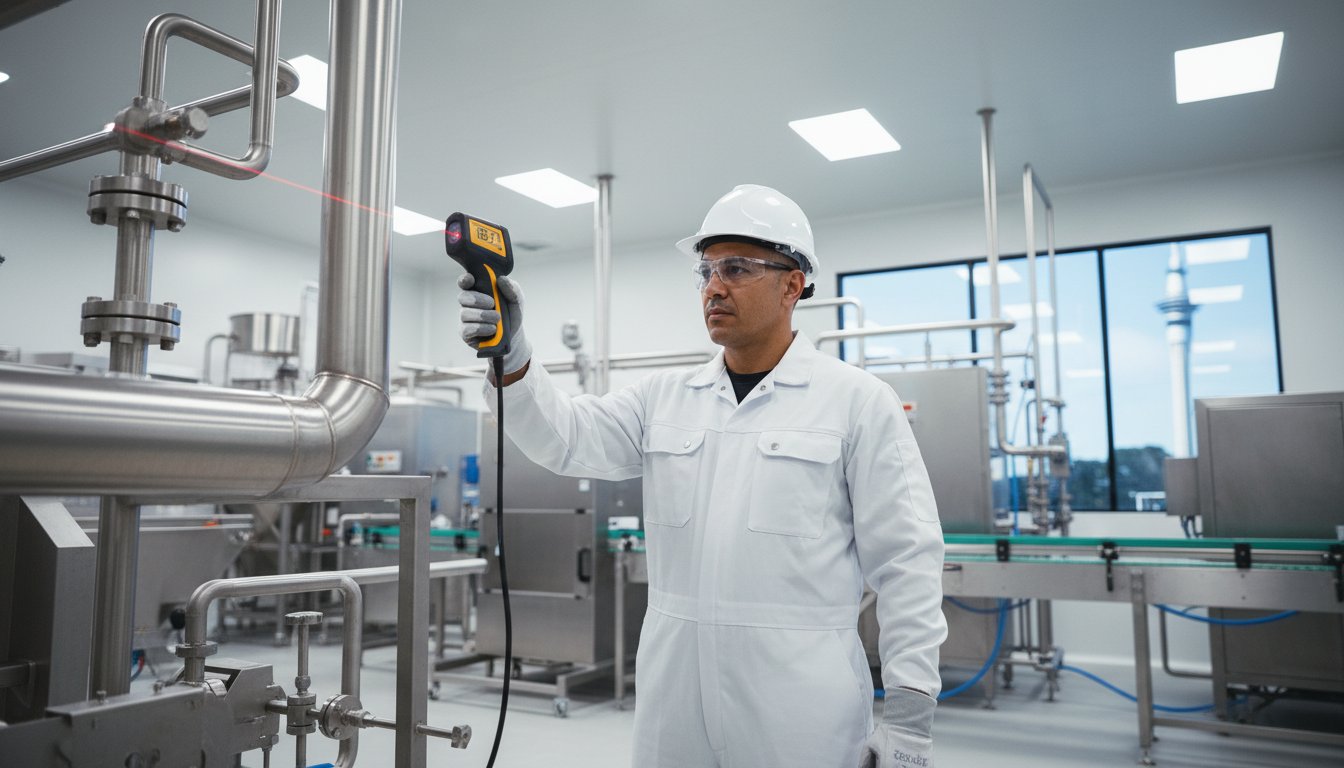



In the high-salinity, humid environments of Fiji's industrial zones, a standard off-the-shelf pressure gauge is often little more than a ticking time bomb for your operational budget. You've likely seen it happen before; a critical dial seizes up after only six months of service, or a reading drifts so far that it compromises plant safety. Recognizing these unique challenges and the struggle to find robust, IANZ-accredited solutions locally, **CPS (NZ) Ltd** brings its expertise to ensure your instrumentation performs reliably in the tropics.
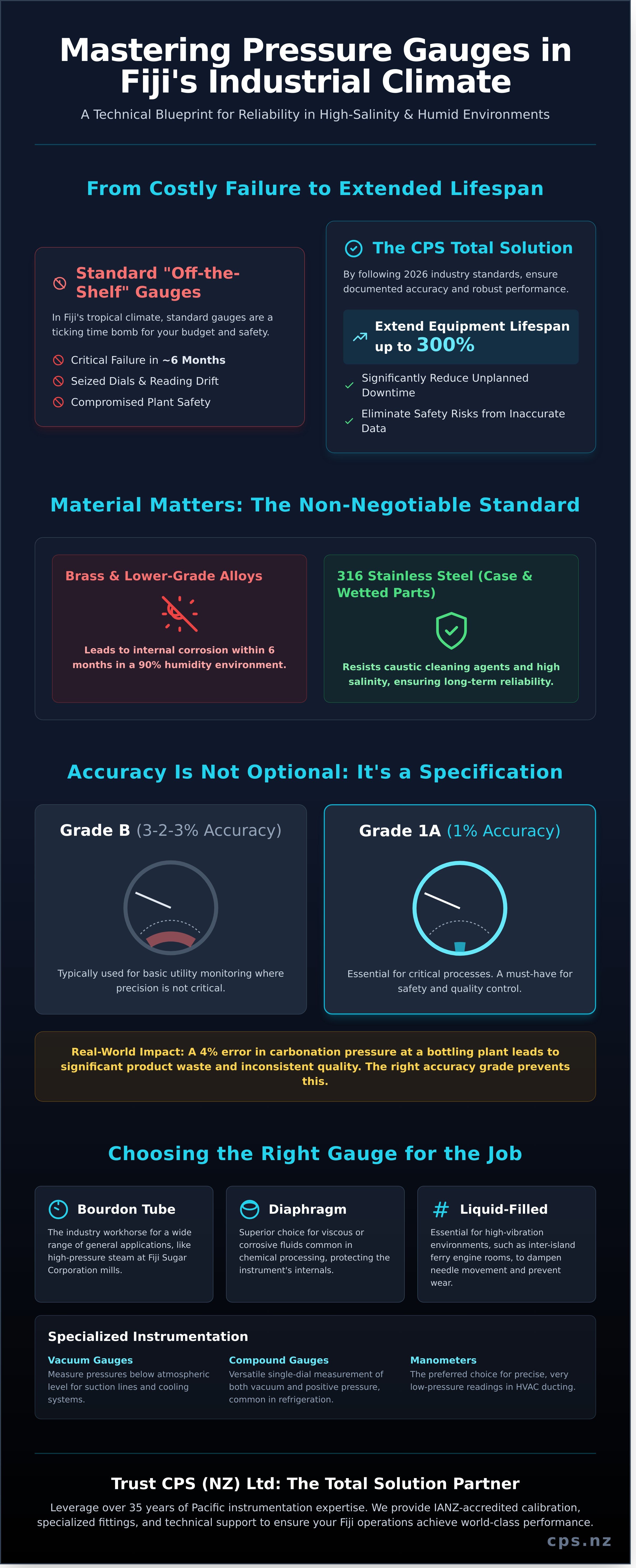
At **CPS (NZ) Ltd**, we believe you shouldn't have to settle for "good enough" when it comes to your critical instrumentation. This guide, drawing on our deep understanding of industrial requirements and the specific demands of the Fijian climate, provides the technical blueprint to master the selection, maintenance, and calibration of your pressure gauges. We don't just look at the hardware; we focus on the total solution that ensures documented IANZ-traceable accuracy and significantly reduces unplanned downtime. By following these 2026 industry standards, you can extend your equipment lifespan by up to 300% and eliminate the safety risks associated with inaccurate data. We'll walk through the exact material grades required for corrosion resistance and the specific calibration cycles that keep your operations running smoothly, ensuring your Fiji operations benefit from world-class performance.
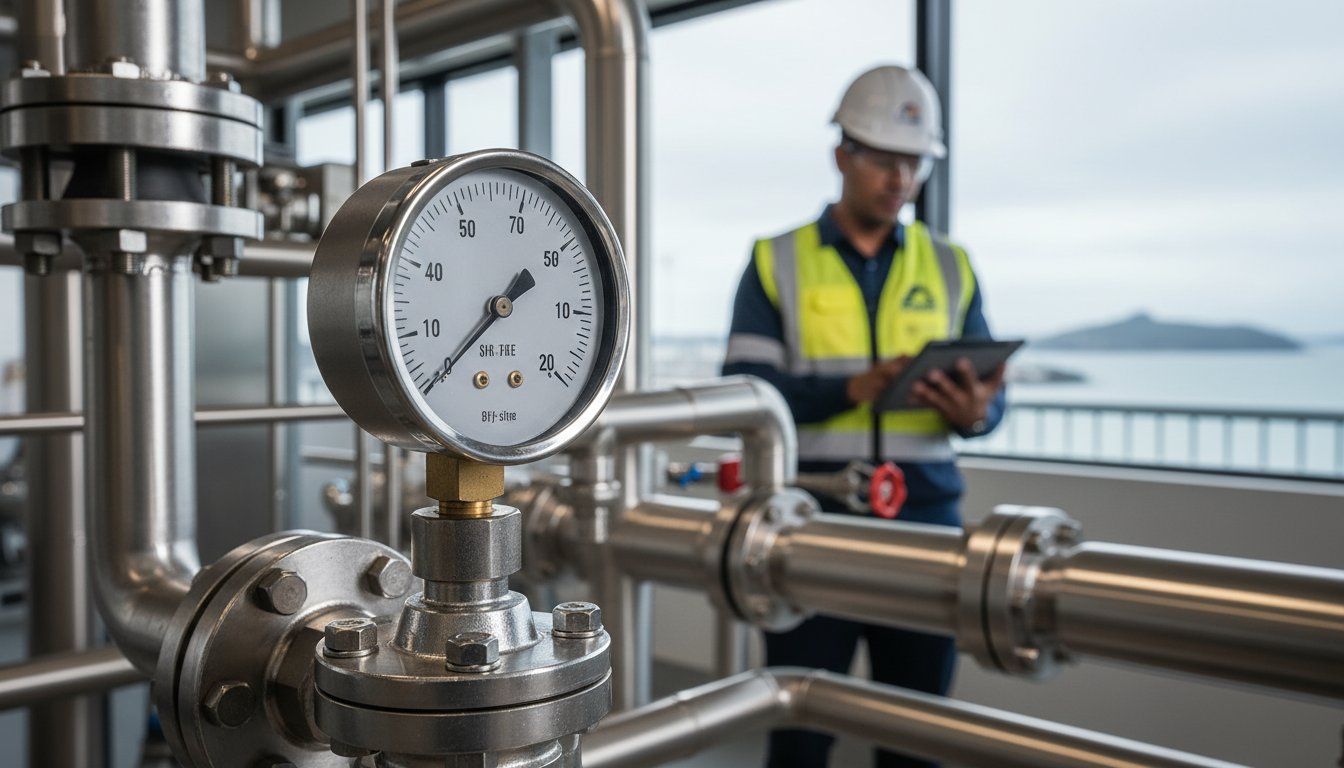
A pressure gauge isn't just a dial on a pipe. It’s a critical safety and process control instrument that protects your infrastructure from catastrophic failure. These devices provide the primary data point for operators to monitor system health in real-time. Without reliable instrumentation, a facility operates blindly, risking equipment damage and personnel safety. Most industrial applications rely on two distinct mechanical designs to translate force into a visual reading. The Bourdon tube gauge uses a curved, hollow tube that tends to straighten under internal pressure. Conversely, diaphragm gauges employ a flexible, corrugated membrane. This membrane deflects under pressure, making it the superior choice for the viscous or corrosive fluids often found in chemical processing.
Selecting the right instrument requires a firm grasp of pressure measurement principles to ensure the hardware matches the media. In Fiji, industry demands are diverse and demanding. The Fiji Sugar Corporation (FSC) relies on precise pressure monitoring across its three primary mills to manage high-pressure steam and juice extraction. In the maritime sector, vessels docking at Suva or Lautoka ports require rugged gauges for engine cooling and hydraulic steering systems. Food processing plants in the Central Division also depend on these tools to maintain sterilization standards. Most Pacific-based facilities use a mix of three common units: PSI (pounds per square inch), Bar, and kPa (kilopascals). Standardizing these units across your plant floor reduces the 12% of recorded maintenance errors caused by unit conversion confusion.
Accuracy isn't a vague goal; it's a technical specification defined by international standards like ASME B40.100. A Grade B pressure gauge typically offers a 3-2-3% accuracy spread, whereas a Grade 1A instrument provides a consistent 1% accuracy across the entire scale. Choosing the wrong grade can be expensive. In a Ba-based bottling plant, a 4% error in carbonation pressure leads to significant product waste and inconsistent quality. We recommend assessing the "criticality" of your process. If a 2-bar deviation could trigger a safety relief valve, you must invest in a higher accuracy class with a verified calibration certificate from an accredited lab.
Standard utility gauges are cost-effective solutions for basic air compressors or water lines where environments are stable. However, these don't survive long in the high-vibration engine rooms of Fiji's inter-island ferries. For those environments, you need liquid-filled industrial models that dampen internal movement. Specialized systems might also require:
Choosing a pressure gauge isn't just about picking a dial off a shelf. In industrial environments like Fiji's sugar mills or food processing plants, the gauge is the final link in a complex measurement chain. We've seen too many operations fail because they treated the instrument as a commodity rather than a component of a total assembly. If the materials don't match the media or the fittings don't match the pipework, the reading is useless. Reliability starts with understanding the specific demands of your process line.
Chemical compatibility remains the first hurdle for any technician. For most Fiji-based applications, 316 Stainless Steel is the non-negotiable standard for both the case and wetted parts. Using brass or lower-grade alloys in a 90% humidity environment leads to internal corrosion within 6 months. We specify 316 Stainless Steel because it resists the caustic cleaning agents used in beverage bottling and the acidic by-products found in geothermal energy production. It's about longevity, not just initial cost. Choosing the wrong alloy can lead to diaphragm failure, which risks contaminating your entire production batch.
Visibility is the next practical requirement. A 63mm dial might save space, but it's unreadable from three meters away in a dimly lit boiler room or a cramped engine space. We recommend 100mm or 160mm dials for primary process points. This ensures operators can monitor pressures accurately without needing to climb ladders or use torches. Finally, you must get the threads right. Mixing NPT (National Pipe Tapered) with BSP (British Standard Pipe) is a recipe for leaks and thread galling. We stock both to ensure your pressure gauge fits the existing infrastructure perfectly without requiring dangerous workarounds.
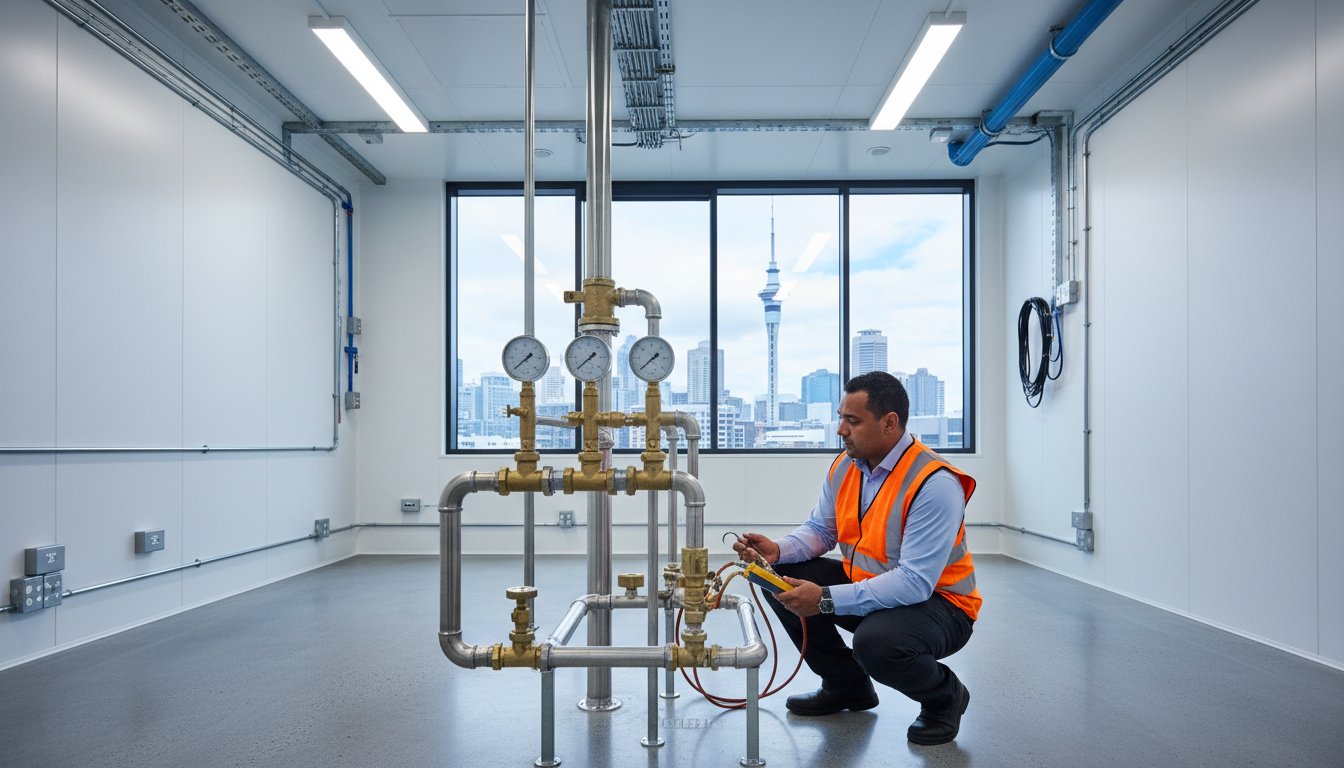
We don't just 'box-shift' equipment. At CPS, we provide a plug-and-play solution that includes the instrument, high-quality hoses, and the specific adaptors required for your site. Most off-the-shelf gauges arrive without the necessary fittings, forcing your technicians to scavenge for parts. Our kits arrive pre-assembled and calibrated in our IANZ accredited lab. We also include custom-moulded carry cases. These cases protect sensitive reference equipment from the vibrations and drops common during transit to remote sites across the islands. It's a complete system designed to work the moment it's opened.
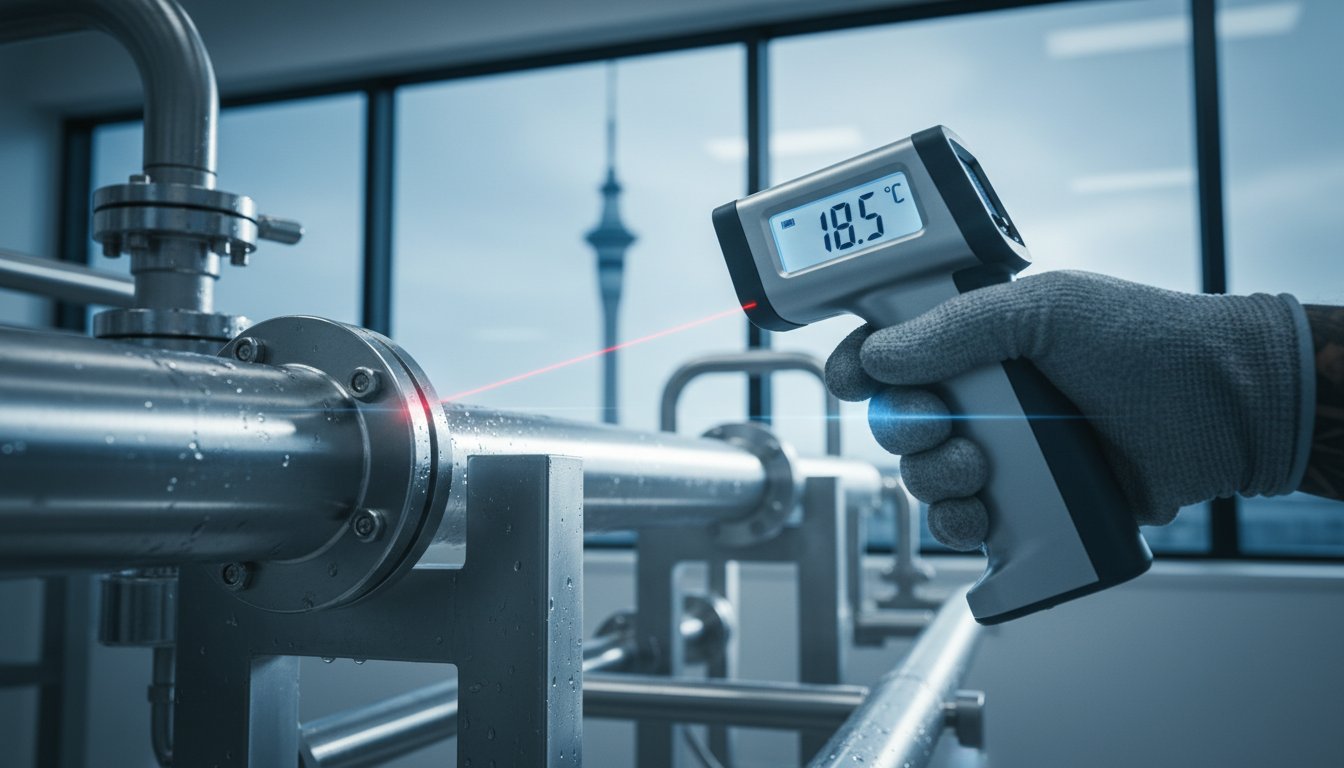
Fiji's tropical climate is brutal on instrumentation. Salt air from the Pacific Ocean causes plastic cases to become brittle and crack within 24 months of installation. We provide hermetically sealed, liquid-filled units to combat this. The liquid filling, usually glycerine or silicone, dampens vibration and prevents internal condensation. High humidity often leads to fogged lenses, making gauges unreadable. Our sealed units maintain clarity regardless of the external moisture levels. We also account for temperature fluctuations. In a 35°C environment, thermal expansion can shift your zero point. Our high-spec units include internal compensation to maintain 1.0% or 0.5% accuracy even when the mercury rises. You can view our full range of industrial instrumentation solutions to see how we build for these specific conditions.
Choosing the right pressure gauge involves more than just picking a dial size. It requires a technical assessment of your specific environment in Fiji, whether you're operating a food processing plant in Suva or a remote utility station in Vanua Levu. At CPS (NZ) Ltd, we've spent over 35 years providing the total solution for instrumentation, and we've seen that the "best" gauge is always the one matched to the local stressors of the job. You aren't just buying a tool; you're investing in the reliability of your entire system.
Analogue gauges remain the industry standard for high-vibration environments. In 2023, mechanical gauges still accounted for roughly 65% of new installations in heavy industrial sectors across the Pacific. Their primary strength lies in their simplicity. They don't require batteries, making them ideal for remote sites where power stability is an issue. For facilities dealing with constant mechanical shifts, a glycerine-filled analogue pressure gauge provides the dampening needed to keep the needle steady. This prevents the internal gears from wearing out prematurely under 50Hz or 60Hz vibration cycles.
Digital pressure modules offer a different level of sophistication. While a standard analogue unit might offer 1.0% or 1.6% full-scale accuracy, a modern digital gauge from manufacturers like Additel provides precision up to 0.02% of full scale. This level of detail is vital for critical processes where even a 2 psi deviation can compromise product quality or safety. Digital units also allow users to toggle between 11 or more different engineering units, including bar, psi, kPa, and MPa, without needing multiple physical dials on the shelf.
Analogue gauges are superior for "at-a-glance" monitoring. A technician walking past a boiler can instantly see if a needle is in the green zone without needing to stop and read a liquid crystal display. We recommend using glycerine-filled units with 99.7% pure vegetable-grade glycerine to protect the movement from dampening pulsation and corrosive tropical humidity. These units require significantly less maintenance in non-critical zones, often lasting 5 to 10 years before requiring a full replacement or recalibration, provided they aren't over-pressured.
For Suva-based labs or maintenance hubs, digital gauges serve as essential reference standards. The Additel 273Ex, for instance, includes a built-in data logger that captures up to 10,000,000 readings. This allows engineers to track peak pressure spikes that an analogue needle might miss. Many Fiji-based facilities now use these as "master gauges" for in-house testing. This approach ensures IANZ-level traceability without sending every single gauge back to New Zealand for routine verification. It's a key part of the total package we provide to keep your operations running autonomously.
The cost-benefit analysis often comes down to long-term operational expenditure. A high-quality analogue gauge might cost NZ$140, while a professional digital module starts around NZ$950. However, the digital unit's ability to capture min/max peaks and log data reduces the man-hours spent on manual recording. For remote Fiji locations, power is the biggest hurdle. Modern digital units now feature battery lives exceeding 8,000 continuous hours. This means a single set of batteries can last over 330 days in the field, effectively bridging the gap between mechanical reliability and digital precision.
Fiji's tropical environment is notoriously hard on mechanical hardware. High humidity levels, often peaking above 85%, combined with salt-laden air in coastal industrial zones like Suva and Lautoka, accelerate the degradation of a standard pressure gauge. This leads to mechanical wear that isn't always visible to the naked eye. Internal components like the bourdon tube or the hairspring can suffer from microscopic corrosion, resulting in "drift" where the reading becomes increasingly unreliable over time. In a 2023 survey of Pacific industrial sites, nearly 30% of unmaintained gauges were found to be operating outside of their specified accuracy class.
Many operators confuse a simple 'check' with a professional calibration. A check involves comparing one gauge against another on-site, which might tell you if a gauge is completely broken, but it won't tell you if it's accurate. Professional calibration is a controlled process where the instrument is compared against a reference standard with a known, higher accuracy. We don't just look at the dial; we verify the entire range of the instrument. You should watch for specific signs of failure to prevent costly downtime:
IANZ (International Accreditation New Zealand) represents the gold standard for calibration across New Zealand and the Pacific. It's the assurance that the laboratory operates under the strict ISO/IEC 17025 framework. When you hold an IANZ-accredited certificate, you're protected during safety audits because the data is legally defensible. This creates a clear traceability chain. It links your specific plant measurements directly to international SI units through our world-class reference equipment. We've seen businesses lose insurance claims because they couldn't prove their gauges were calibrated by an accredited body; don't let your business be one of them.
Choosing between on-site service and laboratory calibration depends on your precision needs and operational schedule. For large-scale operations like the sugar mills in Ba, our on-site services in Lautoka are the total solution. We bring the expertise to your doorstep to minimize downtime, which is critical during the June to December crushing season. We recommend a 6-month calibration interval for these high-intensity environments.
However, when you require ultra-high precision, such as 0.05% full-scale accuracy for master gauges, a controlled laboratory environment is essential. CPS manages the entire logistics chain for our Fiji clients. We handle the instrument transit from the islands to our Auckland lab, ensuring items are packed in custom cases to prevent transit damage. Most instruments are processed and returned within 5 to 7 working days, so you aren't left stranded without your critical tools. We aren't just a company that sells stuff to make a buck; we provide the ongoing support and technical depth that keeps Fiji's industries moving safely.
Ensure your equipment meets international safety standards today. Explore our total solution for IANZ accredited calibration
CPS (NZ) Ltd has spent over 35 years refining its role as the leading instrumentation authority in New Zealand and the Pacific. We don't operate as a typical middleman. While many regional suppliers focus solely on moving inventory, we've built our reputation on providing a total solution. This means we take responsibility for the entire lifecycle of your pressure gauge, from initial selection and sizing to long-term calibration and repair. Our team understands the unique challenges of Fiji's industrial sector, where high humidity and salt air can degrade equipment faster than in other climates.
Our commitment to the total package is what sets us apart. We don't just supply a dial and leave you to figure out the rest. We provide the fittings, the hoses, and the specialized training your technicians need to operate safely. By integrating world-leading brands like Additel and high-quality safety valves into our catalog, we ensure that Fiji's sugar mills, marine workshops, and power stations have access to the same tier of technology used in global metrology labs. We've seen that providing the right hardware is only half the battle; the other half is ensuring that hardware is installed correctly and maintained to ISO standards.
Our IANZ accredited laboratories in Auckland provide a level of technical certainty that simple importers can't match. Every pressure gauge we supply can be backed by rigorous calibration data, ensuring full traceability for your quality management systems. We don't just guess which Ajax valve or safety relief system fits your application; we use 35 years of engineering data to help you size and select the correct components. We're calibration experts who happen to sell equipment, not the other way around. This expertise allows us to support regional reach throughout the Pacific, providing remote technical support that keeps your operations running without the typical 14-day delays associated with overseas advice.
We've simplified the procurement process for Fiji's maintenance teams. Instead of sourcing individual parts from multiple vendors, you can request a quote for our customized plug-and-play kits. These kits arrive in custom carry cases, fully calibrated and ready for immediate deployment on the factory floor. This approach has helped our partners reduce installation errors by 15% and significantly cut down on commissioning time for new projects. Whether you need a single replacement or a site-wide calibration audit, we provide the logistical and technical framework to make it happen. You can contact CPS for a total pressure solution today to discuss your specific requirements and receive a detailed, professional assessment of your instrumentation needs.
Maintaining operational safety in Fiji’s demanding tropical environment requires more than just standard hardware. It demands a robust maintenance strategy that accounts for high humidity and corrosive coastal conditions. Selecting the correct pressure gauge isn't a one size fits all task; it's a critical decision that impacts your facility's long term efficiency and safety. CPS (NZ) Ltd provides the total solution by combining 35+ years of industry expertise with the technical precision of our IANZ Accredited Calibration Labs. As official partners of Additel and other leading global brands, we ensure every piece of equipment meets the highest international standards. We don't just supply hardware; we provide the ongoing calibration and technical support that keeps your infrastructure running within strict tolerances. Don't leave your instrumentation to chance when you can partner with the region's most trusted experts. Request a Professional Calibration Quote or Equipment Consultation today to ensure your hardware remains accurate and compliant for years to come. We're ready to help you build a more resilient industrial future.
You should choose a glycerine-filled pressure gauge because the liquid filling dampens internal vibrations and prevents condensation in Fiji's high humidity, which averages 80% year-round. This filling protects the delicate internal movement from mechanical shock and reduces wear on moving parts. We recommend these for 95% of tropical industrial applications as they can extend the life of your instrument by up to 300% compared to dry alternatives.
You must calibrate your pressure gauge every 6 to 12 months when operating in a maritime environment to maintain safety and accuracy. Salt spray and constant engine vibration can cause a standard gauge to drift by as much as 5% within a single year of service. Following a strict calibration schedule ensures your equipment remains compliant with ISO 9001 standards and prevents costly unplanned downtime.
The main difference is the thread angle and shape; NPT threads have a 60 degree angle with flattened peaks and valleys, while BSP threads have a 55 degree angle. Since Fiji and New Zealand primarily use the British Standard Pipe (BSP) system, it's the most common fitting you'll encounter. These thread types aren't interchangeable, and forcing a mismatch will cause leaks or permanent damage to your equipment's manifold.
Yes, CPS provides IANZ-accredited calibration for businesses in Suva and Lautoka through our specialised laboratory facilities. We've spent over 35 years refining our logistics to support Pacific industries, allowing you to ship your instruments to us for precision testing. We provide a total solution that includes full traceability and certification, ensuring your gear meets the highest international standards before it's returned to your site.
Grade 316 stainless steel is the superior choice for a pressure gauge case because it contains 2% molybdenum to resist chloride-induced pitting. In coastal environments like Suva, standard brass or 304 stainless steel can fail prematurely due to salt air exposure. Investing in 316 stainless steel internals and casings ensures your instrumentation remains operational for 5 to 10 years even in the harshest marine conditions.
Digital gauges are typically more accurate, often providing 0.1% full-scale accuracy compared to the 1.0% or 1.6% found in most analogue models. They eliminate parallax errors where a technician might misread the needle from a side angle. While we supply digital units for high-precision tasks, we still provide analogue gauges for 70% of general monitoring because they're robust and don't require battery power.
If your needle doesn't return to zero, you should remove the gauge from service immediately as it's no longer providing reliable data. This failure usually indicates the internal bourdon tube has suffered a 130% over-pressure event or has been damaged by a pressure spike. Don't attempt a DIY repair; instead, send it to our accredited lab so our experts can determine if it's repairable or needs replacement.
CPS provides the total package by supplying pre-calibrated equipment and technical consultation, while on-site installation is generally handled by our network of skilled local partners in Fiji. We don't just sell you a gauge and leave you stranded; we provide the fittings, hoses, and custom carry cases required for a "plug and play" setup. This ensures your local team has everything they need to complete a professional installation without missing components.