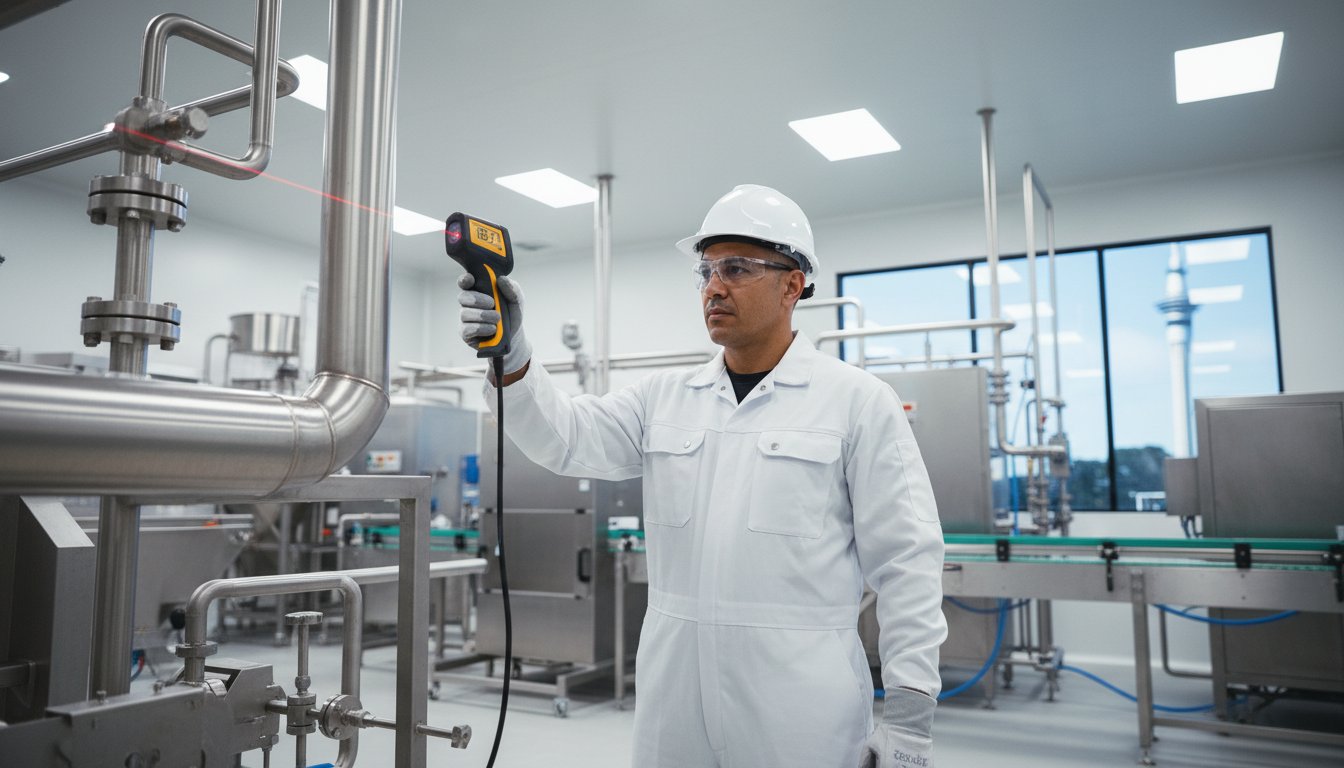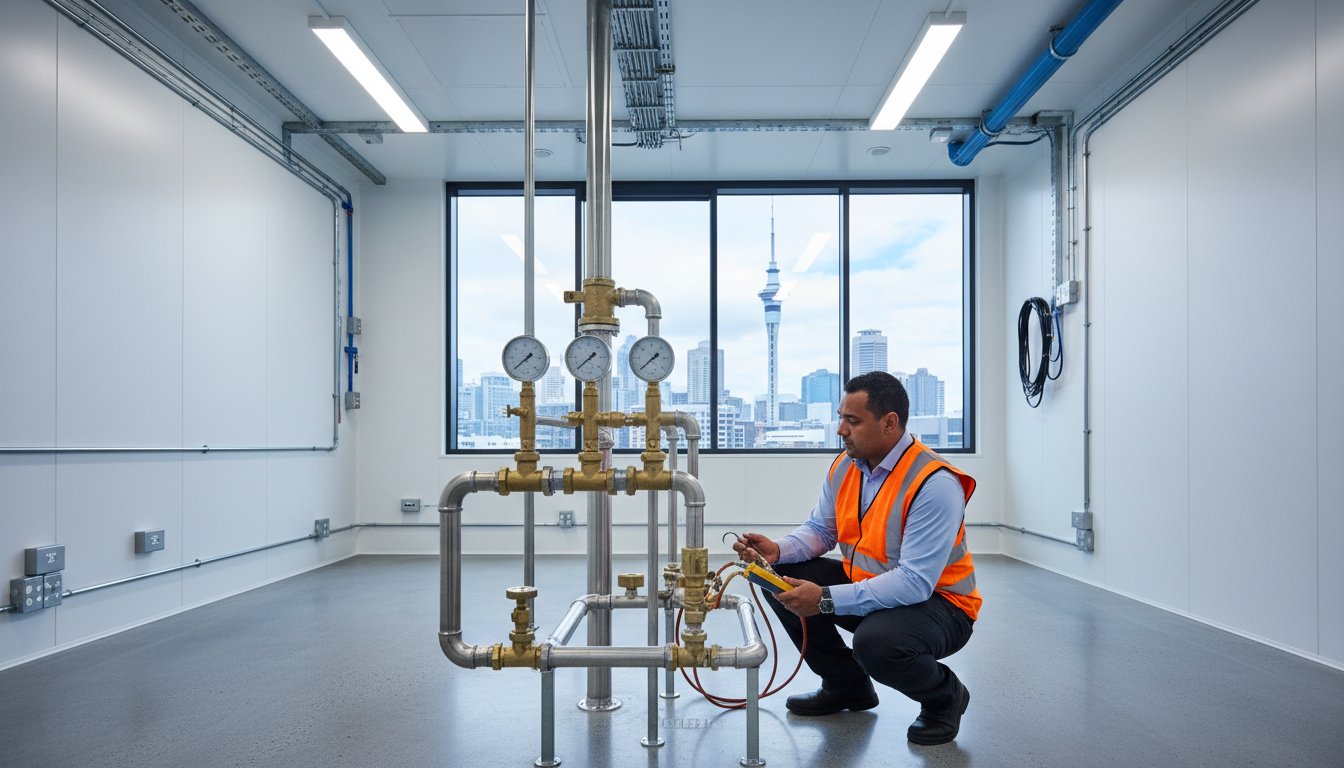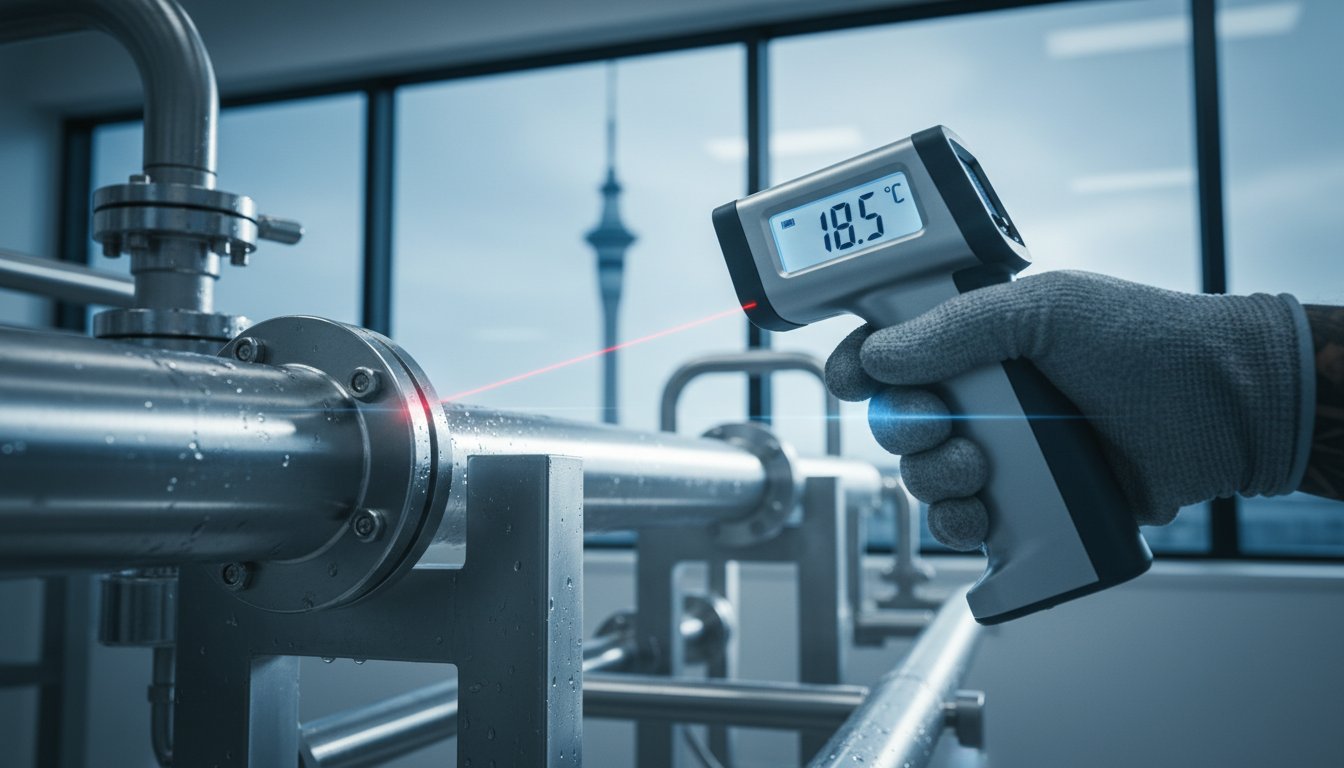



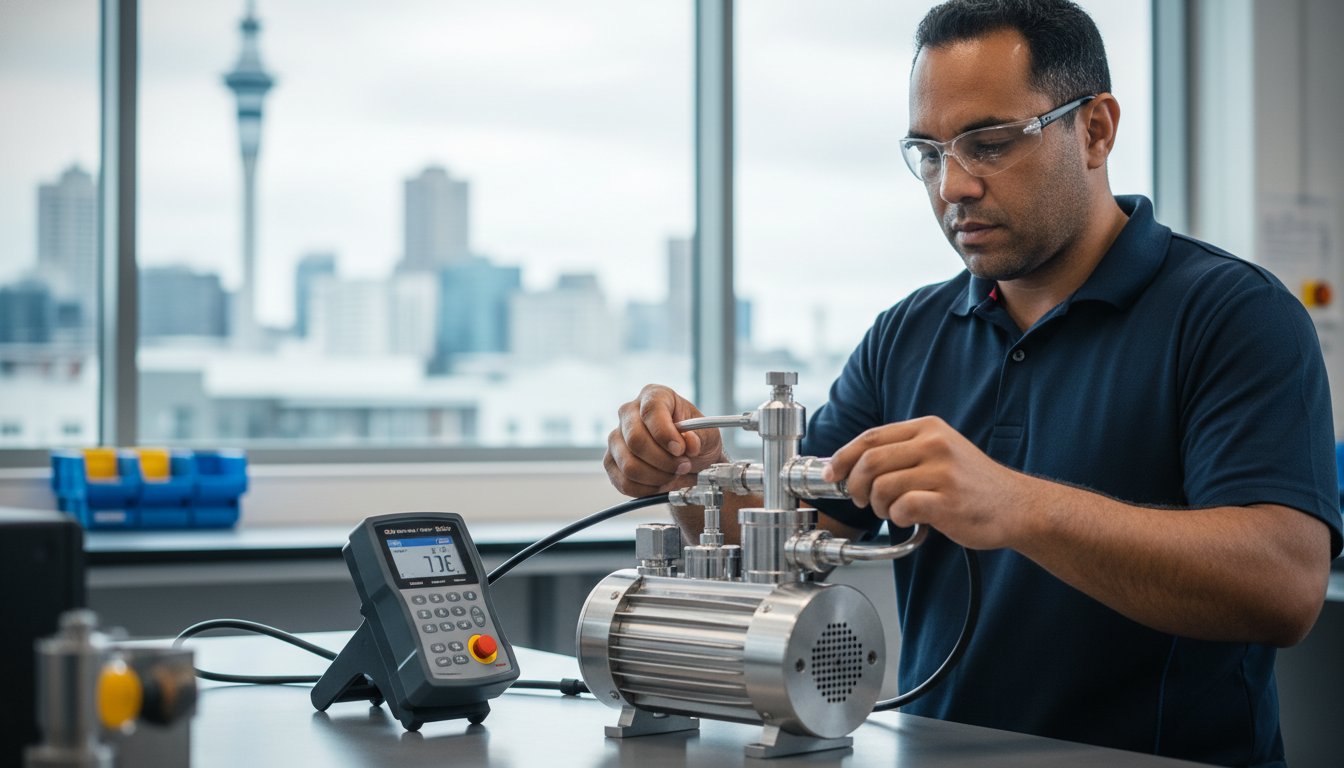
Last Tuesday, a senior technician in New Plymouth discovered that his new pressure calibrator, ordered from an overseas discount site, wouldn't connect to his existing hydraulic pumps because of a non-standard thread. This mismatch didn't just stall production; it added NZ$450 in unexpected freight costs and two weeks of downtime while he hunted for a local adapter. You already know that the true cost of calibration equipment isn't the price tag on the box. It's the risk of a failed IANZ audit or the frustration of buying hardware that lacks local New Zealand support when things go wrong in the field.
We at CPS (NZ) Ltd are here to ensure you never get stranded with a partial fix. Master the complexities of instrumentation with our expert guide to choosing, maintaining, and certifying professional calibration equipment. We'll show you how to build a total solution that thrives in demanding New Zealand operational environments and remains compliant with 2026 safety standards. From matching gauges to pumps to uncovering the hidden costs of initial certification, this guide covers every technical detail you need to stay operational and audit-ready.
• Understand the critical role of traceability and how to maintain strict IANZ and ISO compliance for your industrial measurement standards.
• Discover why investing in a "total solution" for calibration equipment-including custom kits with fittings and hoses-eliminates the hidden costs of downtime.
• Learn to distinguish between pressure generation tools and digital reference gauges to select the correct accuracy class for your specific applications.
• Master a proven two-step selection process to define your uncertainty budgets and assess whether field or laboratory gear is best for your facility.
• Gain professional insights from NZ’s leading experts on leveraging world-class partnerships to ensure long-term support and technical reliability.
Professional calibration equipment isn't just another set of tools on the workbench. It represents the master reference standard that keeps your entire operation accurate. While a standard industrial gauge tells you the pressure in a pipe, calibration equipment tells you if that gauge is actually telling the truth. In the high-stakes environments of Fiji's food processing or New Zealand's energy sectors, accuracy isn't optional. It's the difference between a safe, profitable plant and a regulatory nightmare. We provide the total solution because we know that "close enough" is never good enough for a professional technician. To understand the fundamentals, one must ask: What is calibration? It's the documented comparison between a device of unknown accuracy and a device of known, higher accuracy.
Measurement drift is a silent profit killer. If a flow meter in a Viti Levu beverage plant drifts by just 0.8%, it can result in over NZ$12,000 of lost product every month. In the New Zealand dairy industry, a single degree of temperature inaccuracy during pasteurization could lead to a batch recall costing upwards of NZ$200,000. Investing in high-grade calibration equipment prevents these invisible losses. Professional tools offer 4 to 10 times the accuracy of the instruments they test. This ensures that drift is identified and corrected before it hits the bottom line. We don't just sell you a tool; we provide the precision required to protect your margins.
Traceability is the unbroken chain of comparisons linking your onsite measurements back to international standards. 92% of IANZ-audited facilities in the Pacific region now require full traceability documentation for every critical sensor. Many suppliers provide a basic factory certificate, but this often falls short during a rigorous ISO 9001 or ISO 17025 audit. An IANZ accredited lab provides the gold standard of validation. For businesses across Fiji and NZ, using IANZ-traceable tools means your data is legally defensible and internationally recognized. It's about proving your accuracy to a regulator with 100% confidence. We ensure your equipment is backed by the right paperwork so you aren't left stranded during an inspection.
For technicians and facilities based in Australia, the equivalent standard is upheld by NATA-accredited labs, with comprehensive instrumentation solutions available from providers like Zenith Sales & Calibrations Pty Ltd.
Modern industrial sites require a diverse range of calibration equipment to maintain peak performance. We focus on the three pillars of industrial measurement:
Our range covers everything from delicate vacuum sensors to ultra-high 700+ bar hydraulic systems used in heavy machinery.
We utilize portable dry blocks and liquid baths to verify reference probes with millidegree precision in the field.
High-performance multimeters and process calibrators manage 4-20mA signal loops and complex PLC inputs that drive automation.
Choosing the right tool depends on your specific environment. A tool that works in a climate-controlled lab in Auckland might fail in the high humidity of a Fijian sugar mill. We select equipment that's rugged enough for the Pacific's unique conditions. Our goal is to provide a "plug and play" kit tailored to your exact onsite requirements, packed in a custom carry case that survives the toughest transport.
Buying a "naked" gauge from an offshore retailer often looks cheaper on a balance sheet, but the hidden costs tell a different story. We've seen Fiji-based technicians lose three days of productivity because a new tool arrived without the correct NPT or BSP adapters. A standalone tool usually requires an additional NZ$450 to NZ$1,200 in local procurement for fittings, hoses, and initial certification before it can even touch a process line. CPS (NZ) Ltd eliminates this friction by providing calibration equipment as a complete, ready-to-work kit. We don't just supply the hardware; we provide the fittings, the high-pressure hoses, and the custom-moulded carry cases that protect your investment from the harsh, humid environments common in Pacific industrial sites.
Every piece of equipment we ship is pre-calibrated in our IANZ-accredited laboratory. This ensures your team meets international standards from day one. For facilities operating in highly regulated sectors, staying compliant with the FDA quality system regulation regarding equipment maintenance and calibration is non-negotiable. Our documentation provides the traceability required to pass audits without the stress of retroactively seeking certification. By housing these tools in custom carry cases, we've helped clients reduce equipment damage rates by over 30% during transit between remote island sites.
Offshore retailers often operate on a "sell and forget" basis. If a tool fails in Suva or Nadi, those sellers won't help you with technical support or local repairs. CPS focuses on the "plug and play" standard. We provide technical training for onsite teams to ensure they understand the nuances of the calibration equipment they use. This hands-on approach reduces the risk of user error, which accounts for approximately 25% of all instrumentation failures in the field. Having a partner with 35 years of experience means you aren't just buying a tool; you're securing a long-term service channel.
Modern Fiji facilities are moving away from manual hand pumps toward integrated systems. Automated pressure calibrators, such as the Additel 761A series, significantly reduce human error by automating the pressure generation and recording process. These systems combine internal pumps and digital modules, allowing for versatile field use without carrying multiple heavy components.
Automation can improve data accuracy by up to 50% compared to manual logging.
Software integration allows for instant reporting and cloud-based asset management.
Swap modules to cover ranges from vacuum to 10,000 psi in a single handheld unit.
Transitioning to these integrated systems ensures your facility remains competitive and technically current. You can explore our full range of turnkey kits to see how we package these technologies for immediate deployment.
Reliability in industrial environments depends on more than just buying a tool off a shelf. You need a total solution that incorporates high-end hardware, correct fittings, and the traceability required for modern compliance. At CPS (NZ) Ltd, we've spent 35 years refining the selection of calibration equipment to ensure your onsite testing meets international standards. Choosing the right category of tool isn't just about the measurement; it's about the environment where that measurement happens.
We provide equipment that bridges the gap between laboratory precision and field durability. Whether you're managing a dairy plant in Waikato or a remote utility site, your tools must withstand dust, moisture, and vibration while maintaining accuracy classes as tight as 0.02% of full scale. To ensure global consistency, many of our high-end reference tools align with NIST Calibration Services, providing the traceability required for international export markets and rigorous IANZ audits.
Selecting between pneumatic and hydraulic systems is your first critical decision. Pneumatic hand pumps are ideal for low-pressure gas applications, typically ranging from vacuum up to 40 bar. They're clean and easy to use in the field. However, for high-pressure systems like hydraulic lines or heavy machinery, you'll require a hydraulic comparator. These units use oil or water to reach pressures exceeding 700 bar safely. We've seen a 45% increase in technicians moving toward intelligent digital modules. These allow a single base unit to swap sensors, covering multiple ranges without carrying five different gauges. If you're testing safety relief valves, ensure your digital gauge has a high-speed logging rate, at least 10 readings per second, to capture the exact "pop" pressure accurately.
Temperature metrology requires a choice between speed and stability. For onsite probe testing, a dry block field well is the standard. It's portable and reaches temperature setpoints in under 15 minutes. If you're working in a lab setting with oddly shaped sensors, a liquid bath provides superior stability and uniformity, often within 0.01°C. For food safety compliance, traceable thermometers with a calibration certificate are non-negotiable to meet NZS regulations. On the electrical side, process tools have evolved beyond simple multimeters. Modern loop calibrators don't just measure; they simulate 4-20mA signals and include HART communication protocols. This allows you to talk directly to "smart" transmitters to diagnose configuration issues without removing the device from the loop. We provide these as plug-and-play kits, so you aren't left hunting for a specific lead or resistor when you're 50 kilometres from the workshop.
Look for IP67 ratings for outdoor use and "intrinsically safe" certifications if working in hazardous zones.
Choose models with fine-adjust verniers to hit exact pressure points without overshooting.
Ensure your calibration equipment supports 24V loop power to test transmitters while they're disconnected from the PLC.
Every tool should come with a clear path of calibration back to national standards to satisfy ISO 9001 requirements.
Don't settle for being a "box mover" customer. We ensure your gear is ready for work the moment it arrives. This includes custom carry cases that protect your investment and all the necessary adapters to fit New Zealand and Pacific industry pipework. Our goal is to provide a package that won't leave you stranded in the field with a gauge that doesn't connect to your pump.
Choosing the correct calibration equipment requires a shift from viewing tools as simple purchases to viewing them as long-term technical investments. In Fiji's industrial landscape, where humidity levels often exceed 85%, a cheap gauge becomes a liability within six months. You need a systematic approach to ensure your gear meets both international standards and local operational realities.
Understanding the difference between "% of Full Scale" (FS) and "% of Reading" is critical for your budget. A 100 bar gauge with 0.1% FS accuracy is off by 0.1 bar anywhere on the scale. At the low end, say 10 bar, that's a 1% error. A "% of Reading" instrument maintains its precision across the range, making it far more versatile for varied plant requirements. For remote work across Viti Levu, prioritize tools with 200+ hour battery life and onboard datalogging. This eliminates the need for paper charts in the field and simplifies planning on-site calibration services for your next audit cycle.
Logistics between Lautoka, Suva, and Auckland can be a hurdle for maintaining compliance. We've spent 35 years refining the transport of sensitive reference standards across the Pacific. You don't want your master gauge sitting on a hot wharf for three weeks. Your gear must align with Fiji regulatory standards, such as those monitored by the FCCC or specific industry safety audits in the mining and energy sectors. We ensure every kit includes the necessary certification to pass these inspections the first time. We don't just sell a box; we provide a calibrated system that's ready for work the moment it arrives at your gate.
Ready to upgrade your facility's precision? Contact our technical team for a custom calibration kit quote today.
CPS (NZ) Ltd has operated at the core of the New Zealand and Pacific calibration market for over 35 years. Since our inception in 1988, we've focused on bridging the gap between high-end instrumentation and the practical, often rugged requirements of onsite technicians. We aren't just another importer looking to move boxes for a quick profit. Instead, we act as a technical partner for Fiji’s industrial, aviation, and energy sectors, providing the stability and expertise that only decades of experience can foster. Our Auckland-based hub serves as a specialized gateway for Fiji businesses, ensuring that world-class calibration equipment is accessible, supported, and correctly configured for the local environment.
Our commitment to quality is reinforced through exclusive partnerships with global leaders such as Additel and Fluke. These brands represent the gold standard in precision, but the hardware is only one part of the equation. We pride ourselves on the "Total Package" promise. When you order a calibrator from us, you don't just receive a tool in a cardboard box. We provide a complete, plug-and-play solution that includes the necessary fittings, high-pressure hoses, and a custom-molded carry case designed to protect your investment during transit between sites. This approach eliminates the downtime often caused by missing adapters or incompatible thread types, allowing your team to start work the moment the gear arrives in Suva or Nadi.
Localized support is the cornerstone of our service to the Pacific. We understand the logistical hurdles of operating in Fiji, which is why our Auckland facility acts as a nearby center for technical advice and after-sales care. We don't leave you stranded once a sale is complete. Whether you need help troubleshooting a complex pressure test or require guidance on the latest international standards, our engineers are a phone call away. This proximity ensures that support is delivered in your timezone, by experts who understand the specific challenges of Pacific industries.
Precision is meaningless without proof, which is why our laboratory maintains full IANZ (International Accreditation New Zealand) accreditation. Our facility is equipped with state-of-the-art reference equipment that offers the highest levels of traceability. We recognize that every day your gear is away for servicing is a day of lost productivity. To combat this, we've optimized our workflows to target a 5 to 7 day turnaround for most standard calibration equipment. We also help you move away from generic maintenance schedules by offering customized calibration intervals. By analyzing your specific usage data and environmental conditions, we ensure your tools remain compliant without the expense of over-servicing.
Building a reliable fleet of measurement tools requires a strategy that fits your specific site needs and budget. We provide tailored quotes that account for the unique operational demands of your facility, ensuring you only invest in the capabilities you actually require. For businesses managing short-term projects or facing emergency equipment failures, we offer flexible rental options. Our rental fleet is maintained to the same rigorous IANZ standards as our retail stock, providing an immediate, reliable backup when you need it most. This allows you to maintain continuous operations while your primary tools are being serviced or while you wait for new capital expenditure approvals. Contact our experts for a total calibration solution to discuss how we can streamline your testing processes and improve your site's accuracy today.
Selecting the right calibration equipment for 2026 requires looking beyond basic technical specs. It's about securing a total solution that integrates world-class hardware with local technical support and IANZ accredited traceability. You need gear that's ready to work the moment it arrives, complete with tailored fittings and protective transit cases. Don't risk your facility's compliance by partnering with simple importers who leave you stranded when technical issues arise.
CPS (NZ) Ltd provides the certainty you need through our 35+ years of industry experience. As an exclusive partner for global leaders like Additel and Fluke, we offer New Zealand's most reliable measurement tools backed by our own IANZ Accredited Laboratory. We don't just sell tools; we build long-term partnerships that ensure your systems remain accurate and your team stays productive. It's time to invest in quality that stands up to the demands of modern industry.
Get a Quote for Your Total Calibration Solution
We look forward to supporting your team's success with the best gear and expertise in the country.
A factory certificate is a manufacturer's statement that a tool met its own specifications during production. An IANZ certificate is issued by an ISO/IEC 17025 accredited laboratory, providing independent verification and full traceability to international standards. For critical calibration equipment used in Fiji’s regulated industries, IANZ certification is the standard. It ensures your measurements survive international audits and meet strict legal requirements.
You should have your gear recalibrated every 12 months to comply with most manufacturer recommendations and ISO standards. If you're using tools daily in high-demand environments, a 6 month interval is often safer to prevent measurement drift. Statistics show that 15% of process instruments drift out of tolerance within their first year. Regular cycles keep your "total solution" workflow accurate and prevent expensive production errors.
You shouldn't use the same pump for both mediums because cross-contamination will ruin your seals and internal components. Hydraulic pumps rely on oil or water, while pneumatic systems require clean, dry air to function correctly. Mixing these fluids can lead to a 100% failure rate in sensitive air sensors. We provide dedicated "plug and play" kits for each application to keep your calibration equipment in top condition.
High humidity and salt air are the leading causes of failure, accounting for 40% of equipment damage in tropical environments like Suva. These conditions accelerate internal corrosion and cause electronic components to drift faster than they would in temperate climates. Using IP67 rated housings and custom rugged cases can extend your tool's lifespan by 3 to 5 years. This protection is vital for maintaining long-term reliability.
You need a HART communicator to access the advanced diagnostics and configuration settings found in 75% of modern smart transmitters. While a basic multimeter reads the 4-20mA signal, it can't re-range the device or view error logs. A communicator allows you to perform digital trimming and damping adjustments on-site. It's an essential part of the "total package" for any technician working with modern industrial instrumentation.
An uncertainty budget is a calculated summary of all potential errors in a measurement, including temperature effects and sensor resolution. It's necessary because it proves your test results are accurate enough for the specific job. Most international quality systems require a 4:1 accuracy ratio between the test tool and the device under test. Without this budget, you can't technically guarantee that your data meets those mandatory safety standards.
Choose a digital reference gauge when you need high precision, as they typically offer 0.05% full-scale accuracy. Digital displays also eliminate parallax error, ensuring every technician reads the same value. Analogue gauges are still useful for monitoring rapid pressure pulses or visual trends where a needle's movement is easier to track. However, for 90% of professional calibration tasks, the digital option provides the superior reliability you need.
CPS provides full on-site installation and technical training for clients across Fiji and the Pacific Islands. We've spent over 35 years ensuring our customers aren't left stranded with new technology they don't understand. Our team delivers a "total solution" that includes setting up your kits and training your staff on best practices. Whether you're in Suva or Nadi, we bring our expertise directly to your facility.